
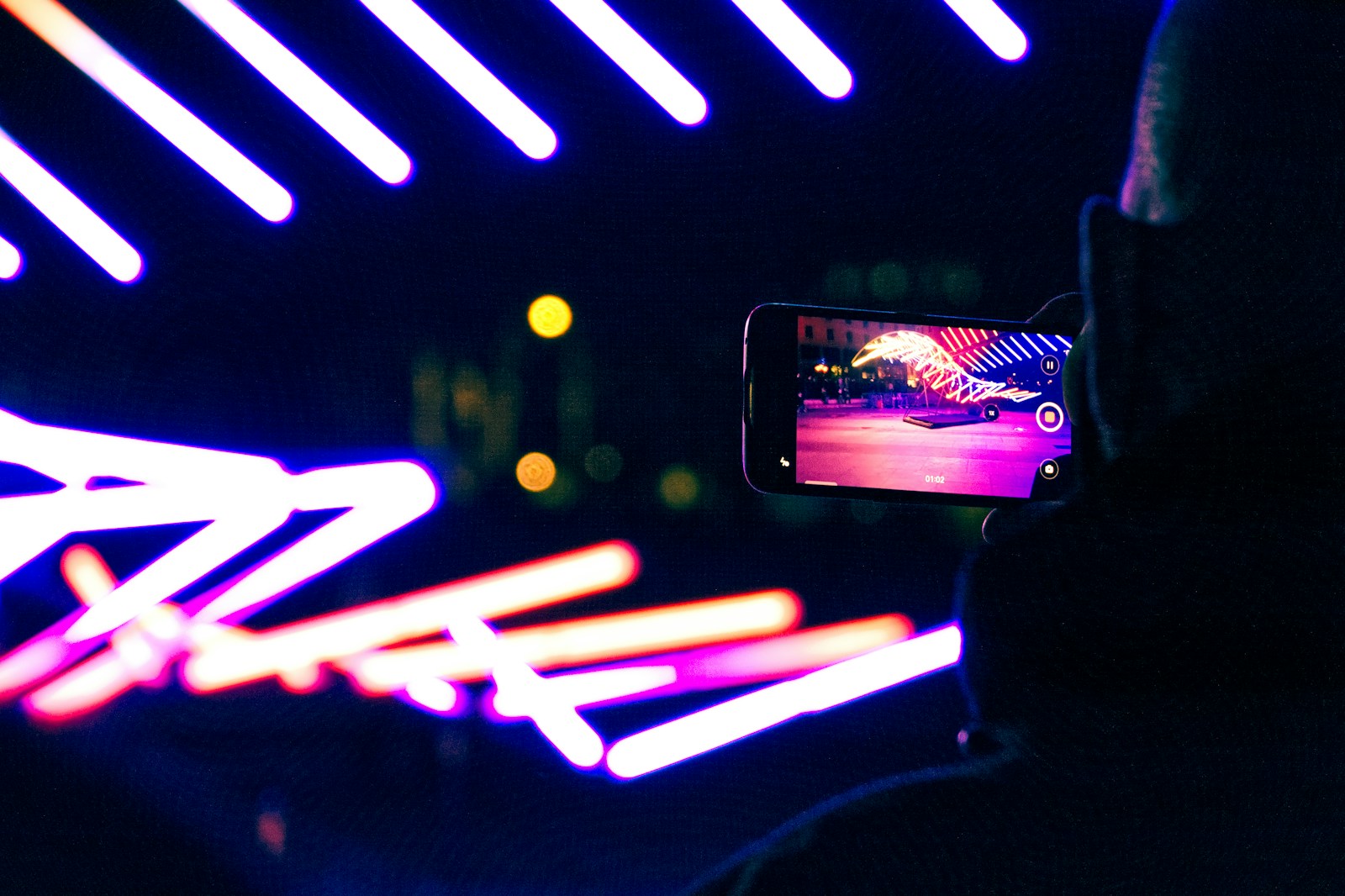
A decade ago, the idea of generating a realistic video from a simple text prompt sounded like science fiction.
Today, it’s an everyday reality — and a terrifying one.
With tools like OpenAI’s Sora, Runway Gen-3, and Pika Labs, anyone can now create ultra-realistic video content in seconds. A few typed sentences — “A man walking on Mars,” “A politician giving a speech,” “A car crash on a rainy street” — and within moments, a photorealistic video appears.
It’s mesmerizing, powerful, and profoundly unsettling. Because as AI-generated video becomes indistinguishable from reality, we are entering a world where you can no longer trust what you see.
From Deepfakes to Dreamfakes
AI video generation started innocently enough. Early tools like DeepFake (2018) allowed users to swap faces in video clips. They were clumsy, often uncanny. But the technology has matured at an astonishing pace.
Today’s AI video systems — powered by diffusion models and transformer-based architectures — don’t just edit footage; they generate entire scenes from scratch, complete with realistic lighting, physics, and camera movement.
OpenAI’s Sora, for example, can produce a 60-second, cinematic-quality video from a single paragraph of text. The results are so convincing that even professional editors have trouble distinguishing them from real footage.
That’s the breakthrough — and the danger.
How AI Video Generators Work
Modern AI video models operate like a fusion of ChatGPT and Photoshop on steroids. They take a text prompt and use vast training datasets — containing millions of videos and images — to learn how the world looks and moves.
These systems then synthesize new frames using what’s called spatiotemporal diffusion — predicting how pixels evolve over time to create natural motion.
In simpler terms:
- The AI learns how reality looks.
- Then it imagines its own version — from scratch.
- You get a video that feels 100% real, but isn’t.
The Power — and Peril — of Visual Creation
AI video technology has enormous creative potential. Filmmakers, educators, and marketers can now produce professional-grade videos at a fraction of the cost and time.
- 🎬 Filmmaking: Directors can visualize scenes before shooting.
- 🧠 Education: Teachers can create immersive explainer videos instantly.
- 🛍️ Marketing: Brands can produce product demos or ads without a camera crew.
But the same tools that democratize creativity also democratize deception.
Imagine:
- A fake video showing a world leader declaring war.
- A fabricated “security camera” clip used in a court case.
- A viral video of a celebrity scandal that never happened.
These aren’t hypotheticals. They’re inevitable.
“Visual Reality Collapse” — The Coming Crisis of Trust
Experts are calling it the Visual Reality Collapse — the point at which humans can no longer distinguish between genuine and synthetic media.
In the past, photographs and video served as proof. A picture was evidence; a video was truth. That foundation is now gone.
Dr. Kate Barlow, a media ethics professor at Stanford, warns:
“We built our entire information system — from journalism to justice — on the assumption that the camera doesn’t lie. That assumption is now obsolete.”
Already, misinformation researchers are seeing a surge in AI-generated propaganda, especially in politically volatile regions. In 2024 alone, dozens of deepfake videos were circulated during elections in India, the U.S., and Eastern Europe — some viewed millions of times before being debunked.
Now that AI video tools are open to the public, the floodgates are wide open.
Who’s Policing AI Video?
Governments and tech companies are scrambling to catch up.
- OpenAI and Google have pledged to include digital watermarks — invisible markers embedded in AI-generated videos to signal synthetic origin.
- Adobe is pushing a Content Credentials standard, letting creators verify authenticity.
- The European Union’s AI Act mandates clear labeling for “synthetic media” that could mislead the public.
But these solutions face real challenges:
Watermarks can be stripped, detection tools can be evaded, and most users don’t check metadata.
In short, technical safeguards are losing the arms race.
The Ethical Crossroads
AI video generation sits at a volatile intersection of innovation and ethics.
The Benefits:
- Lowers barriers for creativity and content production.
- Makes education, storytelling, and visual communication more accessible.
- Drives new industries around virtual production and personalized media.
The Risks:
- Misinformation and propaganda.
- Fraud and identity theft.
- Psychological manipulation (especially in political and social contexts).
- Erosion of public trust in authentic visual evidence.
The line between reality and fiction has never been thinner — and never more consequential.
What Comes Next: Living in the Post-Truth Visual Era
The next few years will bring even more realistic AI videos — with better sound, emotion, and continuity. By 2026, experts predict we’ll see AI-generated livestreams and interactive synthetic influencers indistinguishable from real humans.
Society’s only defense may be literacy, not technology — teaching people to question what they see and demand verification.
In the words of media scholar Renee DiResta:
“The future won’t be about spotting fake content — it will be about learning to live in a world where fake is everywhere.”
Frequently Asked Questions (FAQs)
| Question | Answer |
|---|---|
| 1. What is an AI video generator? | A tool that uses artificial intelligence to create realistic videos from text, images, or audio prompts. |
| 2. What is OpenAI’s Sora? | Sora is OpenAI’s AI video generator capable of creating photorealistic, full-motion videos from written descriptions. |
| 3. How realistic are AI-generated videos now? | Extremely realistic — many are indistinguishable from real footage, even for trained editors. |
| 4. Are AI-generated videos legal? | Generally yes, but using them for misinformation, defamation, or fraud can be illegal. |
| 5. Can AI videos be detected? | Some detection tools exist, but they’re not foolproof. As AI improves, detection becomes harder. |
| 6. What are digital watermarks? | Hidden metadata or pixel patterns embedded to identify AI-generated media. |
| 7. Can watermarks be removed? | Unfortunately, yes — with editing or re-rendering. |
| 8. How are governments responding? | The EU and U.S. are developing rules requiring labeling of AI-generated media. |
| 9. What should viewers do to verify videos? | Check trusted sources, metadata, or tools like Adobe Content Credentials. |
| 10. Is there any benefit to AI video? | Yes — it democratizes content creation and fuels innovation in entertainment and education. |
Final Thoughts
AI video generation represents one of humanity’s greatest creative leaps — and one of its greatest existential risks.
For the first time in history, we have technology that can rewrite reality itself.
The question isn’t whether we can control it — it’s whether we can still agree on what’s real.
As the line between fiction and fact dissolves, one truth remains:
The future of trust won’t be about what we see. It’ll be about who we believe.
Sources The New York Times


