
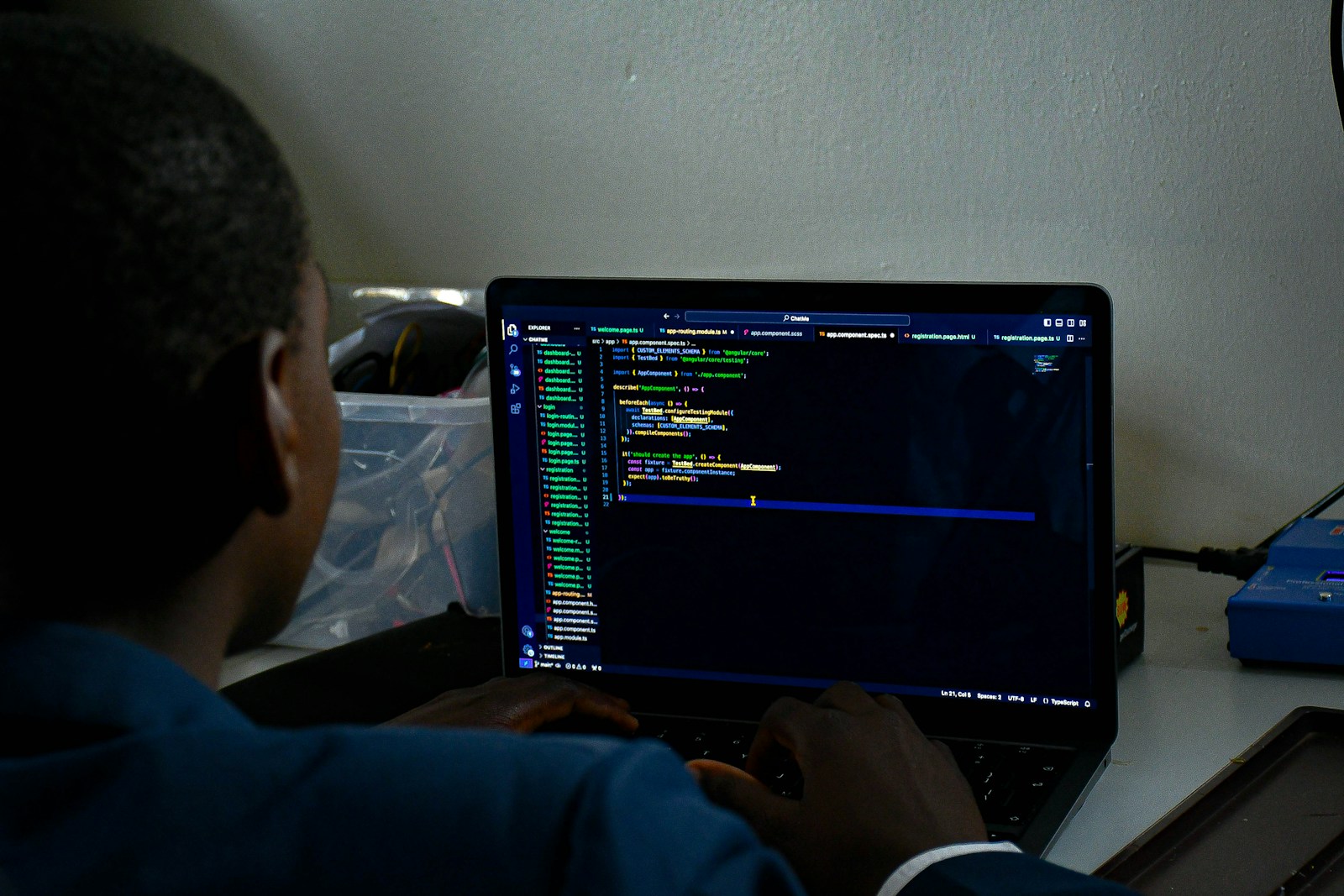
For decades, we’ve dreamed of AI that could write software.
Now, DeepMind is building one that can defend it.
Meet CodeMender — Google DeepMind’s newest AI agent designed to spot, explain, and repair software vulnerabilities automatically. Unlike your typical security scanner, CodeMender doesn’t just flag bugs; it understands them, fixes them, and learns from every patch.
It’s the kind of technology that could transform not only how we code — but how we protect the digital world.

The Big Idea: From Writing Code to Healing It
The average developer spends nearly 40% of their time debugging. For security teams, that number’s even higher — hunting vulnerabilities, patching dependencies, and staying one step ahead of cybercriminals.
DeepMind’s CodeMender was built to flip that equation.
Instead of relying on human engineers to spot every weak point, CodeMender acts like an AI security co-pilot. It scans codebases, finds potential flaws, proposes fixes, and even explains its reasoning in plain English.
It’s like having a teammate who never sleeps, never forgets, and has read every security guideline ever written.
How CodeMender Works (in Plain English)
At its core, CodeMender combines three AI superpowers:
- 🕵️♀️ Vulnerability Detection — It scours code for risky logic, unsafe APIs, and insecure patterns across languages like Python, Java, C++, and Go.
- 🧠 Contextual Reasoning — Instead of throwing false alarms, it prioritizes issues based on real-world exploitability.
- 🛠️ Self-Repair — CodeMender proposes or applies security patches automatically, learning from every correction developers approve.
It’s powered by DeepMind’s latest code-understanding model, trained on vast open-source repositories and reinforced through secure coding simulations.
What makes it unique isn’t just detection — it’s judgment. CodeMender understands why something is insecure and how to fix it elegantly.
Why It Matters
Software vulnerabilities cost businesses billions each year. In 2023 alone, over 26,000 new CVEs (Common Vulnerabilities and Exposures) were recorded — and the number keeps rising.
Most of these aren’t exotic “zero-day” exploits — they’re everyday mistakes: an unescaped query here, an outdated library there.
That’s where CodeMender shines. By catching and fixing issues automatically, it could:
✅ Reduce vulnerability exposure dramatically,
✅ Speed up secure software delivery,
✅ Free engineers to focus on innovation instead of firefighting, and
✅ Bring cybersecurity discipline directly into the development process.
It’s not a tool that audits your code — it’s a teammate that protects it with you.
Beyond GitHub Copilot: The New AI Guardrail
AI code assistants like GitHub Copilot, ChatGPT, and CodeWhisperer have already revolutionized coding productivity.
But they share one dangerous blind spot: they don’t know if their code is secure.
CodeMender is designed to close that gap.
Where Copilot writes, CodeMender reviews.
Where ChatGPT suggests, CodeMender safeguards.
It’s the AI that keeps the other AIs honest — a necessary guardrail in an age where generative models are writing billions of lines of code.
The Security Angle No One’s Talking About
DeepMind isn’t just aiming for convenience; it’s aiming for trustworthy software at scale.
That comes with massive implications — and challenges:
⚠️ 1. The Risk of Over-Reliance
If developers start blindly trusting AI patches, vulnerabilities could slip through disguised as “autofixes.” CodeMender must earn its credibility one patch at a time.
🔒 2. Protecting Sensitive Code
Since scanning code often involves reading proprietary or confidential information, CodeMender must operate under strict privacy protocols. DeepMind says the system can run locally or within secure cloud sandboxes.
🧩 3. Accountability
If an AI patch breaks production or introduces new bugs, who’s responsible — the developer or the AI? The answer will likely depend on evolving legal frameworks around AI-assisted development.
Despite these challenges, CodeMender’s potential impact is hard to ignore: faster audits, safer releases, and a new era of AI-powered resilience.
How CodeMender Could Change the Game
| Today’s Code Security | With CodeMender |
|---|---|
| Developers manually scan and patch vulnerabilities. | AI continuously monitors, identifies, and repairs vulnerabilities. |
| Security teams react to alerts post-deployment. | Prevention is embedded directly into development. |
| Developers struggle to interpret complex reports. | AI explains issues in clear, actionable terms. |
| Patches are reactive. | Code becomes adaptive and self-healing. |
DeepMind calls it “autonomous code security.” The rest of the industry might soon call it essential.
What’s Next
Early pilots of CodeMender are reportedly underway with enterprise partners and Google Cloud clients. A public beta could appear in late 2025 or early 2026.
The long-term vision? Integrating CodeMender into the DevSecOps lifecycle — where AI continuously guards every repository, pull request, and deployment pipeline.
If successful, it could redefine how we think about secure coding: not as a chore, but as an automated, intelligent process built into every layer of software.
Frequently Asked Questions (FAQs)
| Question | Answer |
|---|---|
| 1. What exactly is CodeMender? | An AI agent by DeepMind that identifies and fixes code vulnerabilities automatically. |
| 2. How is it different from GitHub Copilot or ChatGPT? | Copilot writes code. CodeMender secures it — focusing on safety, not productivity. |
| 3. Can it fix code on its own? | Yes — CodeMender can propose or apply patches directly, with human approval. |
| 4. What programming languages does it support? | Multiple, including Python, Java, C++, JavaScript, and Go. |
| 5. How does it ensure privacy? | It supports on-premise or secure cloud processing, ensuring code never leaves controlled environments. |
| 6. Is it open source? | Not yet, but enterprise integrations are expected through Google Cloud. |
| 7. Could attackers exploit the AI? | Theoretically yes, but DeepMind has built in model hardening and adversarial training to reduce this risk. |
| 8. Does it replace security engineers? | No — it acts as an assistant, handling repetitive tasks while experts focus on strategic defense. |
| 9. When will it launch publicly? | Enterprise rollout is expected in late 2025, with broader access following. |
| 10. Why does this matter? | CodeMender could make secure coding the default — transforming cybersecurity from reactive to proactive. |
Final Take
DeepMind’s CodeMender isn’t just another AI developer tool — it’s a glimpse into the future of self-healing software.
For decades, we built code that needed constant fixing.
Now, we’re building code that can fix itself.
If DeepMind succeeds, CodeMender could mark the beginning of a new era — where every piece of software comes with its own guardian, watching silently, patching instantly, and keeping our digital world safe from the inside out.
Because in the future of AI and security, the smartest code won’t just run — it will defend itself.

Sources Google Deepmind

