

Artificial intelligence is racing ahead at blistering speed — bigger models, faster chips, smarter systems, billion-dollar investments. But behind all the hype is a quiet crisis almost no one is talking about:
AI is built on mathematics… and the world is running out of mathematicians.
We don’t just have a compute bottleneck. We have a brains bottleneck — specifically, the kind trained to understand the mathematical foundations that make modern AI possible.
Companies keep scaling up models.
Nations keep throwing money at infrastructure.
But without the people who understand the theory underneath it all, the entire AI ecosystem becomes fragile.
Let’s break down why this matters, what’s going wrong, and what happens if we don’t fix it.

AI Runs on Math — Not Magic
Every breakthrough in AI comes from math:
- Linear algebra → neural networks
- Probability theory → generative models
- Optimization → training stability
- Geometry → embeddings
- Information theory → compression
- Numerical analysis → model efficiency
- Logic → reasoning systems
The big leaps in AI — from transformers to diffusion models — began as mathematical ideas long before they became products.
But here’s the scary part:
We are producing fewer mathematicians just as the AI industry needs them most.
The AI Industry Shifted to “Scale Everything” — And It’s Backfiring
The last five years have been dominated by:
- bigger models
- bigger datasets
- bigger compute clusters
This engineering-first approach produced amazing systems — but also exposed massive weaknesses:
- hallucinations
- training instability
- poor generalization
- adversarial vulnerabilities
- massive energy waste
- opaque internal behavior
- unclear failure modes
These aren’t engineering bugs.
They’re mathematical problems.
No amount of compute can solve issues rooted in theory.
Why We Suddenly Have a Math Talent Problem
The original reporting noted a decline in mathematics graduates. But the reasons go much deeper:
1. Math is seen as “too hard” and “too abstract”
Decades of poor early education created a generation intimidated by math.
2. Universities are cutting pure math programs
They favor “job-ready” degrees instead.
3. Funding for theoretical research has collapsed
Grants prioritize short-term commercial outcomes.
4. Tech companies mostly hire engineers, not theorists
Mathematicians get overlooked until a crisis happens.
5. The finance industry absorbs top mathematical talent
Quant firms offer salaries that academia — and AI labs — rarely match.
The result?
Fewer experts to tackle AI’s biggest challenges.
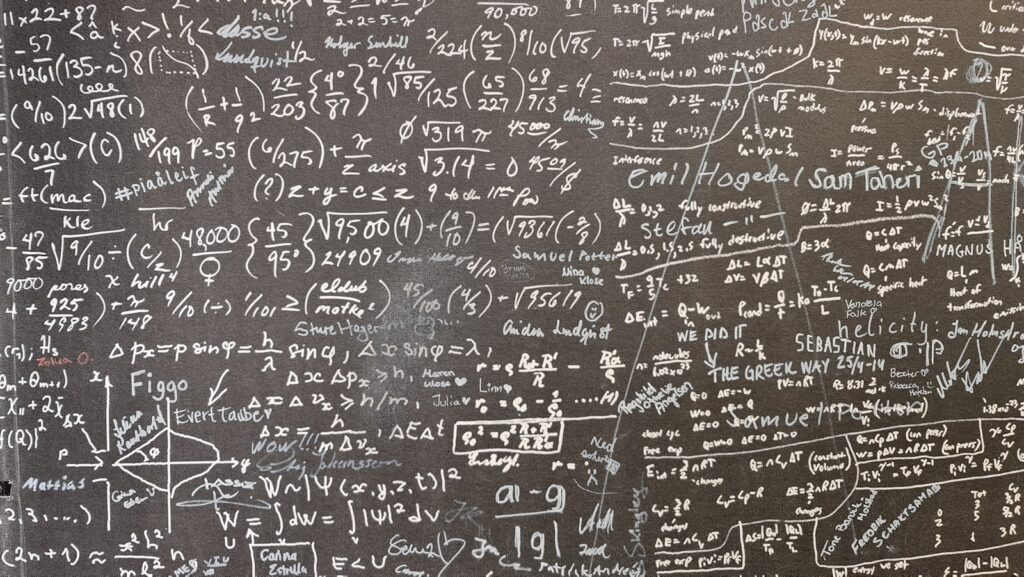
Why the Next Wave of AI Breakthroughs Requires Mathematicians
We are hitting real limits with current model architectures.
To move forward, we need:
- new optimization methods
- new theoretical frameworks
- new architectures beyond transformers
- new ideas from geometry, physics, and statistics
- new mathematical guarantees for safety
- new ways to reason symbolically and logically
In short:
The next AI leap won’t come from more GPUs — it will come from more mathematics.
What the Original Article Didn’t Cover — But You Need to Know
Here’s the bigger picture.
1. AI safety is deeply mathematical
Interpretability, robustness, alignment, and uncertainty all require formal foundations.
2. Nations with strong math education will dominate AI
This is becoming a geopolitical race — and math talent is the deciding factor.
3. Many AI failures trace directly to missing mathematical insight
Everything from gradient collapse to adversarial vulnerabilities is mathematical at its core.
4. Without mathematicians, AI becomes more expensive and less reliable
Scaling hides problems temporarily — not permanently.
5. The AI “brain drain” could tilt innovation globally
Countries investing in math education today will lead the AI world tomorrow.
How We Fix the Math Crisis in the Age of AI
✔ Reinvent math education
Make it creative, applied, and connected to the real world — not fear-based.
✔ Fund foundational math research
AI progress depends on theory, not just engineering.
✔ Create hybrid AI–mathematics career paths
Let mathematicians work directly on core model problems, not as an afterthought.
✔ Pay mathematicians what they’re worth
If AI companies want theoretical breakthroughs, they must offer competitive compensation.
✔ Celebrate math as the backbone of innovation
The same way we celebrate coding and design.

Frequently Asked Questions
Q1. Why does AI need mathematicians?
Because every core component of AI — training, optimization, reasoning, compression, safety — is rooted in mathematical theory.
Q2. Isn’t engineering enough to keep AI progressing?
Not anymore. We’ve reached the limits of scaling. Future breakthroughs require deeper theory.
Q3. Why are math graduates declining?
Poor early education, low perceived value, fewer academic opportunities, and better-paying alternatives in finance and tech.
Q4. What math fields matter most for AI?
Optimization, probability, statistical mechanics, geometry, linear algebra, information theory, and numerical methods.
Q5. What happens if we ignore the math talent shortage?
AI becomes harder to improve, more unstable, more energy-intensive, and more unpredictable.
Q6. Can AI itself replace mathematicians?
AI can assist — but deep conceptual breakthroughs still require human insight.
Q7. Which countries are best positioned?
Nations with strong math education systems and research culture: China, Russia, India, Eastern Europe, Israel, and parts of Western Europe.
Q8. What should AI companies do right now?
Hire mathematicians, fund pure research, and integrate theory into model development.
Q9. How long until this becomes a major bottleneck?
It already is — most AI labs admit foundational theory is the main limitation today.
Q10. Is this fixable?
Yes — but only if we treat mathematics as essential infrastructure.
Sources Financial Times

