

A new wave of AI coding assistants has exploded in popularity, winning over millions of developers around the world. These tools promise to write code faster, fix bugs, automate repetitive work, and even explain complex codebases in seconds. For many programmers, they’ve become indispensable.
But here’s the real question:
Is this boom sustainable — or are these startups riding a temporary high before competition, cost, and complexity catch up?
This article dives deeper into what’s driving the craze, what challenges AI coding startups face, and what the future of software development might look like.
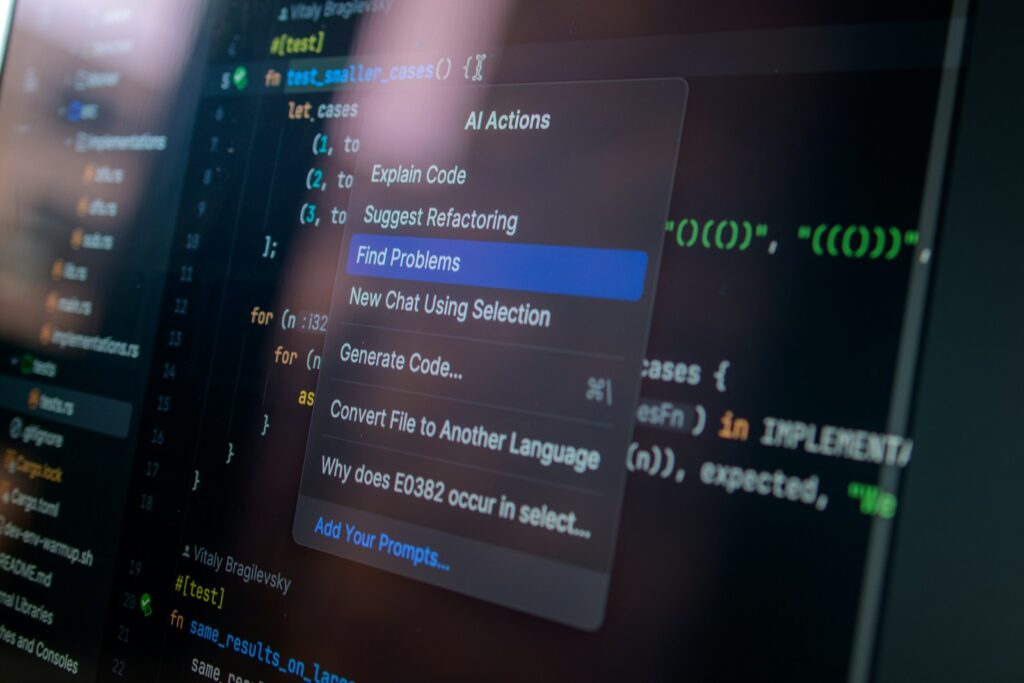
Why Developers Are Obsessed With AI Coding Assistants
For the first time in decades, programming feels like it’s undergoing a fundamental shift. The reason millions of coders love these tools comes down to four big wins:
1. Massive Productivity Gains
Developers say AI tools help them:
- write boilerplate code instantly
- generate test cases
- debug errors
- explain unfamiliar code
- accelerate prototype development
- learn new languages faster
What used to take 30 minutes can take 30 seconds.
2. They Reduce Cognitive Load
Programming is mentally exhausting.
AI assistants:
- break down complex instructions
- simplify unfamiliar libraries
- help developers avoid context-switching
- eliminate repetitive tasks
Coders feel less drained at the end of the day.
3. Junior Developers Finally Have a “Mentor on Demand”
For newer programmers, AI tools serve as:
- an explainer
- a tutor
- a code reviewer
- a debugger
- a guide for best practices
This has dramatically lowered the barrier to entry — and raised the ceiling for rapid skill growth.
4. They Help With Legacy Code and Outdated Systems
Enterprises still rely heavily on:
- Java 8
- COBOL
- PHP
- C# legacy systems
- outdated frameworks
AI tools can analyze and modernize these codebases faster than most humans — a huge selling point.
But Behind the Success Is a Growing Set of Challenges
The WSJ article touches on sustainability concerns, but several deeper threats loom.
1. The Cost of Running AI Models Is Enormous
Coding assistants rely on large language models that are expensive to:
- train
- serve
- host
- update
- scale
Startups often operate at thin or negative margins.
And developers use these tools heavily, driving compute bills sky-high.
2. Big Tech Is Closing In
Startups are battling industry giants:
- Microsoft / GitHub Copilot
- Google Gemini Code Assist
- Amazon CodeWhisperer
- Meta open models
- OpenAI’s code-native models
Big tech has:
- massive compute
- distribution advantages
- deep integration with IDEs
- enterprise contracts
Startups must innovate faster to survive.

3. Open-Source Models Are Evolving Rapidly
Community-driven alternatives are exploding:
- StarCoder
- Codestral
- DeepSeek Coder
- LLaMA Code variants
- Qwen2.5 Coder
Developers who prefer privacy and customization gravitate toward open solutions.
Startups now face a squeeze from both ends:
big tech above, open-source below.
4. Enterprise Security Is a Huge Barrier
Companies worry about:
- data leakage
- intellectual property exposure
- code embedding in training sets
- compliance failures
- vulnerability introduction
Startups must invest heavily in:
- on-prem deployments
- security certifications
- model isolation
- legal guardrails
This slows down growth and increases cost.
5. AI Coding Assistants Still Make Mistakes
Hallucinations remain a major issue:
- incorrect logic
- insecure patterns
- outdated syntax
- subtle bugs
- invented APIs
Developers must carefully review everything AI outputs.
This raises a critical question:
If AI still needs constant checking, how much productivity does it actually create?
6. The Business Model Is Uncertain
Most startups face the same dilemma:
- free tiers attract millions of users
- but only a fraction pay
- enterprise deals are slow
- compute costs scale faster than revenue
This is the Achilles’ heel of many AI companies.
The Big Question: Can the AI Coding Boom Last?
Short answer: Yes. But not for everyone.
Coding assistants are here to stay — the productivity boost is too big to ignore.
But the winners will be startups that:
✔ Control their compute costs
✔ Build trust with enterprises
✔ Offer strong privacy and security features
✔ Integrate deeply into developer workflows
✔ Deliver tools beyond autocomplete
✔ Provide high-quality documentation and guardrails
✔ Invest in long-term model improvement
The rest will likely be acquired, outcompeted, or fade out as big tech tightens its grip.
Where the Future Is Headed: The Real Transformation
AI won’t replace developers.
It will replace bad workflows.
Expect to see:
- automated refactoring
- AI-generated tests
- self-healing codebases
- AI-driven CI/CD pipelines
- natural-language transformations
- AI pairs that learn your code style
- “ask anything” debugging tools
Coding will feel less like typing
and more like designing, reviewing, and supervising.
Frequently Asked Questions
Q1. Will AI replace developers?
No. It will replace repetitive tasks, but humans are still needed for architecture, oversight, logic, creativity, and debugging.
Q2. Why are developers obsessed with these tools?
Because they dramatically reduce busywork and accelerate development.
Q3. Are AI coding tools accurate?
Useful, yes. Perfect, no. They still hallucinate, make mistakes, and require human review.
Q4. What’s the biggest risk for startups in this space?
Massive compute costs and competition from big tech.
Q5. Are open-source models a threat?
Yes. They’re improving fast and appeal to enterprises with strict privacy needs.
Q6. Is AI coding secure?
It depends. On-prem deployments and isolated models are much safer for sensitive codebases.
Q7. Can junior developers rely on AI too much?
Yes — over-reliance can weaken foundational problem-solving skills.
Q8. Will coding jobs disappear?
No. The nature of coding will evolve, but work will shift, not vanish.
Q9. What skills will matter most in an AI-powered programming world?
System design, debugging, architecture, prompt engineering, code review, and critical thinking.
Q10. Which companies will survive the AI coding war?
The ones that solve security, reliability, cost management, and workflow integration.
Sources The Wall Street Journal

