

When new users sign up for YouTube, they expect discovery: creators, creativity, and content worth watching. Instead, a growing body of research suggests something far less inspiring. More than 20% of videos shown to new YouTube users are now “AI slop”—low-effort, algorithmically generated videos designed to game the platform rather than inform or entertain.
This trend isn’t just a YouTube problem. It’s a warning sign for the future of online content, platform trust, and how artificial intelligence is reshaping the attention economy.
This article expands on the issue, explores why it’s happening, what often gets overlooked, and what it means for users, creators, and platforms alike.
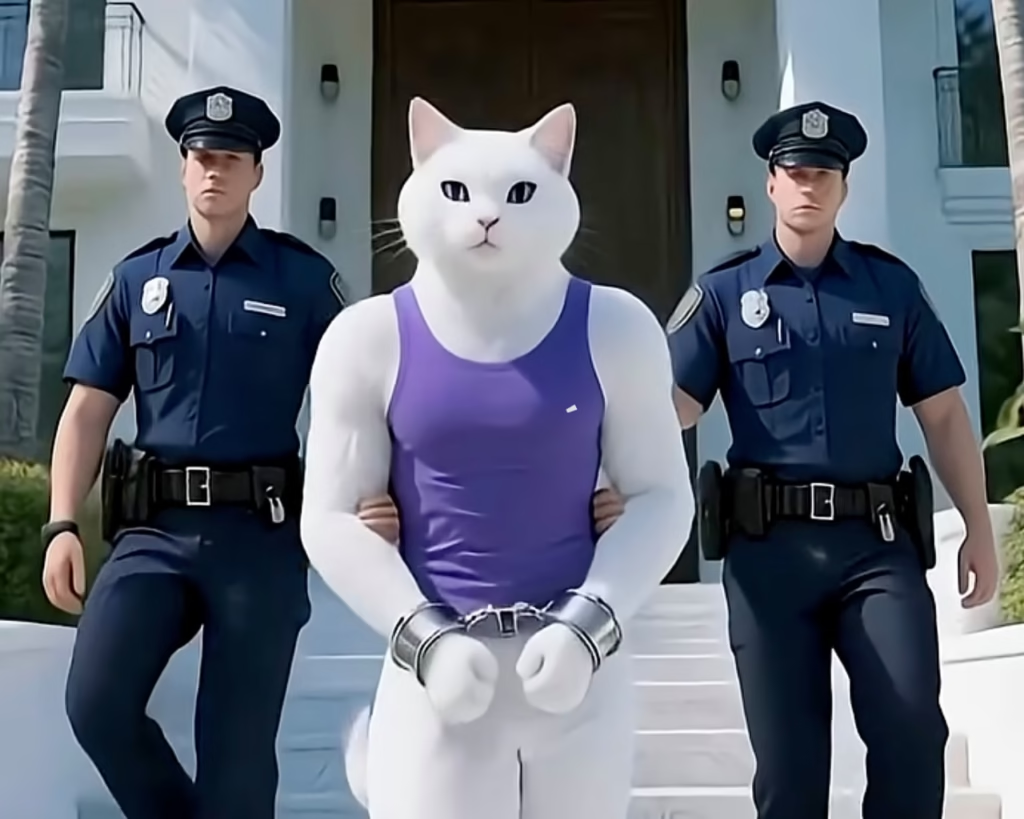
What Is “AI Slop,” Exactly?
AI slop refers to mass-produced, low-quality content created primarily to exploit algorithms, not to serve viewers. These videos often feature:
- AI-generated voices reading scraped text
- Stock images or looping visuals
- Repetitive scripts with little original insight
- Clickbait titles and thumbnails
- Minimal human involvement
The goal isn’t creativity—it’s scale.
Why New YouTube Users Are Hit the Hardest
Cold-Start Algorithms Favor Volume
When YouTube knows little about a user, it relies heavily on:
- Engagement probability
- Watch-time optimization
- Broad appeal signals
AI slop performs surprisingly well on these metrics because it’s engineered to be:
- Familiar
- Sensational
- Easy to consume
For new users, the algorithm’s guardrails are weakest.
AI Slop Is Cheap and Endless
Thanks to generative AI tools, one operator can now produce:
- Hundreds of videos per day
- Multiple channels simultaneously
- Content in many languages
This overwhelms moderation systems and crowds out human creators.
What Most Coverage Misses
This Is an Incentive Problem, Not Just a Tech Problem
AI didn’t create slop—platform incentives did. YouTube rewards:
- Upload frequency
- Viewer retention
- Ad-friendly formats
AI simply makes it easier to exploit those incentives at scale.
Low-Quality Doesn’t Mean Low-Impact
Even when content is shallow or misleading, it can:
- Shape opinions
- Spread misinformation
- Waste attention at massive scale
The harm is cumulative, not always obvious.
Creators Are Being Pushed Into an “Arms Race”
Legitimate creators now compete with:
- AI farms uploading nonstop
- Channels with no production costs
- Synthetic personalities
This pressures creators to post more, simplify content, or leave altogether.

Why Platforms Struggle to Stop AI Slop
Detection Is Hard
AI-generated content is increasingly difficult to distinguish from human-made content, especially when:
- Voices sound natural
- Scripts are lightly edited
- Visuals are passable
False positives risk punishing real creators.
Platforms Profit From Volume
More videos mean:
- More ads
- More watch time
- More data
Cracking down too aggressively risks short-term revenue—even if long-term trust erodes.
The Broader Impact on the Internet
Discovery Gets Worse
When feeds fill with low-quality content:
- Good creators are harder to find
- Niche expertise is buried
- User satisfaction declines
The internet becomes louder, not smarter.
Trust Erodes
If users can’t tell:
- What’s real
- What’s human-made
- What’s reliable
They disengage—or stop trusting platforms altogether.
Attention Becomes Even More Exploited
AI slop turns human attention into a raw resource, mined relentlessly with little regard for value.
What Could Actually Fix the Problem
1. Incentive Reform
Platforms must adjust ranking signals to reward:
- Originality
- Depth
- Demonstrated human input
Not just engagement.
2. Transparent Labeling
Clear labels for AI-generated or AI-assisted content would:
- Restore user agency
- Reduce deception
- Encourage responsible use
3. Stronger Cold-Start Safeguards
New users should be protected with:
- Higher-quality content thresholds
- Human-curated starter feeds
- Reduced exposure to mass-produced channels
4. Support for Human Creators
Discovery boosts, monetization protections, and creator verification can help rebalance the ecosystem.
Frequently Asked Questions (FAQ)
What does “AI slop” mean?
It refers to low-quality, mass-produced AI-generated content designed to exploit platform algorithms rather than provide value.
Why is YouTube recommending it?
Because engagement-focused algorithms reward scale and familiarity, especially for new users with limited viewing history.
Is all AI-generated content bad?
No. AI can enhance creativity. The problem is automated, low-effort content made purely for clicks.
Why does this affect new users more than existing ones?
Existing users have established preferences. New users don’t—making them more vulnerable to algorithmic spam.
Can platforms realistically stop this?
Yes, but it requires changing incentives, not just improving detection.

Final Thoughts
The rise of AI slop on YouTube isn’t a quirky side effect of new technology—it’s a stress test for the modern internet.
If platforms continue to reward volume over value, feeds will fill with synthetic noise, and genuine creativity will struggle to survive. But if platforms choose to protect users—especially new ones—they can still shape an ecosystem where AI supports creativity instead of drowning it out.
The future of online video won’t be decided by how much content we can generate.
It will be decided by what we choose to reward—and what we refuse to amplify.
Sources The Guardian

