It sounds like a paradox.
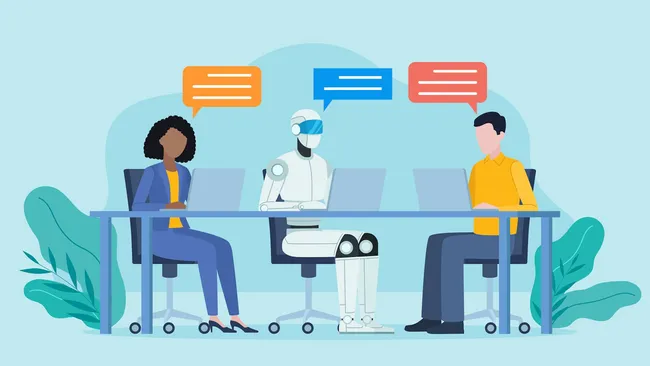
Artificial intelligence can write essays, reports, emails, and stories that look completely human — yet even AI itself often can’t tell whether a piece of text was written by a human or by another AI.
As schools, newsrooms, employers, and governments scramble to detect AI-generated content, researchers are delivering an uncomfortable message: reliable AI-text detection may not just be hard — it may be impossible.
And the consequences are already unfolding.
Why AI-Written Text Is So Hard to Detect
AI Learned to Write by Studying Humans
Modern language models are trained on massive collections of human-written text: books, articles, essays, conversations, and websites. Their job isn’t creativity in the human sense — it’s predicting what sounds right next.
That means AI learns:
- Human grammar and structure
- Natural phrasing and tone
- Logical flow of ideas
- Common writing styles
When AI succeeds, it leaves behind no obvious “machine signature.”
Why Detection Tools Keep Failing
Predictability No Longer Works
Early detection tools relied on a concept called perplexity — how predictable text appears to a language model. AI text tends to be statistically smooth, while human writing is more irregular.
But that difference collapses when:
- Humans edit AI-generated drafts
- AI is prompted to write creatively
- Writers simplify or formalize their language
In many cases, human writing looks more “AI-like” than AI itself.
Rhythm and Style Aren’t Reliable Either
Another approach measured burstiness — variation in sentence length and structure. But modern AI models now intentionally mimic this variation.
What once looked robotic now looks natural.
Small Edits Break Detection
Change a few words. Reorder a paragraph. Add a sentence.
That’s often enough to fool detection tools entirely — whether the text started as human or AI-generated.
The Strange Truth: AI Can’t Recognize Its Own Work
Perhaps the most surprising finding from recent research is this:
AI models frequently cannot tell whether they wrote a piece of text themselves.
When asked to identify AI-generated content:
- Models disagree with one another
- Confidence levels fluctuate wildly
- False positives and false negatives are common
There is no hidden watermark inside most AI text saying, “I made this.”
Why This Might Be a Permanent Problem
Some researchers argue this isn’t just a temporary limitation — it’s a structural one.
If:
- AI is trained on human language
- Humans increasingly write with AI assistance
- Text is edited, revised, and blended across tools
Then authorship becomes irreversibly blurred.
At that point, asking whether text is “AI-written” is like asking whether a spreadsheet calculation was “human math.”
The line no longer exists.
Why This Matters in the Real World
Education
Schools using AI detectors risk falsely accusing students — while missing actual AI-generated work. This damages trust and raises fairness concerns.
Journalism
Newsrooms worry about credibility and misinformation but lack reliable tools to verify authorship at scale.
Workplaces
Hiring managers and employers struggle to assess genuine skill when written communication may be AI-assisted.
Law and Policy
Legal systems depend on attribution. If authorship can’t be determined, enforcement becomes fragile.
Why AI Detectors Can Be Dangerous
Many AI-detection tools:
- Overstate their accuracy
- Provide no explanation for decisions
- Produce false accusations
- Offer no meaningful appeal process
In high-stakes settings — schools, courts, employment — these tools can cause real harm.
As a result, some institutions are abandoning detection altogether.
What Experts Say We Should Do Instead
Rather than chasing unreliable detection, researchers and educators suggest a shift in mindset:
- Teach AI literacy: how AI works, where it fails, and how to use it responsibly
- Redesign assessments to focus on reasoning, drafts, and explanation
- Encourage disclosure of AI assistance rather than punishment
- Evaluate understanding, not just polished output
The goal becomes learning and accountability, not surveillance.
Writing Has Always Evolved — This Is the Next Step
Writing didn’t stop being human when:
- Typewriters replaced handwriting
- Spellcheck replaced dictionaries
- Search engines replaced memorization
AI is another tool in that lineage — powerful, disruptive, and redefining what authorship means.
The challenge isn’t identifying machines.
It’s deciding what we value in human thinking.
Frequently Asked Questions
Can AI ever reliably detect AI-written text?
Current research suggests no — not across diverse, real-world use cases.
Why do AI detectors falsely accuse humans?
Clear, formal, or structured writing often matches AI statistical patterns.
What about watermarking AI text?
Watermarks can help in limited systems, but fail once text is edited, translated, or paraphrased.
Is using AI for writing cheating?
It depends on context and transparency. Many experts argue for disclosure rather than blanket bans.
Should schools ban AI tools entirely?
Most researchers say bans are ineffective and push usage underground.
What’s the best alternative to detection?
Assessments focused on thinking process, explanation, and interaction — not just final text.
The Bottom Line
AI can write like a human.
Humans increasingly write with AI.
At some point, the distinction stops mattering.
Instead of asking “Was this written by AI?”, the better question may be:
“Does this demonstrate understanding, responsibility, and intent?”
Because in a world where even AI can’t tell who wrote the words, judgment matters more than detection.
Sources Live Science