
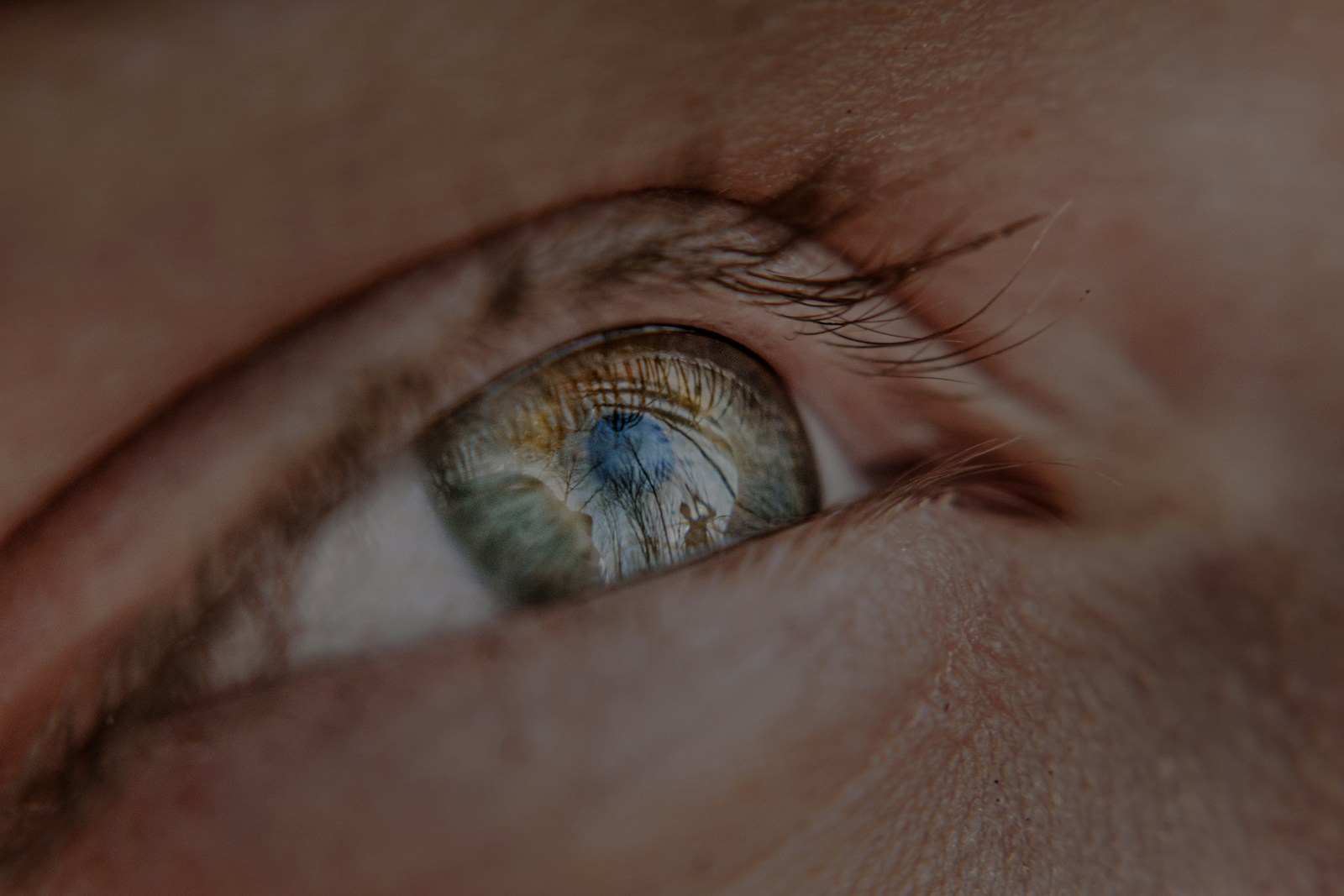
Optical illusions have fascinated humans for centuries. From drawings that appear to move to shapes that seem impossible, these visual tricks expose a simple truth: seeing is not the same as recording reality.
Now, artificial intelligence is giving scientists an unexpected new lens through which to understand these illusions — not by experiencing them like humans do, but by failing in similar ways.
By studying when and why AI systems are fooled by visual illusions, researchers are uncovering deep insights into how both machines and human brains interpret the world.

Why Optical Illusions Matter More Than We Think
Optical illusions aren’t just party tricks or art curiosities. They are scientific tools.
They reveal:
- How the brain fills in missing information
- How context shapes perception
- How assumptions guide interpretation
- Where perception diverges from physical reality
Every illusion exposes a shortcut the brain uses to make sense of incomplete sensory data.
Understanding those shortcuts is central to neuroscience, psychology — and now, AI research.
How AI “Sees” the World
AI vision systems don’t see the way humans do. They rely on:
- Pattern recognition
- Statistical correlations
- Pixel-level data processing
- Learned representations from massive datasets
Yet surprisingly, when AI systems are trained on real-world images, they sometimes fall for the same optical illusions that trick humans.
This overlap is where science gets interesting.
When Machines Fall for Illusions Too
Researchers have found that certain AI models:
- Misjudge size and distance in context-heavy images
- Misinterpret shading and perspective
- Perceive motion where none exists
These failures suggest that AI, like humans, learns assumptions about the world — such as lighting coming from above or objects shrinking with distance.
Illusions exploit those assumptions.
What This Tells Us About the Human Brain
AI provides a comparison point humans never had before.
When both humans and machines make the same perceptual errors, it suggests:
- Those errors aren’t flaws — they’re adaptive shortcuts
- The brain prioritizes speed and usefulness over accuracy
- Perception is predictive, not reactive
In other words, the brain guesses — and usually guesses well.
Illusions Reveal That Perception Is a Prediction Engine
Modern neuroscience increasingly views perception as prediction.
The brain:
- Generates expectations
- Compares sensory input to those expectations
- Updates its internal model
Optical illusions work because they exploit this predictive process.
AI models trained to predict visual patterns end up doing something remarkably similar — reinforcing the idea that prediction is central to intelligence, whether biological or artificial.
Where AI Sees Differently From Humans
Despite similarities, AI also diverges in important ways.
Some illusions that fool humans don’t fool AI at all — and vice versa.
This highlights differences in:
- Attention mechanisms
- Sensitivity to texture versus shape
- Reliance on global versus local features
These gaps help researchers refine both neuroscience theories and AI architectures.

Real-World Applications of This Research
1. Safer AI Vision Systems
Understanding when AI misperceives helps improve:
- Autonomous vehicle vision
- Medical imaging analysis
- Surveillance and security systems
Reducing illusion-like errors can prevent costly or dangerous mistakes.
2. Better Human-Computer Interaction
Designers can:
- Avoid visual interfaces that confuse users
- Use illusions intentionally for clarity or emphasis
- Improve accessibility for people with visual impairments
3. Neuroscience and Mental Health
Studying illusion susceptibility may:
- Reveal differences in perception linked to conditions like autism or schizophrenia
- Improve diagnostic tools
- Deepen understanding of sensory processing disorders
Philosophical Questions AI Reopens
Illusion research with AI forces deeper questions:
- Is perception ever objective?
- Do we experience reality — or a useful simulation?
- If machines and humans share perceptual shortcuts, what defines “understanding”?
AI doesn’t just help explain illusions — it challenges how we define intelligence and reality itself.
What the BBC Article Didn’t Fully Explore
Several broader implications deserve attention:
- Cultural perception: Different cultures may experience illusions differently, raising questions about AI trained on culturally narrow data
- Bias in perception: AI illusions could reflect dataset bias, mirroring human cognitive bias
- Ethics: Systems that exploit perceptual shortcuts could manipulate attention or behavior
Illusions are not just scientific curiosities — they’re powerful tools.
Frequently Asked Questions
Why do optical illusions exist at all?
They arise because the brain uses shortcuts to interpret complex sensory information quickly.
Do AI systems really experience illusions?
Not subjectively, but they can misinterpret images in predictable ways similar to humans.
Why is it useful that AI makes mistakes?
Mistakes reveal how systems work — and where their assumptions lie.
Can this research make AI vision safer?
Yes. Identifying failure modes helps engineers design more robust systems.
Does this mean human perception is unreliable?
It’s not unreliable — it’s optimized for survival, not perfect accuracy.
Could AI ever see exactly like humans?
Unlikely. AI and humans have different architectures, but studying overlap is highly informative.
The Bottom Line
Optical illusions remind us that perception is not a window onto reality — it’s an interpretation.
By watching how artificial intelligence is fooled by the same visual tricks that confuse humans, scientists are uncovering something profound: intelligence, whether human or artificial, depends on assumptions, predictions, and shortcuts.
AI isn’t just helping us build smarter machines.
It’s helping us understand ourselves — and the beautifully imperfect way we see the world.
Sources BBC

