

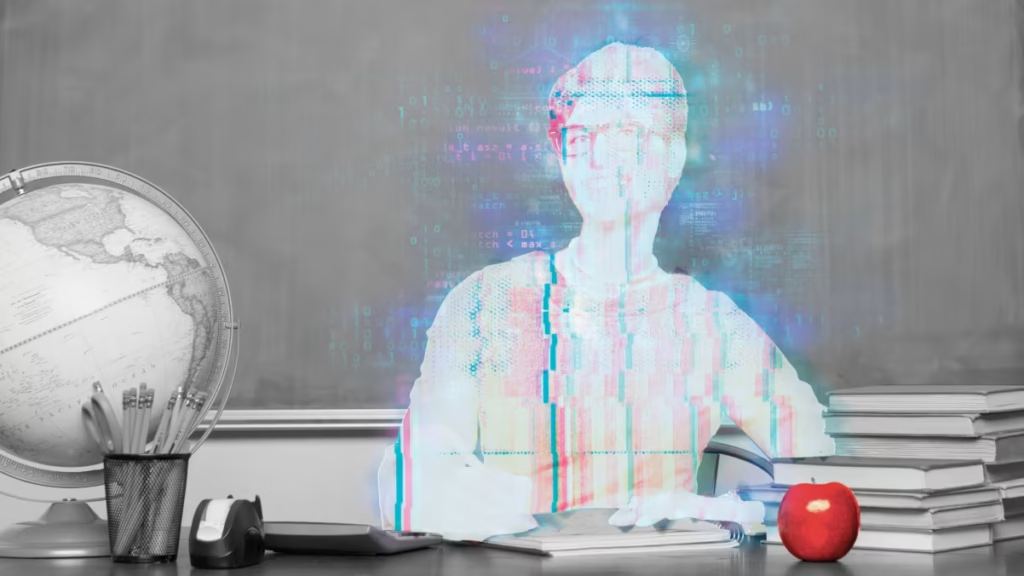
“What if I told you this school had no teachers?”
That provocative idea is no longer hypothetical. AI-powered schools—where algorithms replace or radically reduce the role of human educators—are beginning to emerge, promoted as efficient, personalized, and scalable alternatives to traditional classrooms.
Supporters say these schools represent the future of learning. Critics warn they may be an expensive experiment with children’s development, democracy, and equality.
The truth lies somewhere in between—and the stakes are enormous.
What Is an AI-Run School?
AI-driven schools rely heavily on software systems to:
- Deliver lessons through adaptive learning platforms
- Track student progress in real time
- Personalize pacing and content for each learner
- Automate grading, feedback, and assessments
- Replace or minimize full-time teachers
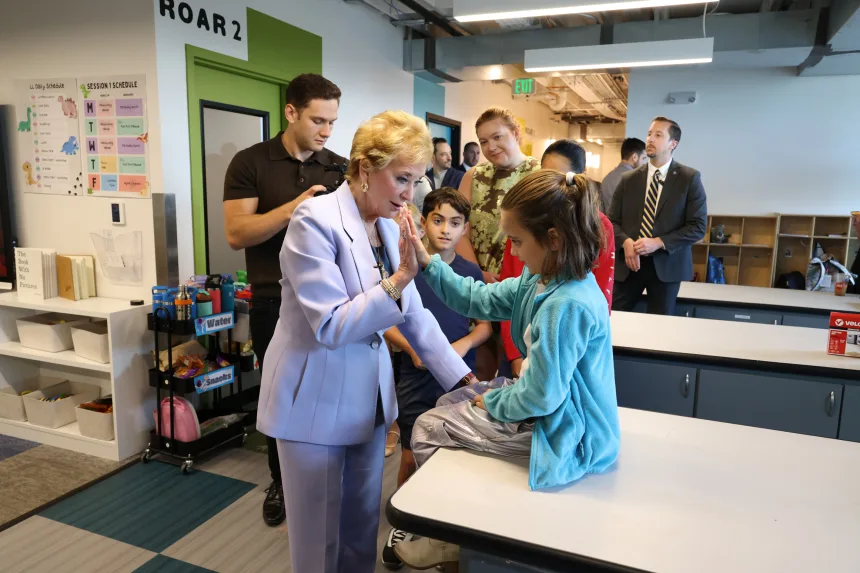
In some models, adults act only as “learning facilitators” or supervisors, not instructors.
The goal is radical efficiency: fewer staff, standardized quality, and data-driven learning at scale.
Why AI Schools Are Gaining Attention Now
Several forces are accelerating interest in AI-run education:
- Teacher shortages and burnout
- Rising education costs
- Political pressure for “innovation” and disruption
- Advances in generative AI tutoring systems
- Cultural belief that personalization equals progress
For some policymakers and entrepreneurs, AI schools appear to offer a fast solution to slow-moving education systems.
The Promises: What AI Schools Claim to Fix
Advocates argue AI-powered education can:
Personalize Learning
Students move at their own pace instead of following one-size-fits-all lessons.
Close Achievement Gaps
Algorithms identify weaknesses early and adjust instruction instantly.
Reduce Costs
Fewer teachers mean lower operational expenses.
Standardize Quality
AI doesn’t vary in mood, energy, or training.
Measure Everything
Every click, answer, and pause becomes data for improvement.
On paper, it sounds compelling.
What’s Missing Without Human Teachers
Education is not just content delivery.
Teachers provide:
- Emotional support and motivation
- Social modeling and mentorship
- Ethical guidance
- Conflict resolution
- Adaptation to context, culture, and nuance
AI can simulate instruction—but it cannot replicate human judgment, care, or moral responsibility.
Children don’t just learn facts. They learn how to be human.
The Risks Few Advocates Fully Address
Developmental Concerns
Young learners need social interaction to develop empathy, communication, and collaboration.
Equity Gaps
Wealthy families may still choose human-rich education, while AI-heavy models are pushed onto underfunded communities.
Data and Surveillance
AI schools collect intimate data on children—often with limited transparency or consent.
Political and Ideological Influence
Curriculum shaped by software reflects the values of its creators.
Accountability
When AI fails a child, who is responsible?
What Research Actually Says
Studies on ed-tech consistently show:
- Technology can support learning—but rarely replaces teachers effectively
- Outcomes depend heavily on implementation quality
- Overuse of screens harms attention and social skills
- Teacher-student relationships strongly predict success
AI works best as a tool, not as a substitute.
Why Politics Is Entangled in the Debate
AI schooling has become a political symbol:
- For some, it represents efficiency and innovation
- For others, it signals privatization and dehumanization
Education policy often reflects ideology as much as evidence. That makes experimentation with AI schools especially risky when applied broadly or prematurely.
A More Realistic Future: Hybrid Models
The most promising path forward blends:
- AI tutors for practice and personalization
- Human teachers for guidance, ethics, and inspiration
- Smaller class sizes supported by automation
- Transparent oversight and public accountability
In this model, AI enhances teachers rather than replaces them.
What Parents Should Ask Before Choosing an AI School
- Who designs and audits the curriculum?
- How is student data protected?
- What role do adults play daily?
- How are social skills taught and assessed?
- What happens when a child struggles emotionally?
Education is not a beta test.
Frequently Asked Questions
Can AI really replace teachers?
Not fully. AI can deliver content but cannot replace human judgment, care, or mentorship.
Do AI schools improve learning outcomes?
Evidence is mixed. Success depends more on human support than technology alone.
Are AI schools cheaper?
Often yes—but cost savings may come at the expense of human interaction.
Is this safe for young children?
Developmental experts urge caution, especially for early childhood education.
Who benefits most from AI schools?
Technology providers and cost-focused administrators—benefits for students are still uncertain.
Will AI schooling expand?
Likely—but whether it becomes dominant depends on regulation, results, and public trust.

The Bottom Line
AI in education is not inherently dangerous—but education without humans is.
Schools are not factories, and students are not data points. Teaching is a profoundly human profession, grounded in trust, care, and moral responsibility.
AI can support learning. It can personalize practice. It can help overworked teachers.
But when schools ask whether they still need teachers at all, they aren’t just rethinking education.
They’re redefining what we believe children deserve.
Sources CNN

