
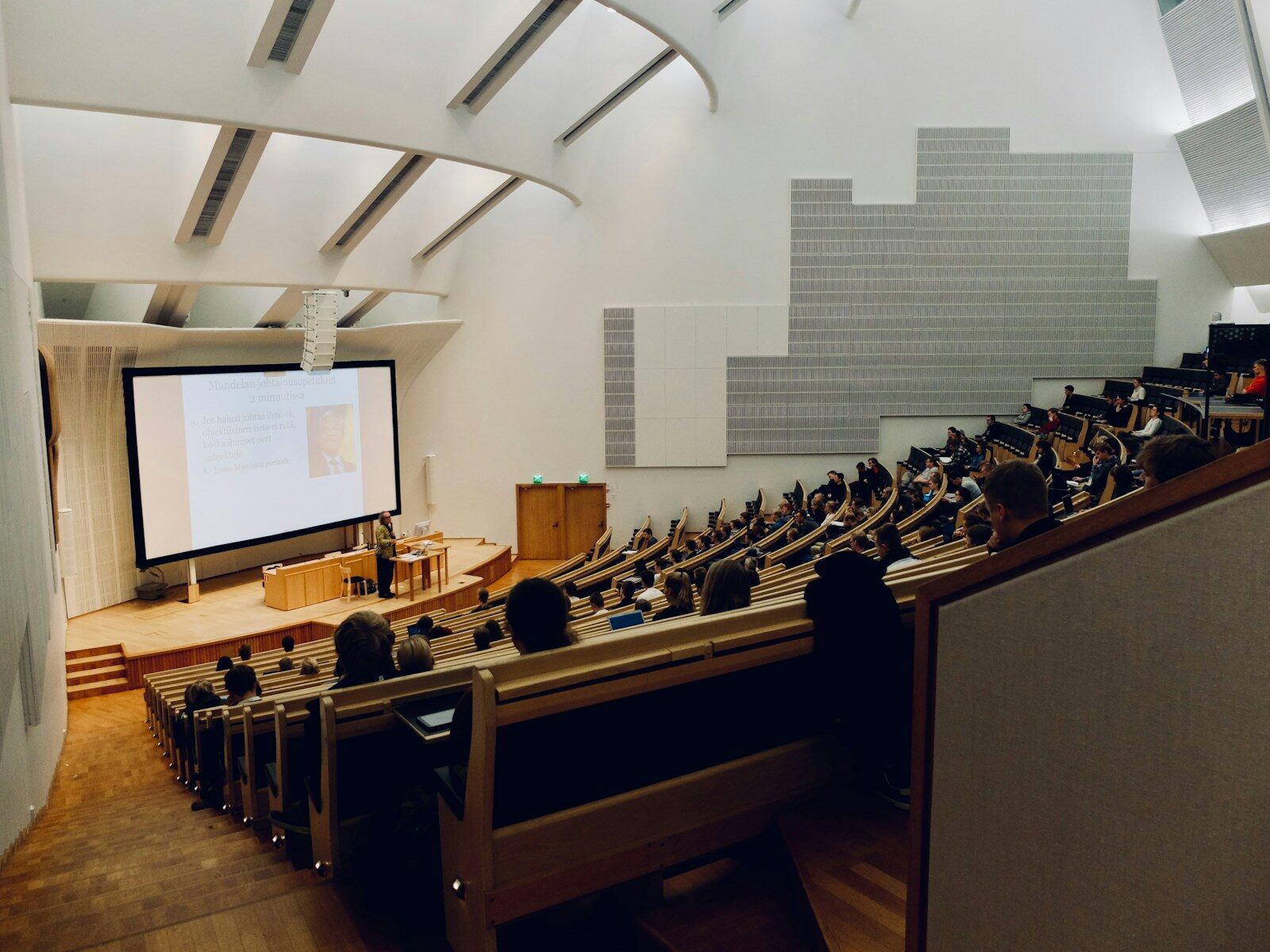
Something strange is happening inside universities.
Students still attend lectures.
Professors still assign essays.
Campuses still hand out degrees.
But underneath the surface, many classrooms are already operating inside a completely different reality:
artificial intelligence has fundamentally changed how students think, learn, write, study, and even experience college itself.
And unlike earlier technological shifts, this one happened almost overnight.
In less than three years, tools like ChatGPT transformed from experimental curiosities into invisible academic companions embedded inside daily student life.
The result is not merely “more cheating.”
It is something much deeper:
a quiet collapse of the old assumptions that modern education was built upon.
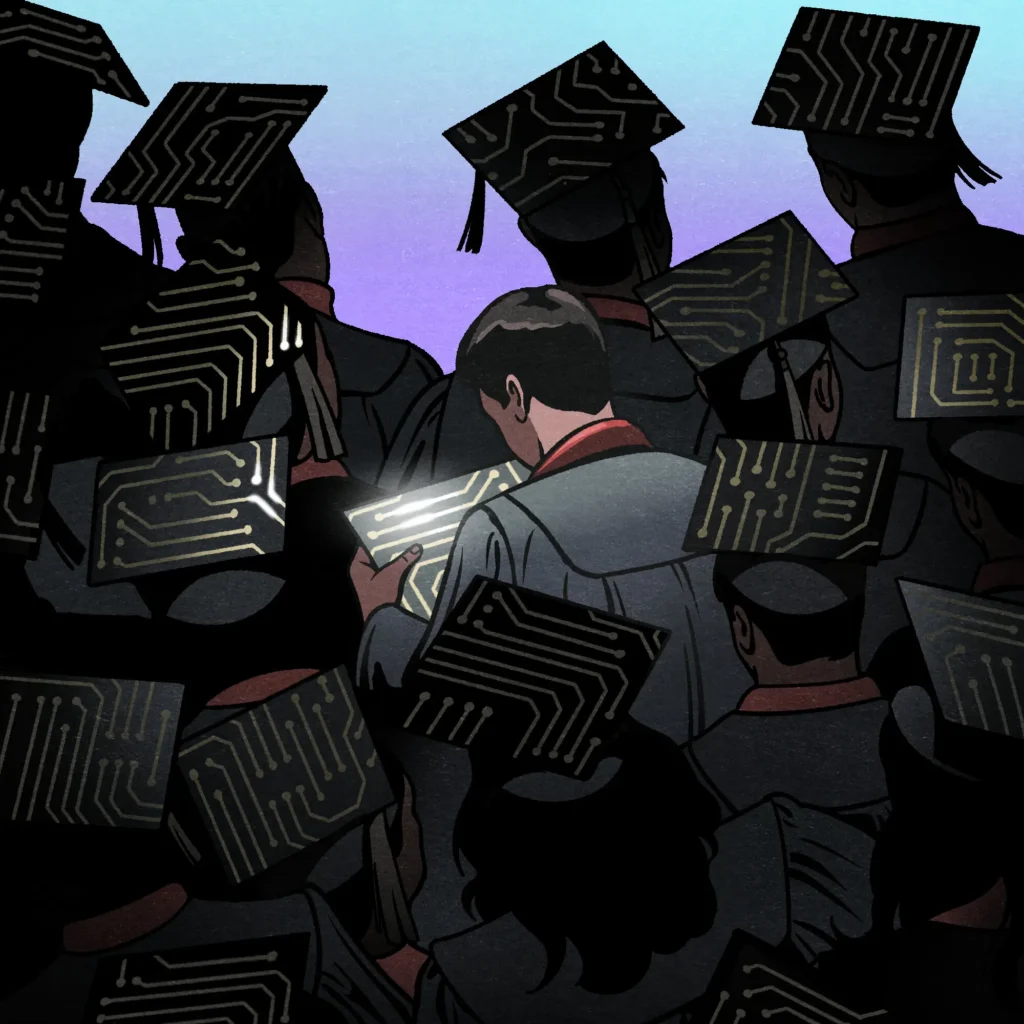
🎓 The College Experience Is Being Rewritten in Real Time
For generations, college operated on a familiar intellectual model:
- read books
- attend lectures
- struggle through assignments
- develop ideas slowly
- write papers independently
- build knowledge through effort
AI disrupts every single layer of that process.
Students can now:
- summarize textbooks instantly
- generate essay drafts
- brainstorm arguments
- solve coding problems
- create study guides
- simulate tutoring sessions
- rewrite assignments in seconds
What once required hours of cognitive labor can now happen in minutes.
And universities are still scrambling to understand what that means.
🤖 The Real Shift Is Psychological, Not Technological
Most public debate focuses on plagiarism.
But students increasingly describe something more unsettling:
AI changes their relationship with thinking itself.
Instead of wrestling with confusion, many now:
- ask AI for instant clarification
- outsource brainstorming
- rely on generated structure
- skip early-stage intellectual struggle
The problem is that intellectual struggle was never a bug in education.
It was the mechanism that created learning.
Without friction:
- memory weakens
- reasoning shortens
- patience declines
- intellectual confidence becomes artificial
And students themselves increasingly recognize this tension.
⚡ Students Are Simultaneously Using AI and Fearing It
One of the strangest contradictions of the AI era is this:
Students depend on AI academically…
while also fearing AI economically.
Many graduates increasingly believe the same systems helping them complete assignments may eventually threaten:
- entry-level jobs
- white-collar careers
- creative industries
- communication work
- analytical professions
That anxiety is becoming visible publicly.
At a 2026 graduation ceremony at the University of Central Florida, students loudly booed a commencement speaker after she praised AI as “the next Industrial Revolution.”
The reaction revealed something powerful:
many students no longer see AI as exciting.
They see it as destabilizing.
🧠 College Was Built Around Scarcity. AI Creates Infinite Abundance
Historically, universities controlled access to:
- expertise
- information
- research
- intellectual guidance
AI breaks that monopoly.
Today, students can ask advanced AI systems to:
- explain philosophy
- teach economics
- debug code
- critique essays
- simulate debate
- translate complex theories
24 hours a day.
For free or nearly free.
This creates an uncomfortable question for higher education:
If knowledge becomes infinitely accessible, what exactly is college selling?
Increasingly, the answer may not be information itself.
But:
- credentialing
- networking
- status
- signaling
- human mentorship
- structured discipline
📚 Essays Are Quietly Losing Their Meaning
The traditional essay may be one of AI’s biggest casualties.
Why?
Because large language models are exceptionally good at producing:
- coherent prose
- structured arguments
- polished summaries
- stylistic imitation
Professors increasingly report difficulty distinguishing:
- student writing
- AI-assisted writing
- hybrid writing
Meanwhile, AI detection tools remain unreliable and controversial.
This creates an educational crisis:
if teachers cannot reliably know who wrote the paper, the paper itself loses value as proof of learning.
And many universities still have no consistent response.
🧩 The “Good Student” Is Being Redefined
Before AI, being a strong student often meant:
- memorization
- writing ability
- research efficiency
- technical execution
Now AI performs many of those functions instantly.
That means future educational value may shift toward:
- original insight
- live reasoning
- discussion skills
- judgment
- creativity
- interdisciplinary thinking
- emotional intelligence
Ironically, AI may force education to become more human again.

💻 Some Students Already Treat AI Like a Cognitive Operating System
For many younger users, AI is no longer just a tool.
It is becoming:
- a tutor
- an editor
- a planner
- a brainstorming partner
- a therapist substitute
- a productivity engine
Some students interact with AI dozens of times daily.
This changes cognitive habits profoundly.
Instead of:
“How do I solve this?”
the default mindset increasingly becomes:
“How do I prompt this?”
That shift sounds subtle.
But it may fundamentally reshape intellectual development.
🏫 Universities Are Quietly Dividing Into Two Camps
A major split is emerging inside education.
Camp 1: Restriction
These institutions:
- ban AI tools
- emphasize handwritten work
- increase in-person exams
- tighten surveillance
Camp 2: Integration
These institutions:
- teach AI literacy
- redesign assignments
- incorporate AI collaboration
- treat AI as inevitable infrastructure
Neither side fully knows what the long-term outcome will be.
But almost everyone agrees:
the old system is gone.
⚠️ The Entry-Level Learning Crisis May Become Catastrophic
One overlooked issue is developmental.
Students traditionally learned through:
- rough drafts
- mistakes
- repetition
- weak first attempts
AI eliminates many of those painful stages.
But those stages often built:
- resilience
- intuition
- independent reasoning
If AI performs too much cognitive labor too early, students may graduate with polished outputs…
without deeply internalized understanding.
That creates what some educators fear is:
competence theater.
🌍 The Economic Value of College Is Being Reexamined
AI is arriving during an already fragile moment for higher education:
- tuition costs remain enormous
- student debt remains high
- public trust is declining
- employers increasingly prioritize skills over degrees
Now students ask:
Why spend four years and massive debt learning skills AI may partially automate anyway?
This question is becoming existential for many universities.
Especially mid-tier institutions without elite brand power.
🤖 AI Might Not Destroy College — But It Could Shrink It
Some analysts believe universities will survive…
but in radically altered form.
Possible futures include:
- fewer traditional campuses
- more AI tutoring systems
- personalized digital learning
- hybrid credential models
- elite universities growing stronger
- smaller colleges disappearing
A growing number of observers believe higher education may split into:
prestige education vs practical AI-assisted training.
🧠 Human Mentorship May Become More Valuable, Not Less
Ironically, AI abundance may increase demand for something rare:
authentic human guidance.
Students may increasingly value:
- professors with unique insight
- live discussion
- mentorship
- intellectual community
- emotional support
- collaborative exploration
Because AI can generate information…
…but it cannot fully replace:
- lived wisdom
- human presence
- moral responsibility
- interpersonal transformation
At least not yet.
🔮 What Happens Next?
Several major shifts are likely:
1. Traditional assignments decline
Essays and take-home work may lose credibility.
2. Oral and live assessment rises
More universities may prioritize:
- discussions
- debates
- presentations
- in-person reasoning
3. AI literacy becomes mandatory
Students who cannot use AI effectively may become disadvantaged.
4. Universities redefine their purpose
Higher education may shift away from information delivery toward:
- judgment formation
- social development
- intellectual identity
- ethical reasoning
❓ Frequently Asked Questions (FAQ)
How is AI changing college education?
AI is transforming:
- writing
- studying
- research
- tutoring
- assessment
- classroom expectations
Are students using ChatGPT for schoolwork?
Yes. Many students use AI tools for brainstorming, summarizing, drafting, studying, and editing assignments.
Is AI making cheating worse?
AI complicates academic integrity because generated work can resemble authentic student writing.
Can professors detect AI writing reliably?
Not consistently. AI detection systems often produce false positives and remain controversial.
Why are students anxious about AI?
Many fear AI could reduce future job opportunities, especially for entry-level white-collar careers.
Will AI make college obsolete?
Probably not entirely. But it may dramatically change how education operates and what universities are valued for.
What skills will matter most in the AI era?
Likely:
- critical thinking
- creativity
- communication
- judgment
- adaptability
- emotional intelligence
- interdisciplinary reasoning
Could AI improve education?
Yes. AI can provide:
- personalized tutoring
- faster feedback
- accessible explanations
- adaptive learning support
if used responsibly.

🧠 Final Thought
The most important thing AI changed in college may not be essays.
Or grades.
Or cheating.
It may be something deeper:
students no longer experience knowledge as something they must slowly earn through struggle.
Instead, knowledge increasingly feels instantly accessible, endlessly generated, and algorithmically optimized.
And that changes the emotional meaning of education itself.
For centuries, universities trained people to search for answers.
Now students carry machines that produce answers instantly.
The next challenge is far harder:
teaching humans why thinking still matters after answers become free.
Sources The New York Times

