
Can AI Replace Genius?
What happens when AI starts writing music…
Answering scientific questions…
Even mimicking creativity?
Is human brilliance still special?
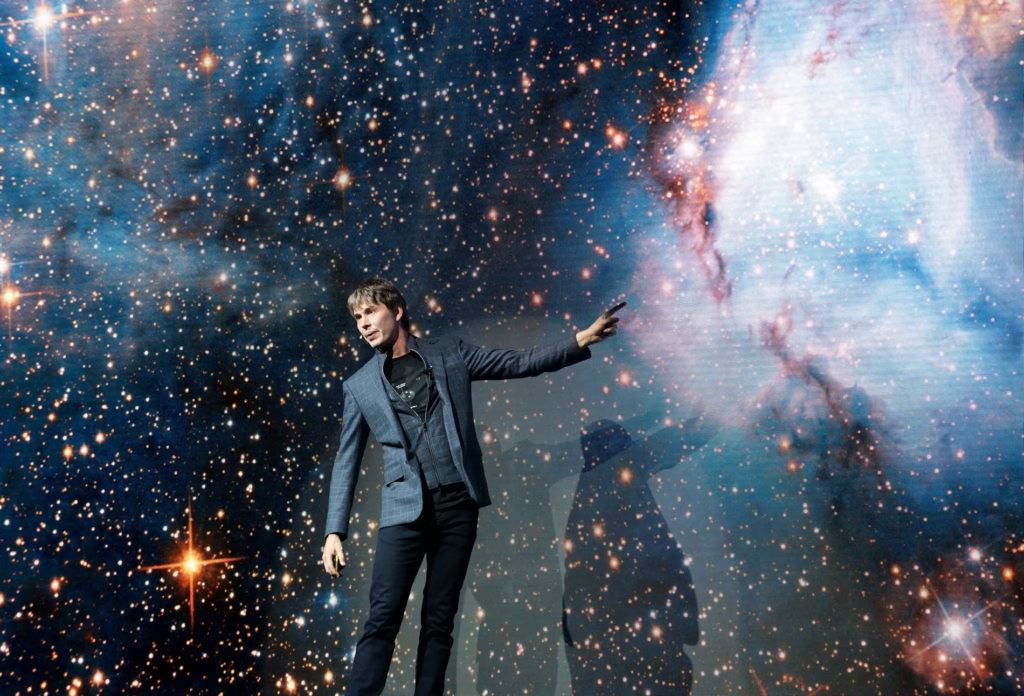
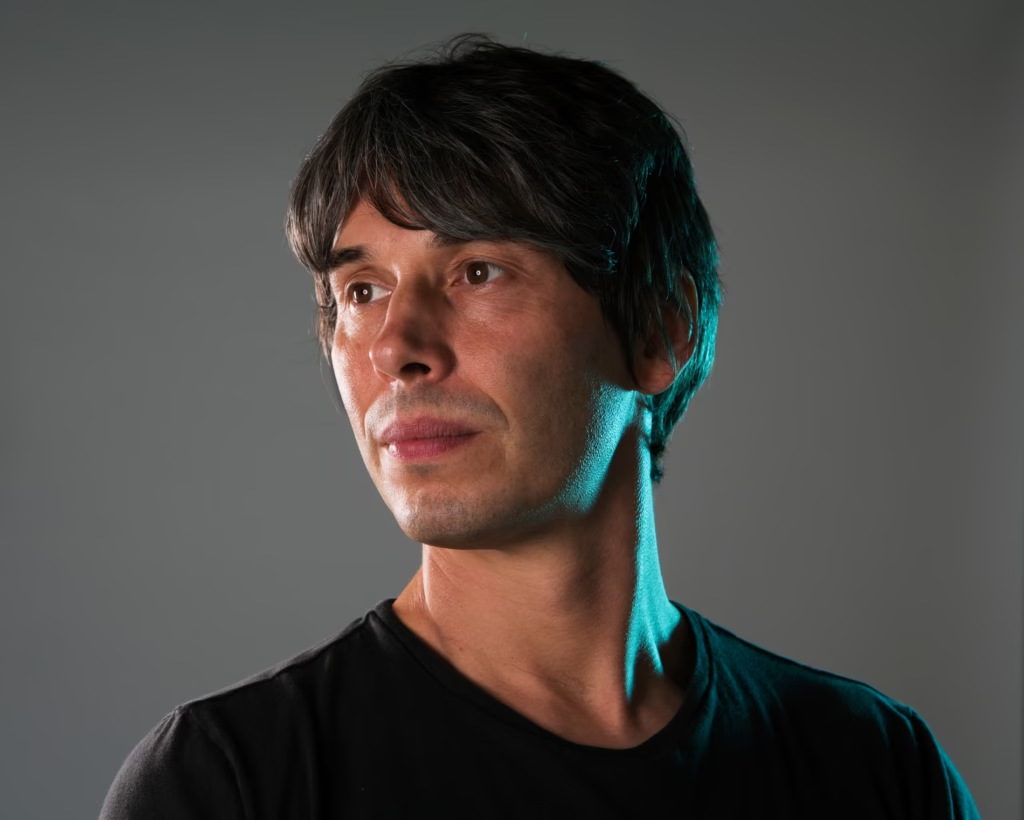
Renowned physicist Brian Cox doesn’t think we’re obsolete—but he does think we’re at a turning point.
👉 AI may be powerful—but it doesn’t understand the universe the way humans do.
And that difference matters more than ever.
🧠 The Core Debate: Intelligence vs Understanding
AI can:
- Solve equations
- Generate theories
- Compose music
But Brian Cox highlights something critical:
👉 AI doesn’t “understand”—it processes.
The difference:
- AI = pattern recognition
- Humans = meaning, curiosity, wonder
👉 Science isn’t just answers.
It’s asking the right questions.
🎵 AI and Creativity: The Paul McCartney Example
AI has already been used to:
- Recreate voices
- Complete unfinished songs
- Generate music in the style of artists
Even Paul McCartney has explored AI-assisted music.
But here’s the key point:
👉 AI can imitate style—but not origin.
Why?
Because creativity comes from:
- Lived experience
- Emotion
- Cultural context
👉 AI doesn’t have a life—it has data.
🔬 Science Isn’t Just Data—It’s Curiosity
Cox emphasizes that science is driven by:
- Wonder
- Curiosity
- Deep questioning
AI can:
- Analyze data faster than humans
But it doesn’t:
- Care about the answers
- Feel curiosity
👉 And curiosity is what drives discovery.
⚠️ The Risk: Mistaking Output for Understanding
One of the biggest dangers:
👉 People may assume AI understands what it produces.
But:
- AI can generate convincing explanations
- Without true comprehension
This creates:
- False confidence
- Misinterpretation
🔍 What the Original Article Didn’t Fully Explore
Let’s go deeper into the broader implications:
1. The Illusion of Intelligence
AI feels intelligent because:
- It communicates fluently
- It responds quickly
But:
👉 It lacks:
- Consciousness
- Intent
- Awareness
2. The Role of Human Intuition in Science
Many breakthroughs came from:
- Intuition
- Unexpected ideas
- Creative leaps
AI struggles with:
👉 True originality beyond patterns.
3. Collaboration, Not Replacement
The future isn’t:
- Humans vs AI
It’s:
👉 Humans + AI
AI can:
- Accelerate research
- Process data
Humans:
- Guide direction
- Interpret meaning
4. The Cultural Value of Human Creativity
Music, art, and science aren’t just outputs.
They are:
- Expressions of human experience
👉 Replacing them with AI risks:
- Losing authenticity
- Diluting meaning
5. The Philosophical Question: What Makes Us Human?
AI forces us to ask:
👉 If machines can do what we do…
What makes us unique?
Cox suggests:
👉 It’s not just intelligence.
It’s:
- Curiosity
- Consciousness
- Experience
⚖️ The Balance: Power vs Responsibility
AI offers:
- Incredible capabilities
- Faster progress
But also:
- Misuse risks
- Over-reliance
- Misunderstanding
👉 The challenge is using it wisely.
🧩 Where AI Helps Science Most
✅ Data Analysis
- Massive datasets
- Complex modeling
✅ Simulation
- Testing theories
- Predicting outcomes
✅ Efficiency
- Faster calculations
- Reduced manual work
👉 AI is a powerful tool—but not a replacement for thinking.
🔮 The Future: Smarter Tools, Not Smarter Minds
AI will:
- Improve rapidly
- Become more capable
But:
👉 It won’t replace:
- Human curiosity
- Human meaning-making
Likely future:
- Scientists working with AI systems
- Creativity enhanced—not replaced
❓ Frequently Asked Questions
1. Can AI replace scientists?
No.
👉 It can assist—but not replace human curiosity and intuition.
2. Is AI truly intelligent?
Not in the human sense.
👉 It processes patterns but lacks understanding.
3. Can AI create original art or music?
It can generate content—but:
👉 True originality comes from human experience.
4. Why is curiosity important in science?
It drives:
- Questions
- Exploration
- Discovery
5. Should we be worried about AI in creativity?
Concern exists—but:
👉 Human creativity still holds unique value.
6. What’s the biggest misconception about AI?
👉 That it understands what it produces.

🔥 Final Thought
AI can calculate.
It can generate.
It can even imitate.
But it doesn’t wonder.
And that might be the most important difference of all.
👉 Because the future of science—and creativity—doesn’t belong to the fastest thinker…
It belongs to the one who keeps asking why.
Sources The Guardian

