
OpenAI’s release of GPT-5.2 is more than a routine model update. It represents a clear signal about where large language models are heading next: more reliable reasoning, tighter safety controls, deeper multimodal understanding, and greater usefulness in real-world, high-stakes environments.
While the official announcement focuses on benchmarks, performance improvements, and developer features, the deeper story is about maturity. GPT-5.2 isn’t just smarter — it’s designed to be trustworthy, deployable, and scalable in ways earlier generations struggled to achieve.
Here’s what GPT-5.2 actually brings to the table, what OpenAI didn’t emphasize enough, and why this release marks a turning point in AI development.
What Is GPT-5.2? (In Plain English)
GPT-5.2 is a general-purpose, multimodal AI model designed to:
- reason more consistently
- follow instructions more reliably
- reduce hallucinations
- handle complex, multi-step tasks
- integrate text, images, and structured data more smoothly
- operate with stronger safety and misuse controls
Rather than chasing raw scale alone, GPT-5.2 focuses on quality of intelligence, not just quantity of parameters.
The Biggest Improvements — Beyond the Marketing
1. More Stable Reasoning (Fewer “Smart Mistakes”)
One of the most meaningful upgrades in GPT-5.2 is reasoning stability.
Earlier models could:
- solve hard problems correctly
- then fail at simpler ones
- or contradict themselves across turns
GPT-5.2 shows better consistency across:
- math and logic
- long conversations
- multi-step planning
- tool-assisted workflows
This makes it more reliable for:
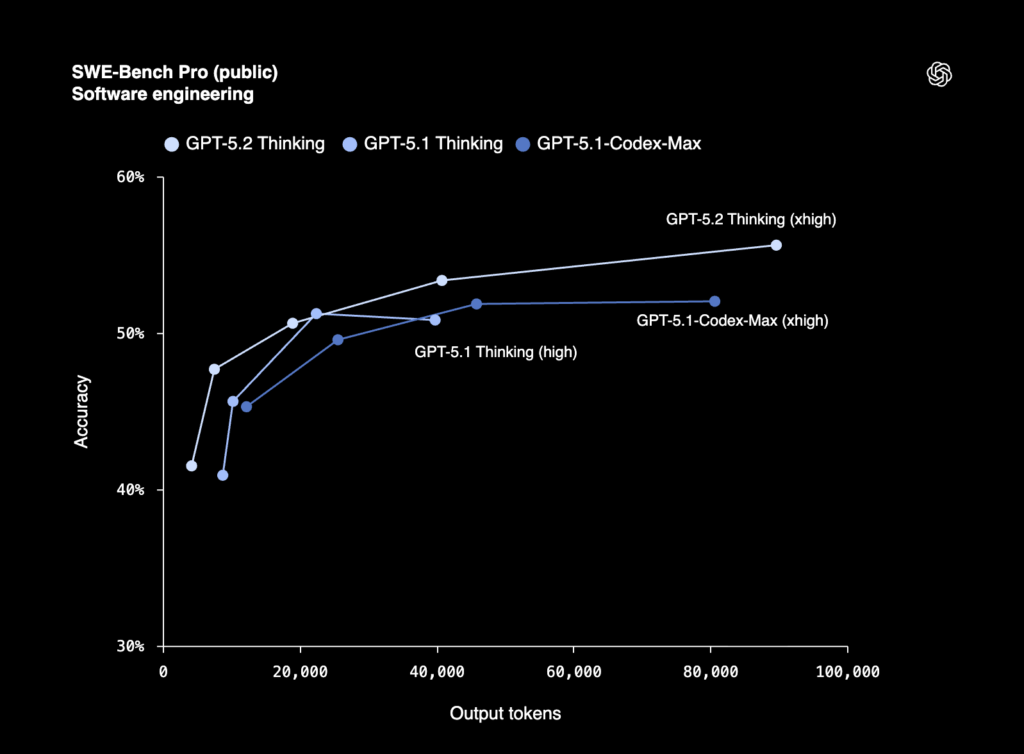
- coding
- data analysis
- research synthesis
- business decision support
2. Dramatically Reduced Hallucinations
GPT-5.2 is better at:
- admitting uncertainty
- refusing when information is missing
- citing assumptions explicitly
- distinguishing fact from inference
This matters enormously for:
- healthcare
- law
- finance
- cybersecurity
- education
Hallucinations haven’t disappeared — but they’re less frequent and easier to detect.
3. Instruction Following That Actually Works
One of the quiet breakthroughs in GPT-5.2 is how well it:
- follows constraints
- respects formatting rules
- maintains role boundaries
- adheres to safety instructions
This makes it far more usable in:
- enterprise workflows
- regulated industries
- automation pipelines
- API-driven systems
4. Multimodal Intelligence Is Now Practical, Not Gimmicky
GPT-5.2 improves how the model:
- understands images in context
- reasons across text + visuals
- extracts structured meaning
- maintains consistency across modalities
This unlocks use cases like:
- document analysis
- chart interpretation
- UI reasoning
- visual debugging
- design feedback
Multimodality is no longer a demo feature — it’s becoming functional infrastructure.
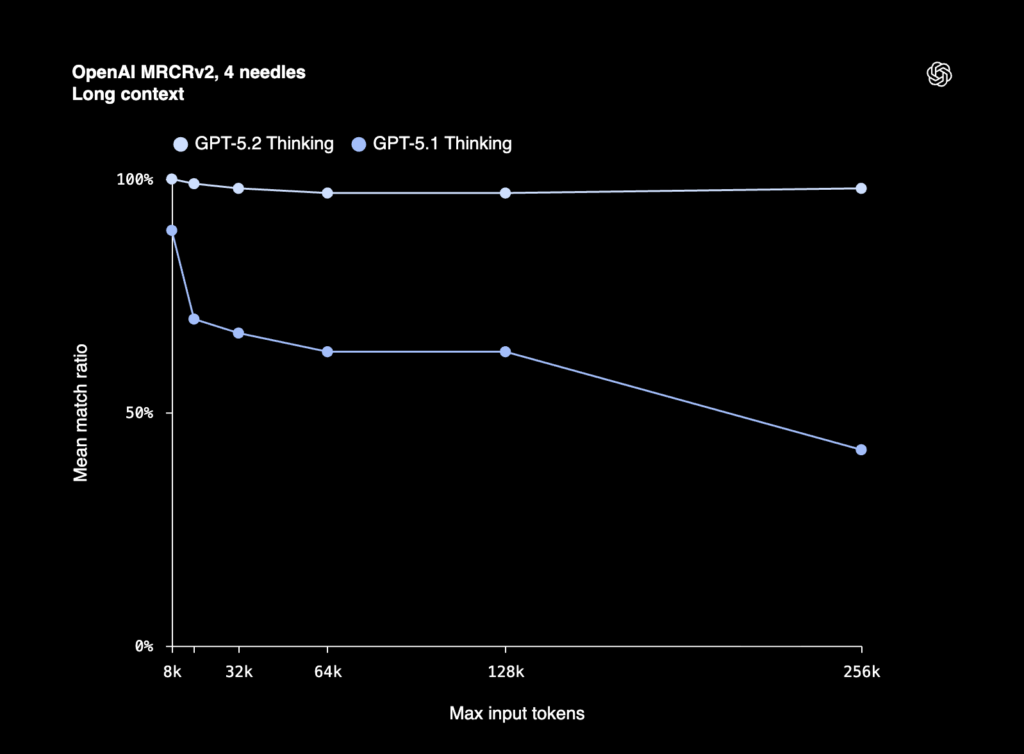
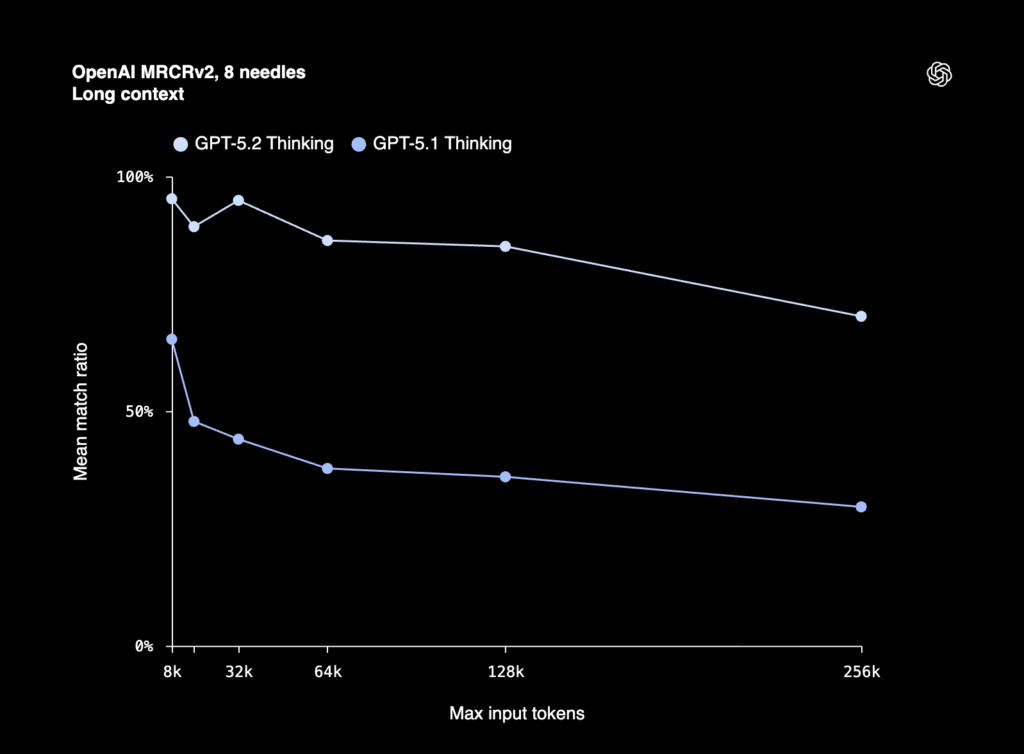
5. Better Long-Context Handling
GPT-5.2 is more capable of:
- tracking long documents
- remembering earlier instructions
- summarizing without distortion
- reasoning across large inputs
This improves:
- legal review
- research analysis
- policy drafting
- large-scale knowledge work
What the Announcement Didn’t Fully Say
GPT-5.2 Is About Control, Not Just Capability
OpenAI is clearly shifting from:
“How powerful can we make this?”
to
“How usable and governable can we make this?”
GPT-5.2 reflects lessons learned from:
- misuse concerns
- enterprise hesitancy
- regulatory pressure
- cybersecurity risk assessments
The model is designed to be deployable at scale without spiraling risk.
This Is a Defensive Release as Much as an Innovative One
GPT-5.2 arrives in a market where:
- competitors have closed the capability gap
- open-source models are improving rapidly
- enterprises demand reliability over novelty
GPT-5.2 strengthens OpenAI’s position not by shocking the world — but by locking in trust.
AI Progress Is Slowing — and That’s Intentional
Unlike earlier leaps, GPT-5.2 is:
- more refined than revolutionary
- more controlled than explosive
- more cautious than flashy
This suggests OpenAI recognizes that raw scaling is no longer enough. The future lies in:
- efficiency
- alignment
- safety
- integration
Who GPT-5.2 Is Really For
Developers
- More predictable outputs
- Better tool-calling behavior
- Fewer edge-case failures
- Easier integration into production systems
Enterprises
- Lower compliance risk
- Improved reliability
- Better auditability
- More stable automation
Researchers
- Improved reasoning chains
- Cleaner outputs
- More consistent experimentation
Everyday Users
- Clearer answers
- Fewer confident mistakes
- Better follow-through on requests
How GPT-5.2 Changes the Competitive Landscape
GPT-5.2 positions OpenAI as:
- a platform provider, not just a model lab
- a trusted enterprise AI vendor
- a leader in controlled intelligence, not uncontrolled capability
The AI race is no longer about who builds the smartest model — it’s about who builds the safest, most useful one.
Limitations That Still Exist
Despite improvements, GPT-5.2 is not magic:
- It can still be wrong
- It still depends on training data
- It still reflects biases
- It still requires human oversight
- It still struggles with true long-term memory
OpenAI is being more honest about these limits — a sign of maturity, not weakness.
What GPT-5.2 Signals About GPT-6 and Beyond
GPT-5.2 hints at the future:
✔ Fewer giant jumps, more steady refinement
✔ Stronger safety layers baked into the model
✔ Tighter integration with tools and systems
✔ More collaboration with regulators
✔ Greater emphasis on reliability over surprise
AI is entering its infrastructure era.
Frequently Asked Questions (FAQ)
Q1. Is GPT-5.2 a big leap over GPT-5?
It’s a meaningful improvement in reliability, reasoning, and safety — not a radical capability jump.
Q2. Does GPT-5.2 hallucinate less?
Yes, significantly less — though hallucinations are not fully eliminated.
Q3. Is GPT-5.2 better for enterprise use?
Absolutely. That appears to be one of its primary design goals.
Q4. Is GPT-5.2 multimodal?
Yes — with improved practical multimodal reasoning.
Q5. Can GPT-5.2 replace human experts?
No. It augments expertise but still requires human judgment.
Q6. Is GPT-5.2 safer than previous models?
Yes — with stronger refusal behavior, monitoring, and guardrails.
Q7. Does GPT-5.2 reason better?
Yes, especially on multi-step and long-context tasks.
Q8. Is this model slower or faster?
Performance is optimized for stability; speed depends on deployment and use case.
Q9. Will GPT-5.2 be open-source?
No. It remains a proprietary model.
Q10. What’s the biggest takeaway from GPT-5.2?
AI progress is shifting from “more power” to more control, trust, and usefulness.
Sources OpenAI

