

In the global race to build powerful computing infrastructure for artificial intelligence, countries are investing billions in supercomputers and data centers. These facilities promise breakthroughs in science, industry and national technological competitiveness.
But not every ambitious project becomes reality.
In Essex, England, a highly publicized plan to build a cutting-edge supercomputer facility once promised to place the region at the center of the UK’s AI and high-performance computing revolution. The project was announced with bold claims about economic growth, innovation and technological leadership.
Years later, the site tells a very different story.
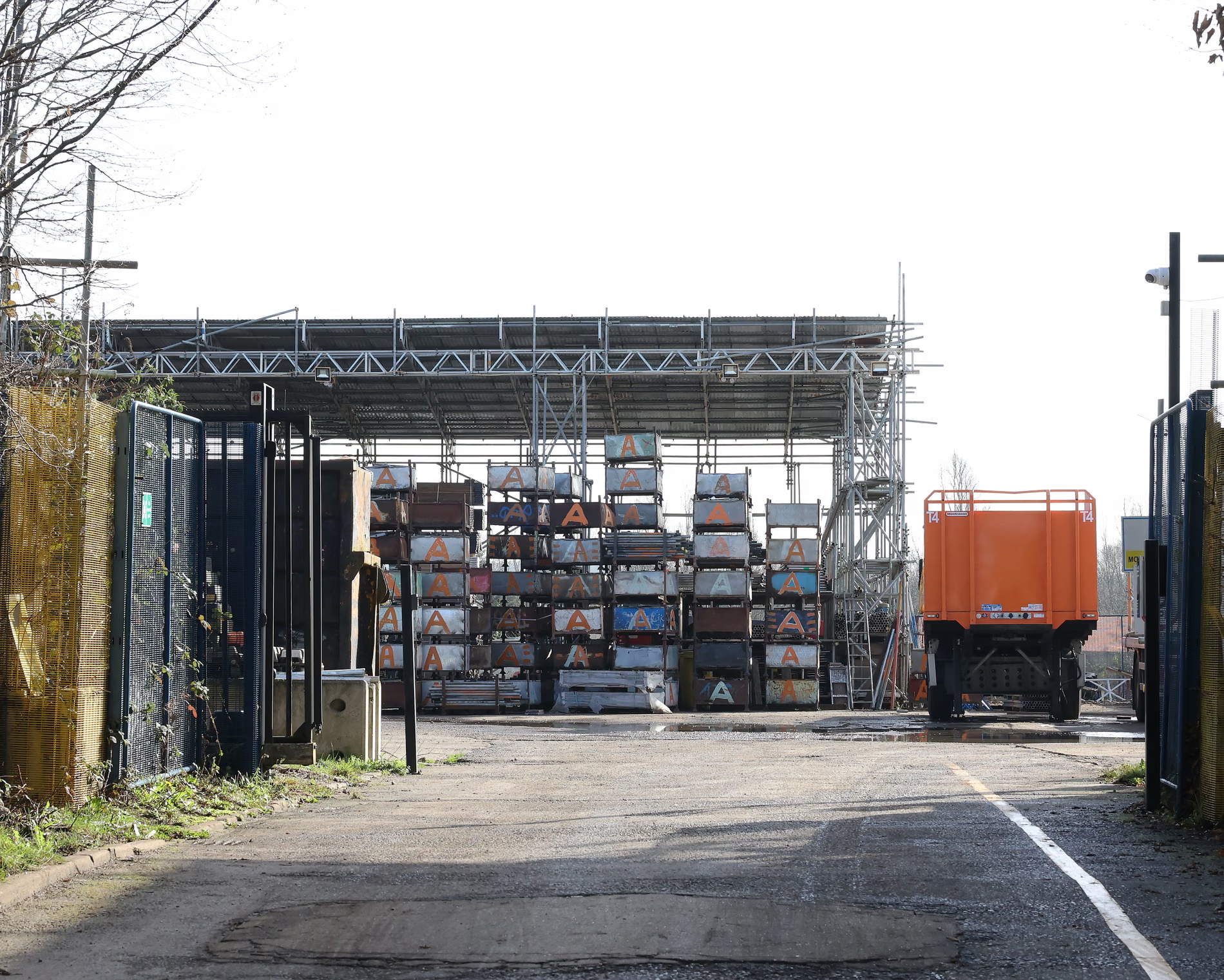
Instead of a world-class computing hub, the location remains little more than a scaffolding yard and scrap-metal storage site—raising questions about hype, accountability and the challenges of building advanced digital infrastructure.
The Vision: A Supercomputer for the AI Era
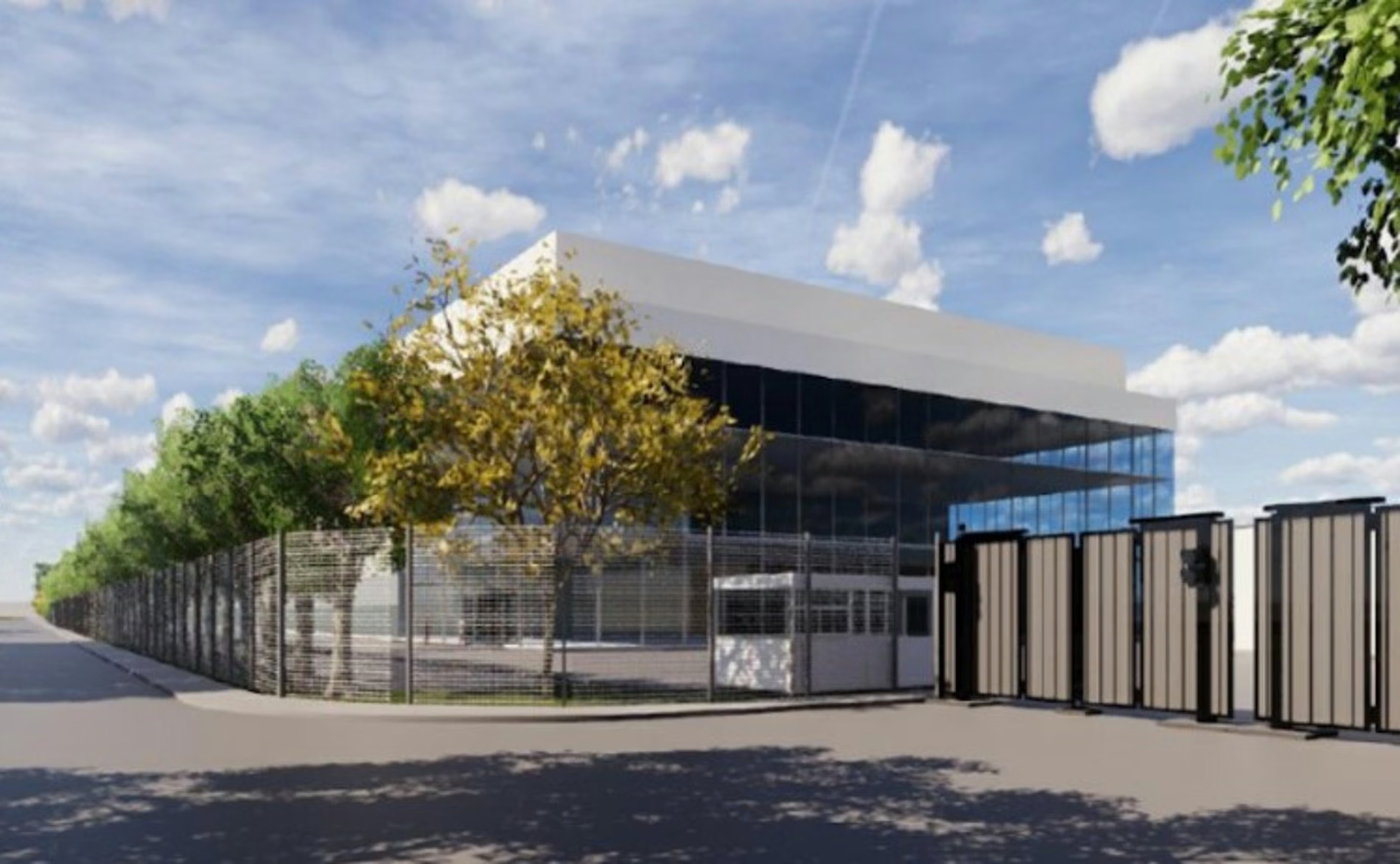
The original proposal envisioned a large-scale high-performance computing (HPC) facility capable of supporting advanced artificial intelligence research and data processing.
Supercomputers are essential for tasks such as:
- training large AI models
- climate modeling
- pharmaceutical research
- advanced engineering simulations
- financial risk analysis
- national security research
The Essex project promised to deliver computing capacity that could compete with other major facilities across Europe.
Supporters argued it would:
- attract technology companies
- create high-skilled jobs
- support academic research
- strengthen the UK’s digital infrastructure
Local leaders hoped the development would turn the region into a new technology hub.
From Press Release to Empty Lot
Despite early announcements and promotional campaigns, progress on the project stalled.
Years after its launch, the promised supercomputer facility never materialized.
Investigations and local reporting revealed that:
- construction never meaningfully began
- major infrastructure was never installed
- the site continued operating as an industrial yard
Residents and observers began questioning whether the project had been realistic from the beginning.
Some critics argued that early announcements created expectations that were never matched by concrete investment or technical planning.
Why Supercomputer Projects Are So Difficult
Building large-scale computing infrastructure is far more complex than announcing it.
A modern supercomputer facility requires enormous resources, including:
Massive Electrical Supply
AI and HPC clusters consume vast amounts of electricity.
Large data centers may require tens or even hundreds of megawatts of power, comparable to the energy consumption of small cities.
Securing stable power infrastructure can be one of the biggest barriers to development.
Specialized Cooling Systems
Supercomputers generate intense heat due to the density of processors operating simultaneously.
Facilities must include advanced cooling technologies such as:
- liquid cooling systems
- immersion cooling tanks
- chilled water infrastructure
Without proper cooling, computing hardware can fail.
High-Speed Networking
Supercomputers depend on ultra-fast fiber networks capable of transferring enormous volumes of data.
These connections must link the facility to:
- universities
- research institutions
- cloud computing providers
- global internet backbones
Installing and maintaining these networks is both expensive and technically challenging.
Advanced Hardware Procurement
Supercomputers rely on specialized chips such as GPUs and AI accelerators.
Global demand for these components has surged, creating supply constraints.
Projects without secure hardware contracts can quickly fall behind.
The Role of Public Funding and Private Investment
Many supercomputer facilities rely on a mix of public funding and private investment.
Governments often support such projects because high-performance computing plays a critical role in:
- national research capabilities
- technological competitiveness
- economic innovation
However, large infrastructure projects sometimes fail when financing arrangements are unclear or overly optimistic.
In the Essex case, questions emerged about whether the financial and technical planning had been sufficiently developed before the project was announced.
The Global Supercomputer Race
While the Essex project stalled, other countries have continued investing aggressively in supercomputing infrastructure.
Examples include:
United States
The U.S. operates several of the world’s fastest supercomputers, including systems used for scientific research, climate simulations and national security.
China
China has heavily invested in supercomputing as part of its broader strategy to lead in artificial intelligence and advanced computing.
Europe
The European Union is funding major HPC initiatives to strengthen digital sovereignty and reduce reliance on foreign technology providers.
These investments highlight how critical computing infrastructure has become in the modern digital economy.
Lessons From the Essex Project
The failure of the Essex supercomputer project illustrates several broader lessons.
Hype vs. Infrastructure Reality
Announcements about AI and computing often generate excitement, but building the underlying infrastructure requires years of planning and billions of dollars.
Local Economic Expectations
Communities often hope technology projects will transform regional economies.
When projects fail to materialize, disappointment and skepticism can follow.
Transparency and Accountability
Large infrastructure projects require clear communication about funding, timelines and technical feasibility.
Without transparency, public trust can erode quickly.
The Future of AI Infrastructure in the UK
Despite the setback, the UK continues investing in advanced computing.
The country has launched multiple initiatives to expand AI research capabilities, including:
- national supercomputing programs
- university HPC clusters
- partnerships with cloud computing providers
As AI applications grow across industries, demand for high-performance computing will continue to increase.
Future projects will likely require closer coordination between government, industry and research institutions.
Frequently Asked Questions (FAQ)
Q: What was the Essex supercomputer project?
It was a proposed high-performance computing facility intended to support AI research and advanced data processing.
Q: Why was the project important?
Supercomputers enable scientific research, AI development and industrial innovation.
Q: Why did the project fail?
Reports suggest that construction never meaningfully began and that financing and infrastructure challenges may have prevented progress.
Q: How powerful are modern supercomputers?
The fastest systems can perform quintillions of calculations per second, enabling complex simulations and AI training.
Q: Are supercomputers only used for AI?
No. They are also used in fields such as climate science, physics, medicine and engineering.
Q: Which countries lead in supercomputing?
The United States, China, Japan and several European countries currently operate many of the world’s fastest systems.
Q: Will more supercomputer projects be built in the future?
Yes. Demand for high-performance computing is growing rapidly due to AI, scientific research and data-intensive industries.

Conclusion
The abandoned supercomputer site in Essex serves as a cautionary tale in the age of AI hype.
While the world races to build the infrastructure powering artificial intelligence, not every ambitious announcement translates into real-world progress.
Building the digital backbone of the future requires more than bold press releases—it demands deep technical expertise, massive investment and long-term commitment.
Without those foundations, even the grandest visions of technological transformation can remain little more than empty lots.
Sources The Guardian

