

Consciousness is the most familiar thing we experience — and the least understood.
You are conscious right now. You have thoughts, feelings, sensations, and a sense of being you. Yet despite centuries of philosophy and decades of neuroscience, science still struggles to answer a deceptively simple question:
Why does any of this feel like something at all?
Modern science has explained how stars form, how life evolved, and how matter behaves at the smallest scales. But consciousness — subjective experience itself — remains one of the deepest unsolved problems in human knowledge.
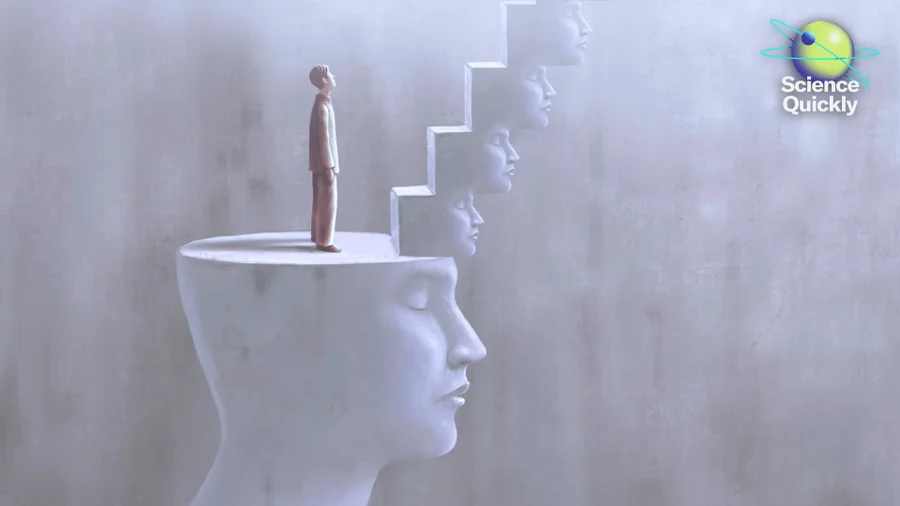
What Scientists Mean by “Consciousness”
In scientific terms, consciousness usually refers to:
- Subjective experience (“what it’s like” to feel pain, see red, or think a thought)
- Awareness of oneself and the environment
- The integration of perception, memory, emotion, and decision-making
Importantly, consciousness is not the same as intelligence, behavior, or information processing. A system can act intelligently without necessarily being conscious — at least in theory.
Why Consciousness Is So Hard to Explain
Science excels at studying things that can be measured from the outside. Consciousness, however, is experienced from the inside.
This creates a unique challenge:
- Brain activity is observable
- Conscious experience is private
We can measure neurons firing — but we cannot directly measure experience itself. This gap lies at the heart of the problem.
The “Easy” Problems vs. the “Hard” Problem
Philosopher David Chalmers famously distinguished between:
- The easy problems: How the brain processes information, integrates senses, and controls behavior
- The hard problem: Why these processes give rise to subjective experience
Neuroscience has made tremendous progress on the “easy” problems. The hard problem remains largely untouched.
Leading Scientific Theories of Consciousness
Scientists have proposed several major frameworks, each attempting to bridge brain activity and experience.
Global Workspace Theory
Consciousness arises when information becomes globally available across the brain, like a broadcast system.
Integrated Information Theory (IIT)
Consciousness corresponds to the degree of integrated information in a system — measured by a quantity called Φ (phi).
Predictive Processing
The brain is a prediction machine, and consciousness emerges from continuous error correction between expectation and sensation.
Higher-Order Thought Theories
We become conscious of mental states when we can think about them.
Each theory explains some aspects of consciousness — but none fully solves the mystery.
What Neuroscience Has Successfully Explained
Science has made real progress in understanding:
- Which brain regions correlate with conscious states
- How anesthesia suppresses consciousness
- Why sleep, coma, and disorders alter awareness
- How attention and perception interact
These findings allow doctors to assess consciousness clinically — but they still don’t explain why experience exists at all.
Why Correlation Isn’t Explanation
A recurring criticism is that neuroscience often explains consciousness by mapping it, not explaining it.
Saying “this brain activity correlates with pain” doesn’t explain:
- Why that activity feels painful
- Why there is experience instead of none
- Why physical processes produce subjective states
This is the explanatory gap that frustrates both scientists and philosophers.
Could Consciousness Be Fundamental?
Some researchers argue that consciousness may not emerge from matter — it may be a fundamental feature of reality, like space or time.
This view appears in:
- Panpsychism (consciousness exists in all matter, to varying degrees)
- Neutral monism (mind and matter arise from a deeper underlying substance)
These ideas were once dismissed as mystical. Today, they are being debated seriously — not because they are proven, but because alternatives remain inadequate.

What AI Has Taught Us About Consciousness
Artificial intelligence has complicated the debate.
Modern AI can:
- Write essays
- Hold conversations
- Recognize images
- Mimic emotional language
Yet most scientists believe AI systems are not conscious.
This suggests that:
- Intelligence does not guarantee consciousness
- Behavior alone cannot prove experience
- Consciousness may require more than computation
AI highlights how little we truly understand what consciousness is.
Why Some Scientists Think Consciousness May Defy Full Explanation
There are several possibilities:
- Consciousness may require new physical laws
- It may not be reducible to objective description
- Our language and concepts may be inadequate
- Human cognition may be incapable of fully explaining itself
This wouldn’t be unprecedented. Some truths in mathematics and physics are provably unreachable from within certain systems.
Why This Question Matters Beyond Philosophy
Understanding consciousness has real-world implications for:
- Medicine (coma, anesthesia, brain injury)
- Ethics (animal consciousness, AI rights)
- Law (responsibility and agency)
- Mental health (subjective suffering)
- The future of artificial intelligence
How we define consciousness shapes how we treat others — human or otherwise.
What the Original Discussion Often Misses
Progress Is Real, Even If Incomplete
Not solving consciousness doesn’t mean science has failed.
Multiple Levels of Explanation Can Coexist
Biology, physics, psychology, and philosophy may all be necessary.
Mystery Isn’t Defeat
Some of science’s greatest advances began as unsolved mysteries.
Frequently Asked Questions
Can science explain consciousness today?
Not fully. It can explain correlations and mechanisms, but not subjective experience itself.
Will neuroscience eventually solve consciousness?
Possibly — but it may require new theories or frameworks.
Is consciousness just brain activity?
That’s the dominant view, but it doesn’t yet explain why experience exists.
Are animals conscious?
Most scientists believe many animals experience consciousness to varying degrees.
Could machines ever be conscious?
Unknown. Intelligence alone may not be enough.
Is consciousness a scientific or philosophical problem?
Both. It sits at the boundary between disciplines.

The Bottom Line
Consciousness remains one of the deepest mysteries science has ever faced.
We know more than ever about the brain — yet we still don’t know why a physical universe gives rise to experience, meaning, and awareness.
Science may one day explain consciousness completely.
Or it may reveal that consciousness is not something to be solved, but something to be understood differently.
Either way, the question forces us to confront something profound:
the strange fact that the universe is capable of experiencing itself — through us.
Sources Scientific American

