

Artificial intelligence made headlines throughout 2025, but many of its most important advances didn’t arrive as flashy consumer products or viral demos. Instead, they unfolded inside laboratories, research institutes, and supercomputing centers—where AI began to change how science itself is done.
From drug discovery and materials science to climate modeling and mathematics, AI in 2025 crossed a threshold: it stopped being just a tool for analyzing data and started acting as a partner in scientific discovery. The result was a series of breakthroughs that may reshape research for decades, even if the public barely noticed at the time.
This article expands on the major scientific AI breakthroughs of 2025, explores what is often missing from summaries, and explains why these developments matter far beyond the lab.
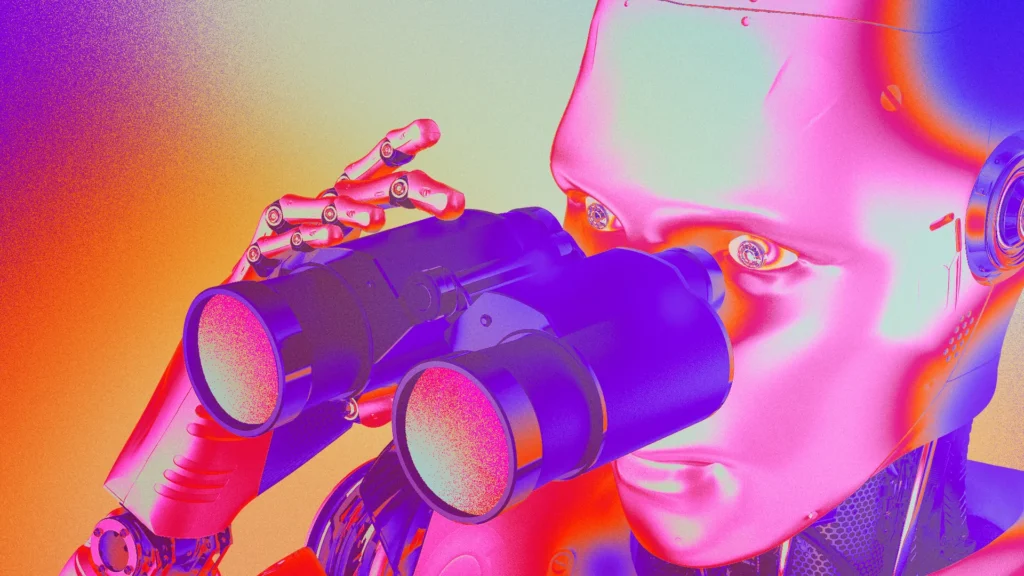
Why 2025 Was a Turning Point for AI in Science
AI had been used in research for years, but 2025 marked a shift in scope and confidence. Three forces converged:
- More powerful foundation and multimodal models
- Vast increases in compute and specialized AI chips
- Better integration between AI systems and experimental workflows
Instead of assisting at the margins, AI began influencing what questions scientists asked in the first place.
Breakthrough Areas Where AI Changed the Game
1. Drug Discovery and Biology
AI accelerated biological research by:
- Predicting protein structures and interactions
- Identifying promising drug candidates in weeks instead of years
- Modeling cellular behavior at unprecedented scale
What’s often overlooked is that AI didn’t replace wet labs—it reshaped them. Experiments became more targeted, reducing cost and failure rates.
2. Materials Science and Chemistry
AI systems helped discover:
- New battery materials
- Stronger and lighter alloys
- More efficient catalysts
By navigating massive chemical search spaces, AI found combinations humans would likely never test manually. This could accelerate progress in energy storage, electronics, and manufacturing.
3. Climate and Earth Systems
In 2025, AI-driven models:
- Improved extreme weather prediction
- Enhanced climate simulations at higher resolution
- Optimized renewable energy forecasting
These advances matter because they directly affect disaster preparedness, infrastructure planning, and climate policy.
4. Physics and Fundamental Science
AI began assisting in:
- Particle physics data analysis
- Astronomical discovery
- Simulation of complex physical systems
In some cases, AI uncovered patterns humans hadn’t noticed, raising philosophical questions about explanation versus prediction in science.
5. Mathematics and Symbolic Reasoning
AI systems demonstrated surprising ability to:
- Suggest novel proofs
- Explore abstract mathematical spaces
- Assist human mathematicians with conjectures
While still limited, these tools hint at a future where AI expands—not replaces—human reasoning.

What Headlines Often Miss
AI Is Becoming Scientific Infrastructure
These breakthroughs weren’t isolated experiments. AI is increasingly:
- Embedded in lab equipment
- Integrated into simulation pipelines
- Used to design experiments automatically
This makes AI a foundational layer of modern research.
Human Judgment Still Matters
Despite impressive results:
- AI can mislead if data is biased
- Predictions require interpretation
- Experiments still need human validation
The best outcomes came from tight human–AI collaboration, not automation alone.
Access Is Uneven
Cutting-edge AI science requires:
- Massive compute resources
- Specialized talent
- Expensive infrastructure
This risks concentrating scientific power in wealthy institutions and countries unless access expands.
Why These Breakthroughs Matter Outside Science
Scientific AI advances spill into:
- Medicine and healthcare
- Energy and climate resilience
- National security
- Economic competitiveness
Countries that lead in AI-driven science may gain long-term strategic advantages.
The Limits Revealed in 2025
Even as AI advanced, it exposed key constraints:
- Lack of causal understanding
- Difficulty explaining predictions
- Dependence on high-quality data
- Enormous energy consumption
These limitations ensure that AI will remain a collaborator—not an independent scientist—for the foreseeable future.
What Comes Next for AI in Science
Looking ahead, researchers expect:
- AI-designed experiments run autonomously
- Deeper integration with robotics
- Better interpretability tools
- Increased focus on safety and validation
- Global competition over AI-enabled discovery
The pace is likely to accelerate—but so will the stakes.
Frequently Asked Questions (FAQ)
Did AI replace scientists in 2025?
No. AI augmented human researchers, speeding up discovery while relying on human judgment.
What was the biggest AI scientific breakthrough?
There was no single moment. The real breakthrough was AI becoming embedded across many disciplines simultaneously.
Are these advances reliable?
They are powerful but not infallible. Human oversight remains essential.
Who benefits most from AI-driven science?
Institutions with access to compute, data, and talent—raising concerns about inequality.
Will AI discoveries accelerate in the future?
Yes, especially as models improve and integration with labs deepens.

Final Thoughts
The most important AI breakthroughs of 2025 didn’t look like revolutions—they looked like quiet transformations. Inside labs, AI began changing how science works: how hypotheses are formed, how experiments are designed, and how knowledge is discovered.
History suggests these shifts matter more than any single headline result. When tools change the process of discovery itself, progress compounds.
The real story of AI in 2025 isn’t that machines became scientists.
It’s that science itself entered the age of artificial intelligence—and there’s no going back.
Sources Axios

