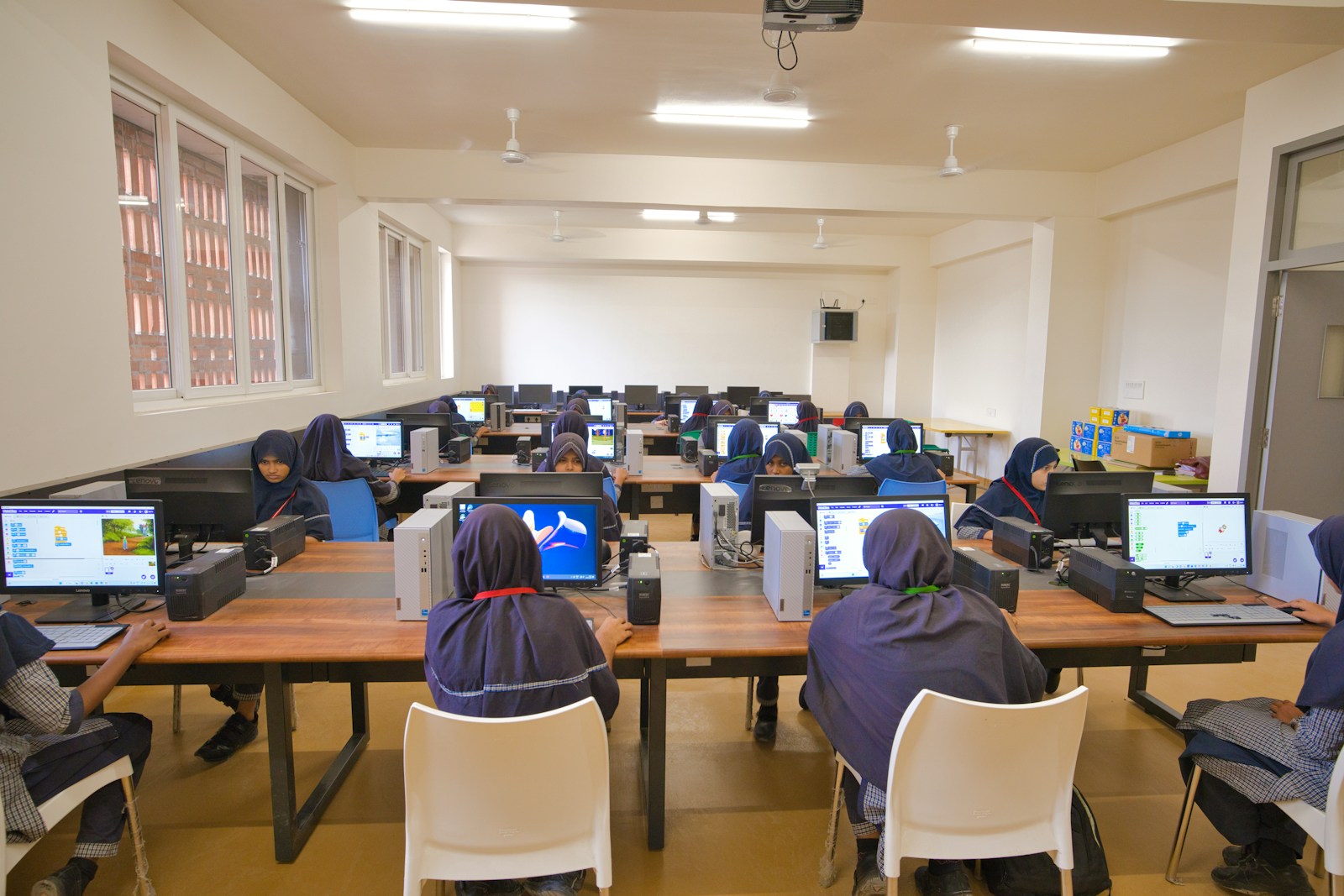
Artificial intelligence didn’t ask permission to enter classrooms. It simply showed up—and students embraced it overnight. From explaining tough math problems to shaping essays and study plans, AI tools have become as common as search engines once were. Meanwhile, many schools are still debating whether AI belongs in education at all.
This growing disconnect reveals a hard truth: students are already learning in an AI-powered world, and education systems are struggling to keep pace.

How AI Became a “New Normal” for Students
For students, AI isn’t a shortcut—it’s support.
They use it to:
- Break down complex topics
- Create study guides in minutes
- Improve grammar and structure
- Practice languages and problem-solving
- Get instant feedback anytime, anywhere
Unlike earlier educational technologies, AI requires no training or setup. It speaks their language—literally. Students didn’t wait for approval because the tools solved real problems immediately.
Why Schools Fell Behind
1. Teachers Were Never Trained for This
Most educators were not prepared for generative AI. Professional development programs haven’t caught up, leaving teachers to learn on their own while managing full classrooms.
2. Outdated Rules Can’t Handle New Tools
Academic integrity policies were written for copy-and-paste plagiarism—not AI collaboration. Bans sound firm but are nearly impossible to enforce.
3. Fear Is Driving the Conversation
Concerns about cheating dominate discussions, overshadowing the deeper question: how should learning change when knowledge is instantly accessible?
4. Unequal Access Complicates Everything
Not every student has the same access to AI tools, raising real equity concerns that schools must address carefully.
What Most AI-in-Education Debates Miss
AI Is Already a Learning Partner
Students aren’t just using AI to finish assignments—they’re using it to understand. For many, AI functions like a patient, on-demand tutor.
AI Detection Tools Are Unreliable
False positives can punish honest students and damage trust. Detection alone is not a sustainable solution.
Traditional Assignments Are Breaking
If AI can complete an assignment instantly, that assignment no longer measures learning. The issue isn’t AI—it’s outdated assessment design.
AI Literacy Is Now a Core Skill
Knowing how to question AI, verify outputs, and use it responsibly is as important as reading and writing in the digital age.

How Forward-Thinking Classrooms Are Adapting
Some educators are already reshaping learning:
- AI-transparent assignments where students explain how they used AI
- AI-assisted learning, not AI-generated answers
- More in-class discussion, reflection, and presentations
- Teaching students to challenge AI, not trust it blindly
The question is shifting from “Did you use AI?” to “How did AI help you think better?”
The New Equity and Ethics Challenge
Equity
AI can widen gaps—or close them—depending on access and guidance. When used well, it can provide personalized support at scale.
Ethics
Students must learn that AI can be wrong, biased, or incomplete. Human judgment remains essential.
Thinking Skills
AI doesn’t replace thinking—it amplifies habits. Used passively, it weakens learning. Used actively, it strengthens it.
What the New AI-Powered Education System Could Become
If schools adapt intentionally, AI could:
- Provide personalized tutoring for every student
- Reduce teacher burnout through automation
- Support diverse learning styles
- Shift education toward creativity, reasoning, and real-world problem-solving
If schools don’t adapt, learning risks becoming disconnected from how students actually think and work.
Frequently Asked Questions
Is using AI for homework cheating?
Not always. It depends on expectations and transparency. Clear guidelines matter more than bans.
Can teachers detect AI-generated work?
Not reliably. Detection tools should not be treated as definitive proof.
Will AI replace teachers?
No. AI supports instruction, but teachers provide mentorship, context, and human connection.
Should schools ban AI tools?
Bans are ineffective. Education and structured use produce better outcomes.
What AI skills should students learn?
Critical thinking, fact-checking, ethical use, and understanding AI limitations.
Final Thoughts
AI didn’t slowly integrate into education—it arrived all at once. Students adapted instantly. Schools hesitated.
The real challenge isn’t whether AI belongs in the classroom.
It’s whether education will evolve fast enough to stay relevant.
The future of learning isn’t AI-free.
It’s AI-aware, human-centered, and intentionally designed.
Sources CNBC