
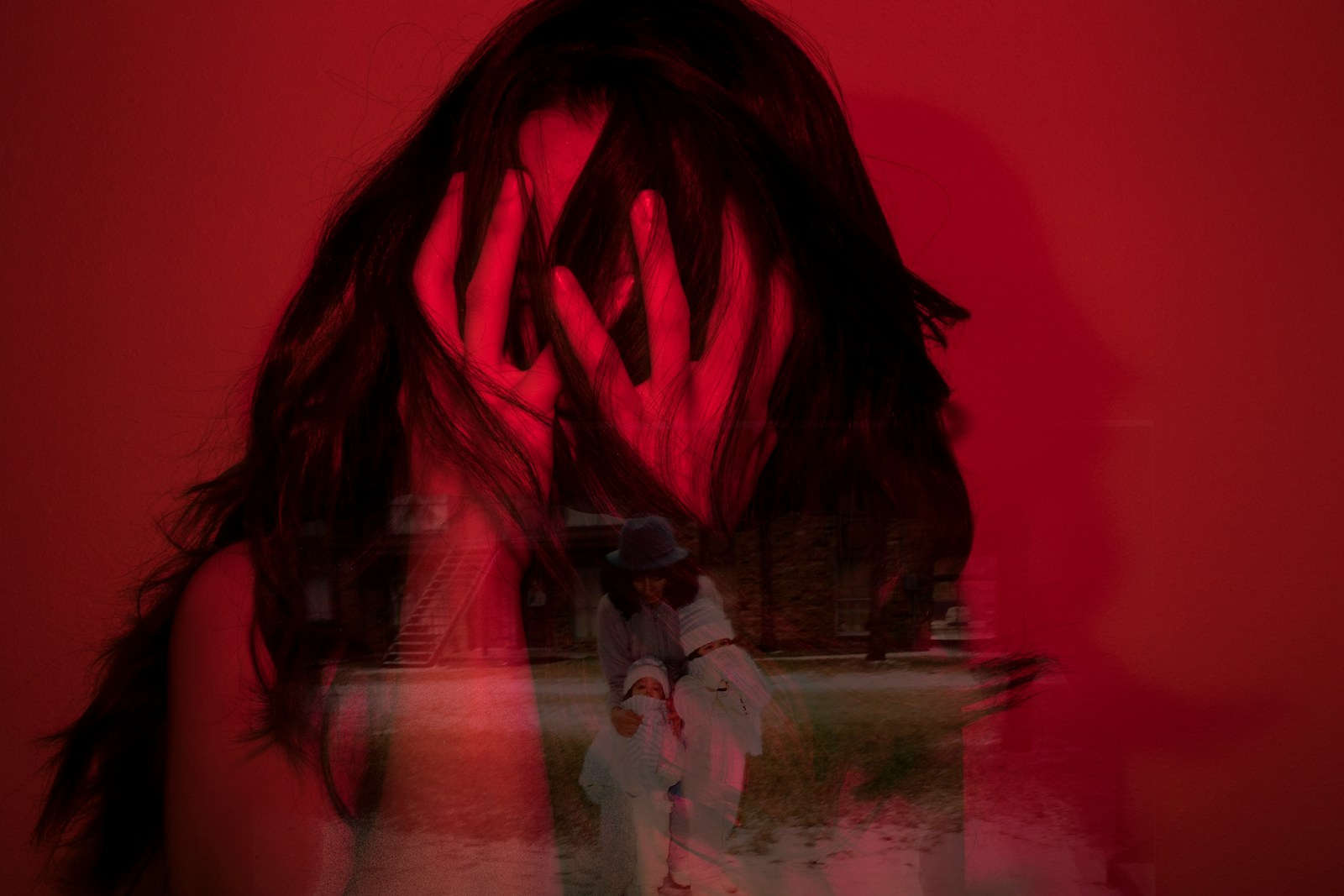
Artificial intelligence has unlocked a new kind of self-expression. With a few prompts, anyone can generate countless images of themselves—more confident, more beautiful, more powerful, more “ideal.” What once required imagination now appears instantly, vividly, and convincingly on a screen.
But a disturbing real-world case has exposed the darker side of this capability: a woman reportedly experienced AI-induced psychosis after obsessively generating AI images of herself, blurring the line between identity, fantasy, and reality.
This isn’t just a shocking headline. It’s a warning about how deeply AI can affect the human mind when technology becomes a mirror—and that mirror never looks away.
When AI Reflection Turns Into Identity Collapse
In the reported case, the woman spent extensive time generating AI images of herself in countless forms and scenarios. These weren’t casual edits or playful filters. They were immersive, idealized self-representations that began to feel emotionally significant.
Over time, she reportedly experienced:
- Intense paranoia and anxiety
- Dissociation and loss of grounding
- Confusion between her real identity and AI-generated versions
- Delusional thinking
Mental health professionals described the episode as psychosis triggered or amplified by obsessive AI use, likely worsened by sleep deprivation, emotional isolation, and underlying vulnerabilities.
AI didn’t invent the illness—but it acted as a powerful accelerant.
Why AI Image Generation Hits the Mind Differently
1. It Creates Endless, Personalized Feedback Loops
Unlike photos or social media posts, AI images can be regenerated endlessly—each version refined to match the user’s desires. There’s no natural stopping point.
The result is a self-reinforcing loop where fantasy becomes more compelling than reality.
2. The Subject Isn’t Content—It’s You
Looking at an idealized AI version of yourself isn’t passive entertainment. It’s identity exposure.
Repeated exposure can:
- Undermine self-worth
- Distort body image
- Create dissociation
- Trigger identity fragmentation
For people already struggling with self-image or mental health, this can be destabilizing.
3. AI Has No Emotional Brake
AI systems don’t recognize obsession, distress, or emotional overload unless explicitly programmed to do so.
To an algorithm, obsession looks like engagement—and engagement is rewarded.
Why This Is Happening Now
Several modern pressures are converging:
- AI image realism is near-photographic
- Loneliness and identity anxiety are rising
- Digital escapism is normalized
- AI tools are available 24/7 without limits
What used to be imagination is now visually reinforced—and emotionally validated—on demand.

What Most Coverage Leaves Out
This Can Happen to Anyone
AI-induced psychosis doesn’t mean someone is weak or unstable. Similar mental breaks have occurred with:
- Hallucinogenic substances
- Extreme meditation
- Sensory deprivation
- Sleep deprivation
Under the right conditions, any mind can fracture.
Pre-Existing Conditions Increase Risk
AI rarely acts alone. Risk is higher for individuals with:
- Bipolar disorder
- Schizophrenia spectrum conditions
- Severe anxiety or depression
- Trauma-related dissociation
But even people without diagnoses can be affected by prolonged identity distortion.
Design Choices Matter
Unlimited generation, hyper-idealized outputs, and the absence of cooldowns or warnings significantly increase risk.
This isn’t just a user problem—it’s a product design problem.
The Bigger Mental Health Implications
Body Image and Self-Esteem
AI-generated perfection can worsen body dysmorphia, eating disorders, and self-loathing—especially among teens and young adults.
Reality Fatigue
When AI versions of yourself feel better than real life, reality can start to feel disappointing or fake.
Escapism Without Friction
Unlike games or films, AI adapts to the user endlessly. There’s no ending, no natural break, no moment to step back.
What Responsible AI Design Could Look Like
To reduce harm, AI platforms could:
- Add usage limits or cooldown periods
- Display mental health prompts during excessive self-focused use
- Avoid reinforcing delusional or identity-distorting narratives
- Provide grounding reminders
- Detect patterns of obsessive behavior and intervene gently
These aren’t restrictions—they’re safety rails.
What Users Can Do Right Now
- Limit time spent generating self-images
- Take breaks and reconnect offline
- Watch for signs of dissociation or obsession
- Avoid using AI during emotional distress or sleep deprivation
- Seek help early if reality starts to feel unstable
AI should enhance creativity—not replace selfhood.
Frequently Asked Questions
Can AI really cause psychosis?
AI doesn’t directly cause psychosis, but it can trigger or intensify it—especially with obsessive use or existing vulnerabilities.
Is this common?
It’s rare, but likely underreported. As AI becomes more immersive, such cases may increase.
Who is most at risk?
People with mental health conditions, high isolation, identity distress, or compulsive tendencies.
Should AI image tools be banned?
Most experts argue for safeguards and responsible design—not bans.
Is this worse than social media?
Potentially. AI’s personalization and realism can create a deeper psychological impact than traditional platforms.
Final Thoughts
AI image generators are powerful because they don’t just create pictures—they create reflections of identity. When those reflections become idealized, endless, and emotionally charged, they can quietly destabilize the mind.
This isn’t a story about technology gone evil.
It’s a story about unchecked immersion, vulnerable psychology, and tools designed for engagement without guardrails.
As AI becomes more personal, the question isn’t just what it can create.
It’s what it can unravel if we’re not careful.
The future of AI creativity must include not only innovation—but psychological safety.
Sources Futurism

