

Artificial Intelligence has already reshaped our world — from automating industries to generating art, code, and even conversations. But in the shadows of this AI revolution, another technology is quietly preparing to make its move: quantum computing.
And now, a growing chorus of scientists and tech leaders are asking a provocative question:
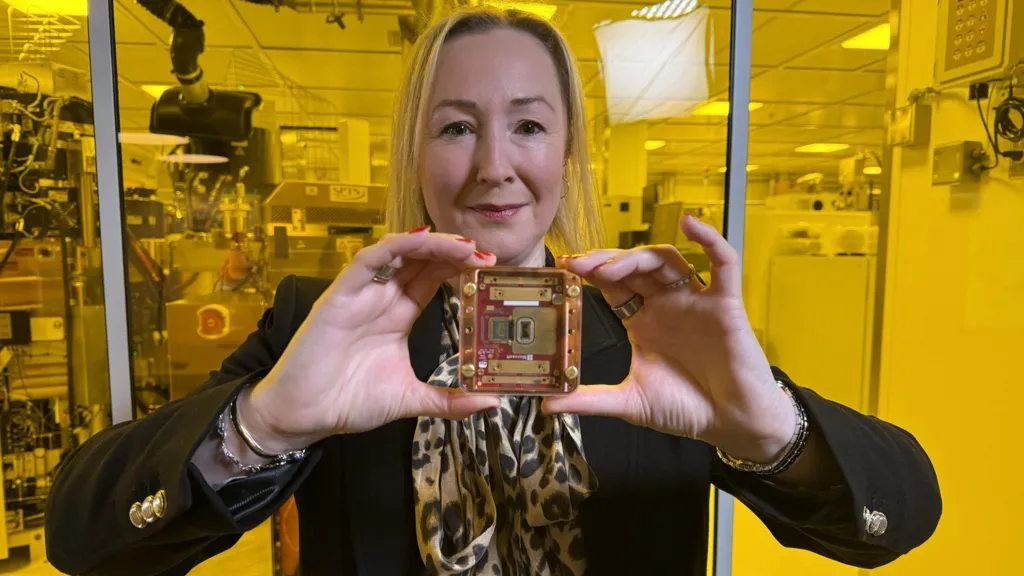
“Will quantum be bigger than AI?”
It sounds like hype. After all, AI is already everywhere — in our phones, workplaces, and daily decisions. Quantum computing, by contrast, still feels abstract, locked in research labs and theoretical debates.
But make no mistake: quantum computing could eventually redefine the limits of what machines can do — potentially eclipsing AI in long-term impact.
Here’s what that really means — and why this isn’t a battle, but a partnership in the making.
AI and Quantum: Two Giants with Very Different Powers
AI and quantum computing are often compared, but they’re fundamentally different beasts.
🤖 AI: The Master of Patterns
AI thrives on data — detecting trends, predicting outcomes, generating text, images, and decisions. It runs on classical computers, using powerful chips like GPUs and TPUs.
AI doesn’t break the laws of physics — it just pushes existing hardware to the limit.
⚛️ Quantum: The Master of Complexity
Quantum computing, on the other hand, isn’t just faster — it’s different.
It’s based on the strange rules of quantum mechanics, where data can exist in multiple states at once (a phenomenon called superposition).
Instead of traditional bits that are 0 or 1, quantum computers use qubits, which can be both at the same time. When combined with entanglement (another quantum property), they can perform calculations that classical computers could never finish — not in a trillion years.
In other words, where AI learns from data, quantum discovers possibilities.
The Real Question: Not “Which Is Bigger,” But “When and How?”
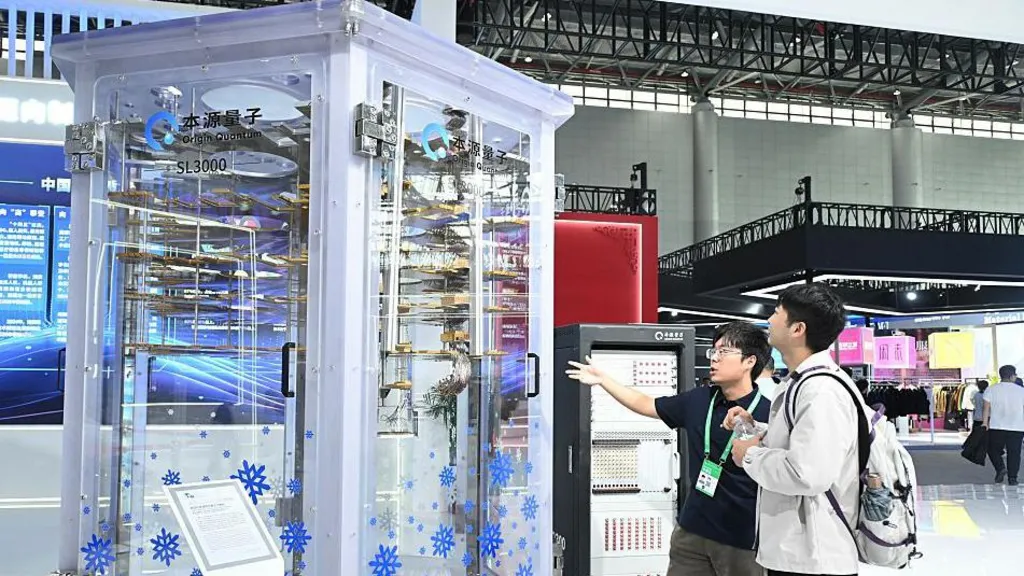
AI is already here, everywhere, today. Quantum computing is still in the early, experimental stage — what researchers call the “NISQ” era (Noisy Intermediate-Scale Quantum).
It’s noisy because quantum computers make errors easily; intermediate because they aren’t big enough yet to solve the world’s toughest problems.
So in the short term, AI is winning the practical race.
But in the long term? Quantum could change everything.
⚙️ AI Works on Data — Quantum Could Redefine It
Imagine solving problems that even the most powerful AI struggles with:
- Modeling complex molecules for new drugs.
- Optimizing global logistics in seconds.
- Breaking encryption algorithms in minutes.
- Simulating climate systems with atomic precision.
Quantum could turn these “impossible problems” into solvable ones.
That’s why tech giants like Google, IBM, Amazon, and Microsoft are all pouring billions into quantum research — even as they scale AI. They know this next computing revolution could make today’s “smartest” machines look like calculators.
The Secret Alliance: AI + Quantum
Here’s what most people get wrong — AI and quantum aren’t rivals.
They’re collaborators in waiting.
Quantum computing could supercharge AI in three big ways:
- Faster training: Quantum processors could crunch AI training data exponentially faster.
- Smarter algorithms: Quantum-inspired optimization could make AI more efficient and less energy-hungry.
- New frontiers: Quantum machine learning could reveal patterns and relationships even today’s most advanced AI can’t see.
And it goes both ways:
AI is already being used to design better quantum hardware, improve error correction, and simulate qubit behavior. In short, AI might be the tool that helps build the quantum future.
What Most People Don’t Realize About Quantum’s Future
The hype around quantum is real — but so are the challenges. Here’s what the headlines often skip:
1. Hardware Is Still Fragile
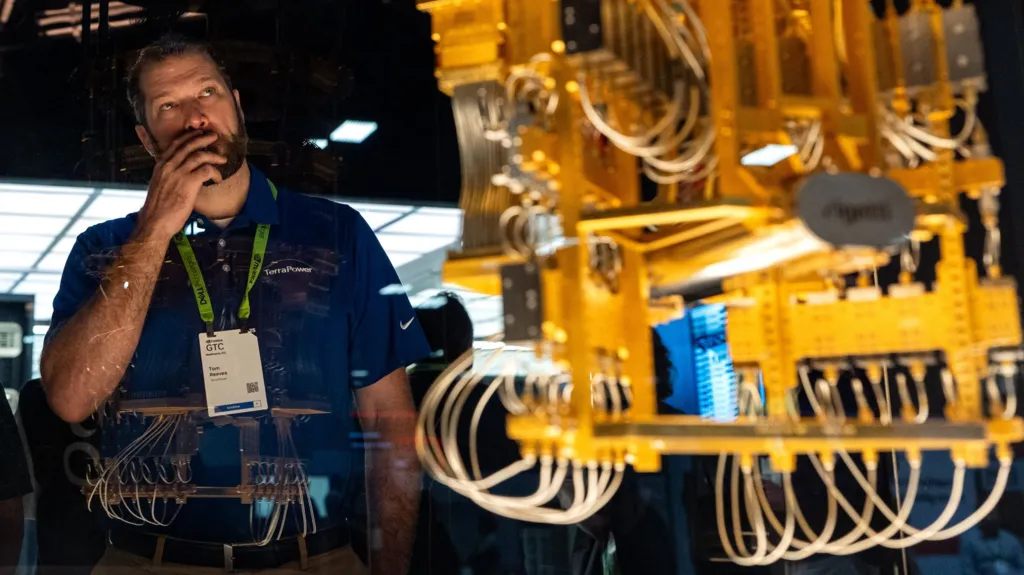
Qubits are sensitive to temperature, vibration, and noise. They must be stored near absolute zero (-273°C), and even then, they “decohere” (lose information) within milliseconds.
2. Errors Are the Enemy
Quantum computers make mistakes — a lot. Scientists are racing to develop error correction systems that can stabilize calculations long enough to be useful.
3. The Software Ecosystem Is Barely Built
AI has Python, TensorFlow, PyTorch, and massive developer communities. Quantum computing, by comparison, is just getting started.
Developers need new programming languages, tools, and frameworks — and a lot of training — before quantum becomes mainstream.
4. Quantum Advantage Is Narrow
Right now, quantum only beats classical computing in specific niches like chemistry simulations and cryptography. General-purpose dominance? Still years (or decades) away.
Quantum and AI: Who Will Shape the Next Decade?
Here’s the simplest way to see it:
- AI is the revolution of today — scaling globally, transforming industries, and generating immediate impact.
- Quantum is the revolution of tomorrow — slower to arrive, but potentially far deeper in its consequences.
If AI is the smartphone era, quantum is the internet’s invention.
When it arrives, everything will change — again.
Frequently Asked Questions (FAQ)
Q: Will quantum computing replace AI?
No. They’re built for different problems. Quantum will likely enhance AI rather than replace it — powering faster, more complex models that classical computers can’t handle.
Q: How far away are we from practical quantum computing?
Experts estimate 5–15 years for broad commercial use. Some niche applications (like materials science and cryptography) could appear sooner.
Q: Why is quantum computing so hard to build?
Quantum bits (qubits) are incredibly fragile and hard to stabilize. Even small amounts of heat or noise can destroy the data. That’s why error correction and cooling systems are so critical.
Q: Can quantum computing make AI smarter?
Potentially yes. Quantum machine learning could drastically speed up AI model training and uncover new insights from data — but this is still experimental.
Q: Should businesses invest in quantum now?
Forward-looking companies in finance, energy, logistics, and pharmaceuticals are already exploring it. For most businesses, it’s wise to stay informed and start building expertise, but not expect short-term returns.
Q: Which will create more jobs — AI or quantum?
AI will dominate job creation in the next 5–10 years. But quantum will open entirely new industries later — in computing, security, materials science, and beyond.
Final Take: The Future Isn’t “AI vs Quantum” — It’s “AI + Quantum”
Artificial intelligence has already changed the way we think, work, and live. Quantum computing might change the rules of reality themselves.
One learns patterns in data; the other simulates the universe at its most fundamental level.
So will quantum be “bigger” than AI?
Maybe. But it’s not a race — it’s a relay. AI is carrying the torch today, and when quantum finally takes the handoff, the next revolution begins.
Sources BBC

