
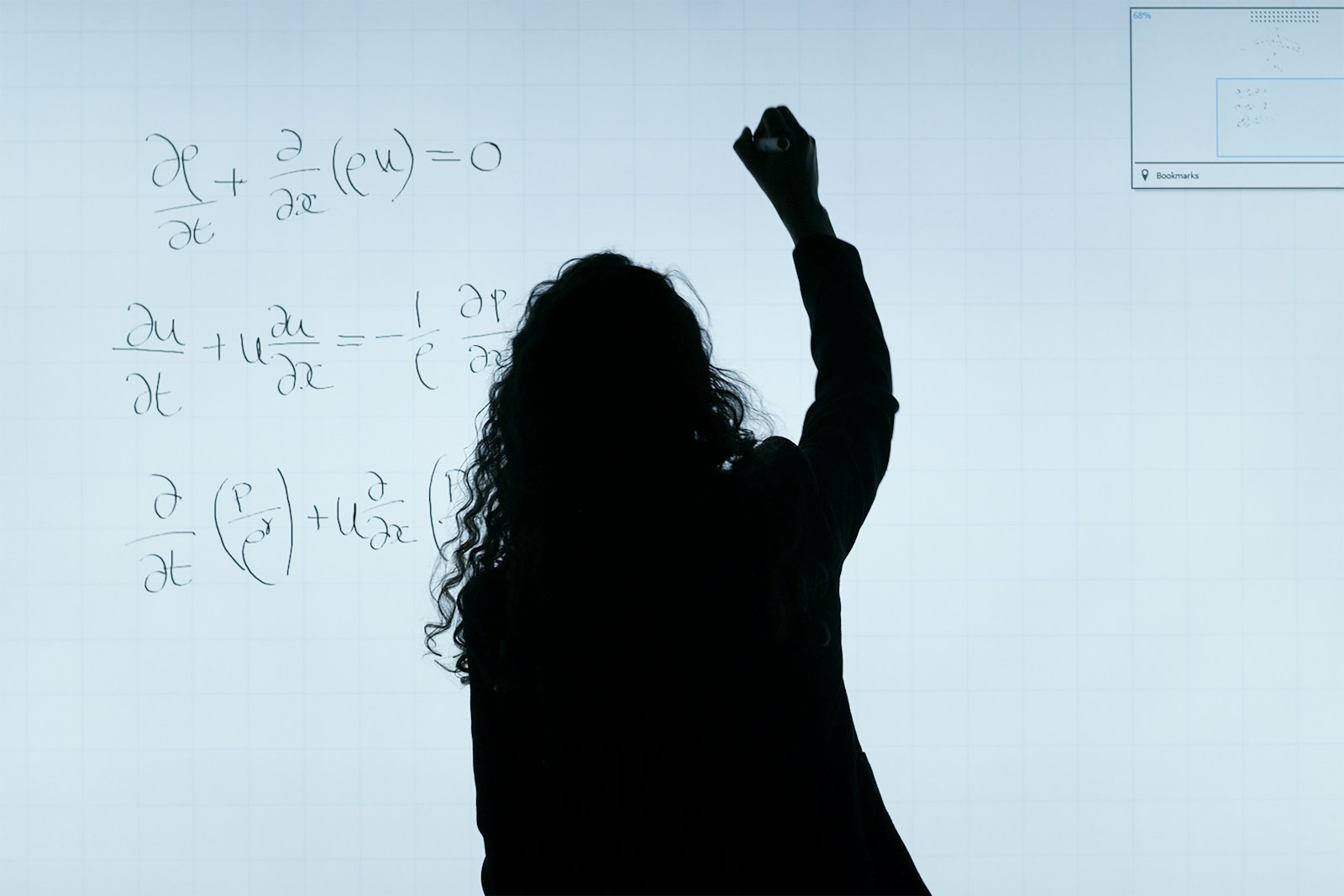
For centuries, mathematics has been regarded as the purest expression of human reasoning — a domain where truth is established through logic, rigor, and proof. Recently, that tradition entered a new phase when artificial intelligence played a meaningful role in advancing a difficult mathematical proof, associated with work connected to renowned mathematician Martin Hairer.
The moment sparked excitement, confusion, and unease. Did AI prove something humans couldn’t? Can machines now do mathematics independently? And what does this mean for the future of mathematical discovery?
This article goes beyond the original reporting to explain what actually happened, how AI-assisted proofs work, why this matters philosophically and practically, what limitations remain, and how mathematicians are responding.
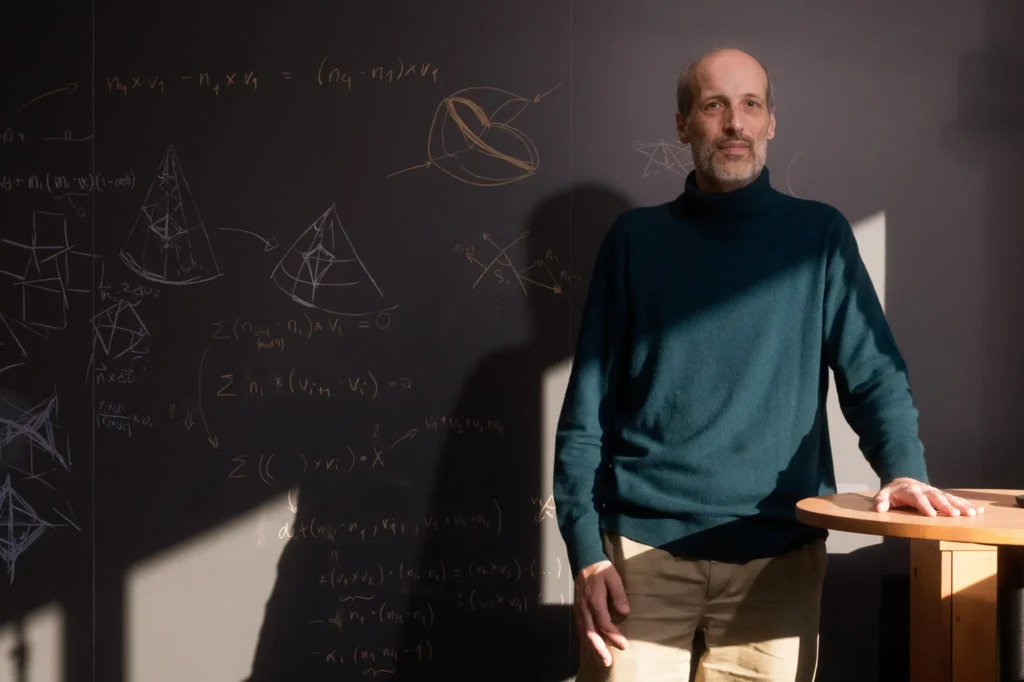
What Happened: AI as a Partner in Mathematical Proof
The breakthrough did not involve an AI suddenly announcing a theorem from scratch. Instead, AI was used as a tool to explore, test, and structure complex mathematical arguments, helping human researchers navigate an extremely difficult problem.
In this case:
- The mathematics involved abstract, highly technical structures
- Traditional human intuition struggled with the sheer complexity
- AI systems helped identify patterns, verify intermediate steps, and explore logical pathways
The final proof still required human judgment, interpretation, and validation.
Who Is Martin Hairer — and Why This Matters
Martin Hairer is a Fields Medal–winning mathematician known for solving problems that were considered intractable for decades. His work often involves:
- Deep abstraction
- Multi-layered logical structures
- Proofs that push the limits of human comprehension
When AI becomes useful at this level of mathematics, it signals something profound: machines are beginning to assist not just with calculation, but with reasoning itself.
How AI Helps With Mathematical Proofs
1. Exploring Vast Search Spaces
Modern mathematical problems often involve:
- Thousands of possible logical paths
- Highly interconnected assumptions
- Subtle constraints
AI can rapidly explore these spaces, ruling out dead ends that would take humans years to check manually.
2. Verifying Consistency and Edge Cases
AI systems can:
- Test whether steps violate hidden assumptions
- Check consistency across large logical structures
- Identify contradictions early
This acts like an ultra-fast proof assistant.
3. Suggesting Structures Humans Might Miss
AI doesn’t rely on intuition the way humans do. This allows it to:
- Propose unconventional formulations
- Spot symmetries humans overlook
- Highlight unexpected relationships
Humans then decide which ideas are meaningful.
What This Was Not
It’s important to clarify misconceptions.
- AI did not independently invent mathematics
- AI did not “understand” the proof in a human sense
- AI did not replace mathematicians
Instead, it functioned as an amplifier of human reasoning.
Why This Is a Big Deal
Mathematics Has a Bottleneck Problem
Modern mathematics faces a paradox:
- Problems are getting harder
- Proofs are getting longer
- Fewer people can fully verify them
AI assistance could:
- Reduce verification time
- Increase confidence in correctness
- Allow mathematicians to tackle problems previously deemed too complex
Trust and Transparency Are Being Redefined
Mathematical truth depends on trust:
- Trust in logic
- Trust in verification
- Trust in peer review
When AI is involved, new questions arise:
- Can humans fully audit AI-assisted steps?
- What happens if a proof is too complex to explain without the machine?
What the Original Conversation Often Misses
AI Changes Who Can Do Advanced Math
AI tools could democratize access to advanced research by:
- Helping early-career mathematicians
- Reducing reliance on elite intuition
- Making collaboration more accessible
This may reshape academic hierarchies.
The Philosophy of Proof Is Being Challenged
Traditionally, a proof must be:
- Checkable by humans
- Understandable in principle
AI-assisted proofs raise a difficult question:
Is a proof still valid if no single human fully grasps every step?
Mathematicians are actively debating this.
This Is Not the First Time Tools Changed Math
History offers parallels:
- Algebraic notation
- Calculus
- Computers and symbolic algebra
Each initially faced resistance — and later became indispensable.
Risks and Limitations
Despite the promise, challenges remain:
- Overreliance on tools
- Difficulty explaining AI-generated structures
- Risk of subtle, undetected errors
- Unequal access to advanced AI systems
Mathematics demands certainty — and AI must meet that standard.
What the Future of Mathematics May Look Like
In the coming years, we may see:
- AI-assisted proof discovery as standard practice
- Human–AI teams tackling grand challenges
- New norms for verification and explanation
- Mathematical education evolving to include AI fluency
The role of the mathematician may shift from solo thinker to orchestrator of reasoning systems.
Frequently Asked Questions
Did AI prove the theorem on its own?
No. Humans guided, interpreted, and validated the proof. AI assisted in exploration and verification.
Can AI now replace mathematicians?
No. Creativity, judgment, and meaning remain human responsibilities.
Are AI-assisted proofs trustworthy?
They can be — but they require rigorous checking and transparency, just like traditional proofs.
Will this change how math is taught?
Over time, yes. Students may learn how to work with proof assistants and AI tools alongside traditional methods.
Is this a threat to mathematical truth?
Not inherently. It challenges conventions, but also strengthens our ability to verify complex truths.
Final Thoughts
AI’s role in advanced mathematics is not about replacing human genius — it’s about extending it.
Just as microscopes expanded what scientists could see, AI is expanding what mathematicians can reason about. The proof associated with Hairer marks a turning point, not because a machine “understood” mathematics, but because humans learned how to think with machines at the highest level of abstraction.
Mathematics remains a human pursuit.
But from now on, it may no longer be a human-only one.
Sources The New York Times

