
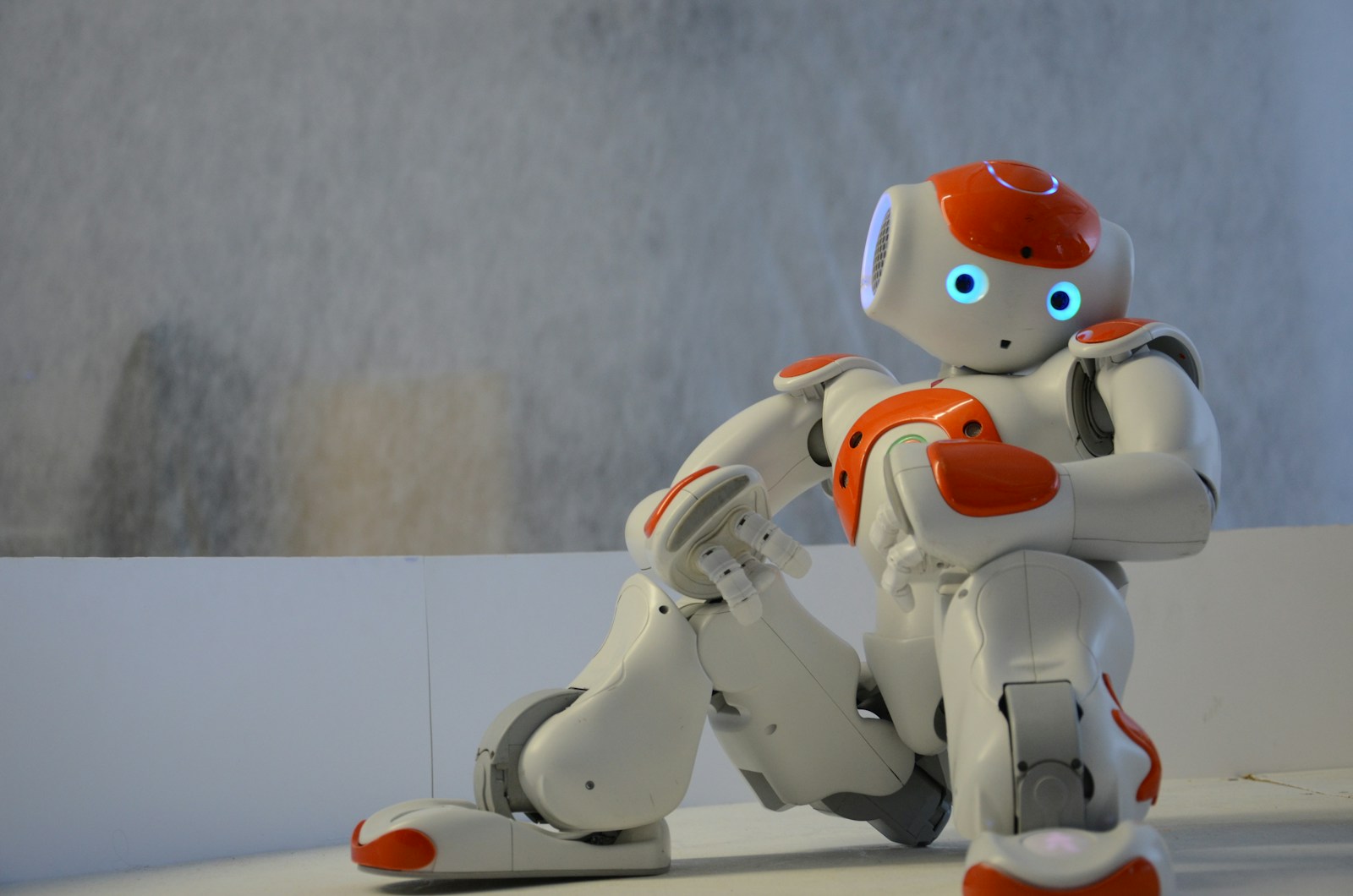
Once a symbol of Western innovation, robotics has now become one of China’s fastest-growing industries — and its next great geopolitical weapon.
While the world’s attention has focused on artificial intelligence, China has quietly built the world’s most advanced robotics ecosystem, from industrial arms to humanoid assistants capable of walking, talking, and even performing factory tasks.
And Beijing’s ambitions are clear: to make China the global leader in intelligent robotics by 2035, fusing AI and automation into an unstoppable manufacturing and military machine.

The Next Industrial Revolution — Made in China
In 2015, Beijing unveiled its Made in China 2025 initiative — a plan to move beyond cheap manufacturing and lead in high-tech industries like AI, semiconductors, and robotics.
A decade later, that plan is coming to fruition.
China now produces over half of the world’s industrial robots, outpacing Japan, South Korea, and the U.S. combined. Cities like Shenzhen, Hangzhou, and Suzhou have become global hubs for robotics startups, supported by generous government subsidies and state-backed venture capital.
And now, China’s robotics companies are turning their attention to humanoid robots — machines designed to mimic human motion, dexterity, and social interaction.
From Assembly Lines to Androids
Companies such as Fourier Intelligence, UBTech Robotics, and Agibot have unveiled humanoid prototypes that rival, and in some cases surpass, those of Western firms like Boston Dynamics, Figure AI, and Tesla’s Optimus project.
- Fourier’s GR-1 can walk, climb stairs, and carry loads up to 50 kg, designed for eldercare and rehabilitation.
- UBTech’s Walker S, showcased at the 2025 World Robotics Conference in Beijing, demonstrated fluid human-like movement and emotional expression.
- Agibot’s production-ready “worker bots” are already being tested in logistics centers and electronics factories.
These robots are not science fiction — they are prototypes for mass production. China’s edge isn’t just in innovation; it’s in scale.
“China can make a million of something faster than anyone else can make ten,” says Dr. Marina Kwon, a robotics researcher at MIT. “That’s what makes this moment so significant — it’s not just research, it’s deployment.”
The U.S.-China Robotics Race
The robotics race is now an extension of the broader AI and semiconductor rivalry between Washington and Beijing.
While American companies such as Tesla, Figure AI, and Boston Dynamics lead in design sophistication, Chinese firms dominate the supply chain — from sensors and servomotors to lithium batteries and manufacturing plants.
The U.S. government’s export restrictions on advanced chips have slowed China’s progress in AI, but robotics offers Beijing a new route to technological dominance — one that relies more on engineering and manufacturing precision than on high-end GPUs.
In other words, China’s strength lies not in algorithms, but in embodied intelligence — AI with a physical form.
Strategic Implications: Beyond the Factory Floor
Humanoid robotics has implications far beyond assembly lines.
1. Military Applications
Defense analysts warn that China’s advancements in robotics could extend to military automation — from logistics bots to autonomous combat units. The People’s Liberation Army (PLA) is already testing robotic exoskeletons and AI-controlled drones.
2. Aging Workforce Solution
With a shrinking population and aging workforce, robots could fill critical labor shortages in healthcare, eldercare, and infrastructure maintenance.
3. Export Power
China aims to export its robots globally, especially to the Global South. Affordable, AI-powered machines could redefine industrial production in Africa, Latin America, and Southeast Asia — spreading Beijing’s technological influence.
4. Soft Power and Surveillance
Humanoid robots embedded with facial recognition and natural language AI could also enhance China’s domestic surveillance apparatus and “smart city” initiatives.
The Ethical Crossroads
As robots become more human-like, ethical concerns multiply.
- How much autonomy should humanoid robots have?
- What rights, if any, should they possess?
- How do we prevent their misuse in warfare or authoritarian control?
China’s rapid deployment of social robotics — from AI teachers in schools to emotion-detecting customer service bots — has reignited global debates about privacy, consent, and emotional manipulation.
Critics warn that in the wrong hands, humanoid AI could become a new tool of psychological influence and state propaganda.
Global Ripple Effects
China’s rise in robotics could reshape global labor markets.
If humanoid robots become cheap and scalable enough, manufacturing could “re-shore” — not back to America, but to automated smart factories in China.
Meanwhile, developing nations that rely on low-cost labor could find their economic models disrupted. The result could be a new form of technological dependency, where countries buy Chinese robots instead of hiring local workers.
This shift could redefine global inequality — not between nations that have labor, but between those that have robots.
Frequently Asked Questions (FAQs)
| Question | Answer |
|---|---|
| 1. How advanced are Chinese humanoid robots compared to Western ones? | Comparable in many respects. China leads in manufacturing scale, while the U.S. leads in AI sophistication and design aesthetics. |
| 2. What industries are adopting robots fastest in China? | Electronics, logistics, healthcare, and eldercare. Industrial automation is already widespread. |
| 3. Why is China investing so heavily in robotics? | To counter demographic decline, boost productivity, and achieve technological independence. |
| 4. Are Chinese robots used militarily? | Officially no, but robotics and AI research are closely linked to defense applications in China. |
| 5. What role does AI play in these robots? | AI enables perception, language interaction, and adaptive behavior, making robots more autonomous and human-like. |
| 6. How does the U.S. compare? | American firms innovate rapidly but face higher production costs and slower scaling. |
| 7. Are these robots exported globally? | Yes — China exports industrial and service robots to over 100 countries, often at lower prices than Western competitors. |
| 8. What ethical concerns exist? | Privacy, surveillance, labor displacement, and emotional manipulation. |
| 9. How does this affect the global workforce? | Routine labor jobs may decline as humanoid robots replace workers, especially in logistics and manufacturing. |
| 10. What’s next? | China plans to mass-produce humanoid robots by 2027, integrating them into public services, healthcare, and smart factories. |
Final Thoughts
China’s robotics revolution is not just technological — it’s geopolitical, social, and philosophical.
By merging AI with mass manufacturing, Beijing is positioning itself not just as the world’s factory, but as the world’s factory of intelligence.
The question for the rest of the world isn’t whether the Chinese robots are coming — they already are. The question is whether we’ll be ready to live, work, and compete alongside them.

Sources The Washington Post

