
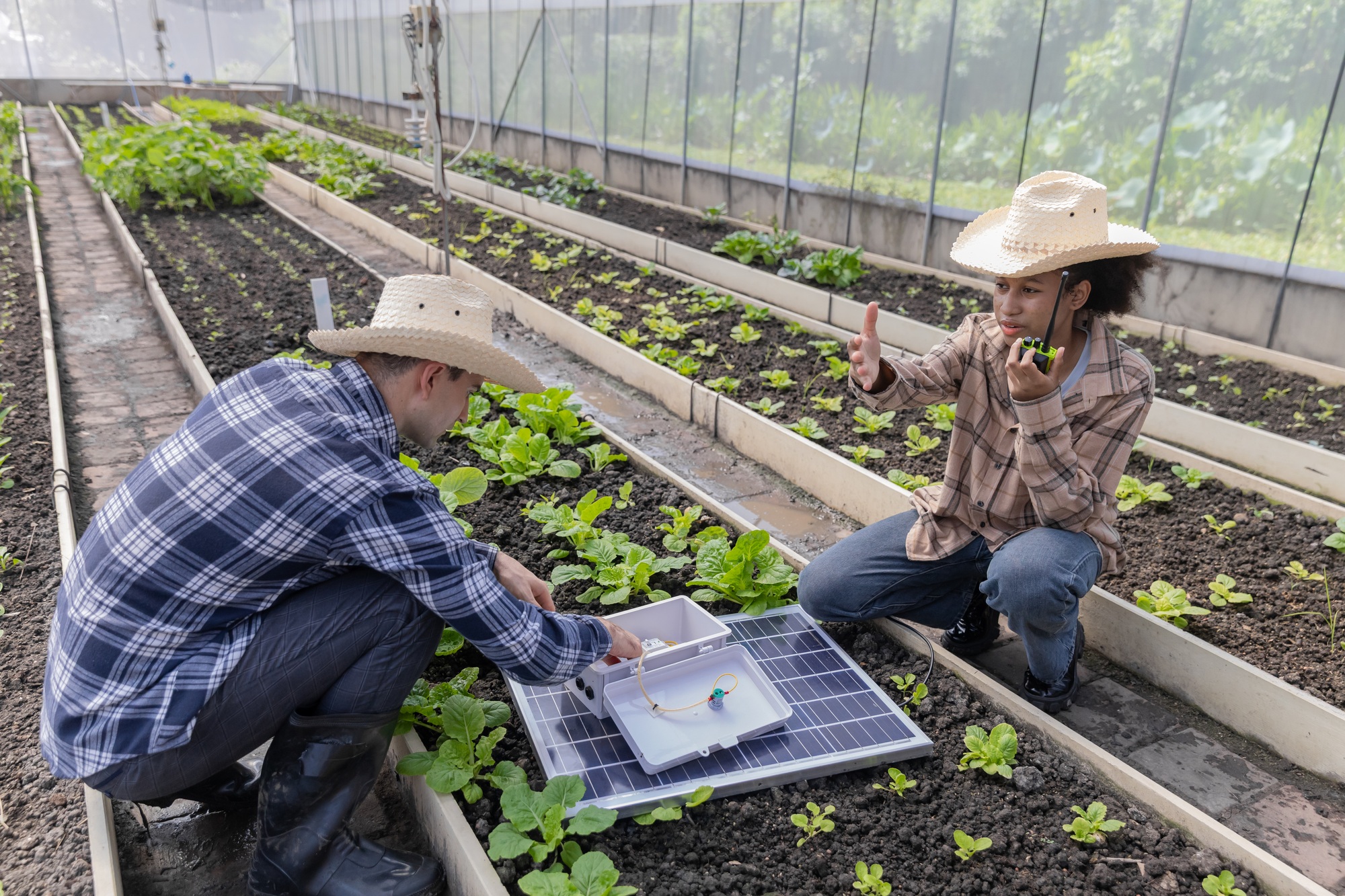
How AI, Drones, and Smart Machines Are Transforming Agriculture from Soil to Supermarket
The fully autonomous farm isn’t a far-off fantasy—it’s already plowing fields, picking strawberries, and managing crops with barely a human in sight. Powered by drones, smart tractors, robotic arms, and artificial intelligence, agriculture is being reshaped before our eyes.
Here’s what the new era of “thinking farms” looks like, how it works, and what it means for our food system—and your next meal.

🚁 Drones That Scout. Robots That Harvest. AI That Decides.
Forget the farmer with a clipboard. Today’s fields are dotted with drones that fly over crops, capturing data in real-time to identify issues like pests, drought, and disease. These drones use advanced sensors and AI-powered imaging to detect what the human eye can’t—sometimes before symptoms even appear.
Meanwhile, robotic harvesters roam the rows of berries, tree nuts, and vegetables. With camera-guided arms and gentle grippers, these machines pick produce with astonishing precision, ensuring less waste and damage.
Autonomous tractors—guided by GPS, AI, and onboard sensors—plant, plow, and even fertilize the fields with optimal efficiency, using just the right amount of resources for each square meter of soil.
🌍 Why Autonomous Farms Are Growing Fast
- Labor shortages are pushing farmers to find high-tech solutions.
- Precision agriculture saves money, boosts yield, and reduces environmental harm.
- Electric robotics reduce emissions and fuel dependency.
- AI-driven decision-making helps farmers respond instantly to changing weather, soil, and market data.
What used to take a team of workers and weeks of trial-and-error now happens in hours—guided by software and executed by robots.
🧠 Farms That Learn and Evolve
Autonomous farms aren’t just robotic—they’re self-learning systems.
Data collected from drones, satellites, ground sensors, and weather feeds trains machine learning models that recommend the best times to plant, irrigate, and harvest. This data loop allows farms to optimize continuously, season after season.
Companies like Bonsai Robotics, FarmWise, and SwarmFarm Robotics are leading the way with innovations ranging from AI-powered harvesters to weed-zapping laser robots.
🚧 But There Are Hurdles
- Robotic dexterity is still evolving—especially with soft fruits and unpredictable terrain.
- Upfront costs can be high for small and mid-size farms.
- Regulatory frameworks around self-driving farm machinery are still catching up.
- Many consumers and farmers alike have concerns about data privacy, AI oversight, and job displacement.
Still, most experts agree: automation isn’t replacing farmers—it’s giving them a smarter set of tools.
❓ FAQs About Fully Autonomous Farming
Q: Will autonomous farms replace human workers?
Not entirely. While some repetitive jobs will shift to machines, new roles in AI monitoring, maintenance, robotics, and data analysis are emerging.
Q: Can small farms afford these technologies?
Costs are dropping. Leasing, “robot-as-a-service,” and shared equipment models are making autonomy more accessible.
Q: Are AI-run farms sustainable?
Yes. They use fewer chemicals, conserve water, reduce waste, and lower emissions through electric and precision systems.
Q: Are fully autonomous farms in use now?
Yes. Pilot farms in the US, UK, Australia, and Japan are already growing, managing, and harvesting entire crops autonomously.
🌾 The Takeaway
The next generation of agriculture won’t be defined by tractors—it will be defined by data, drones, and robotic intelligence. These smart farms aren’t just futuristic—they’re real, and they’re here to feed a growing planet more sustainably and efficiently.
And whether you’re a farmer or just someone who eats—you’re already part of the harvest.

Sources The Wall Street Journal

