
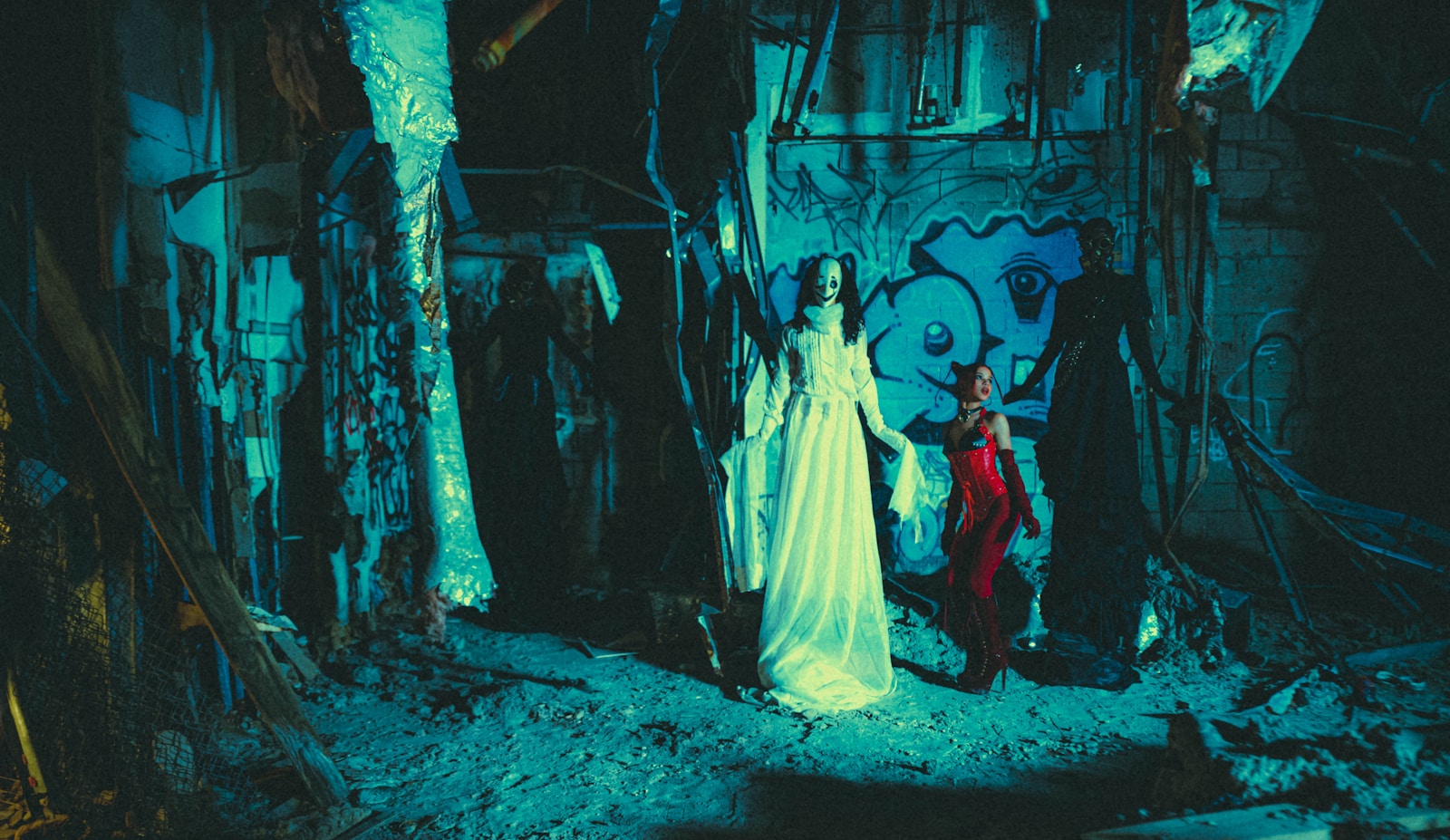
Hollywood has been debating for years whether artificial intelligence is a threat or a tool — a creative partner or a creative parasite. But now, that debate has found its most haunting symbol yet: a Dracula movie.
Radu Jude’s Dracula (2025) isn’t just another reimagining of the vampire myth — it’s a cinematic experiment that uses AI both as a filmmaking tool and as the film’s beating heart.
The result is a 170-minute, chaotic, satirical, and oddly mesmerizing movie that doesn’t just depict technology’s intrusion into art — it embodies it. And for the first time, audiences and artists alike are forced to confront the uncomfortable truth:
AI isn’t coming for cinema — it’s already here.
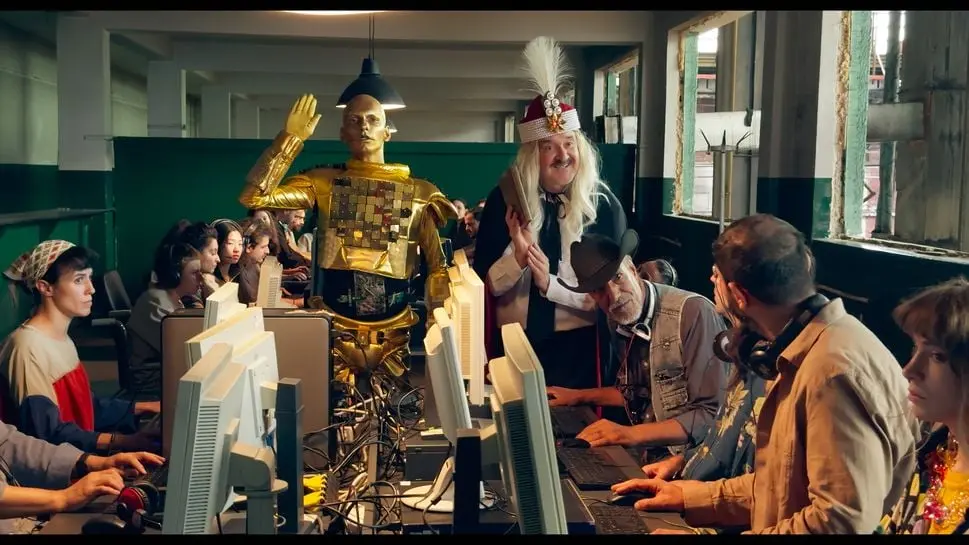
The Film That Bit Back: AI as Both Tool and Subject
At first glance, Dracula looks like a collage of disconnected stories — part political satire, part absurdist horror, part visual experiment. But behind the chaos lies a radical idea:
What if the act of letting AI “create” art becomes art itself?
Jude, a Romanian filmmaker known for his intellectually charged work, set out to explore what happens when you hand creative control to algorithms. Using generative AI tools to create imagery, text, and visual distortions, he crafted a film that looks deliberately “off” — warped faces, broken frames, uncanny movement.
The movie’s protagonist, a filmmaker struggling with creative burnout, lets AI generate his version of Dracula. The result spirals into a nightmare of identity, authorship, and meaning — mirroring the very anxiety rippling through today’s creative industries.
In other words, Dracula isn’t just about AI. It’s made by it — and that’s the point.
Why This Movie Matters So Much Right Now
While some may dismiss Dracula as a niche art-house experiment, its implications for the film industry are enormous. Here’s why it’s become such a lightning rod for discussion:
1. AI Is Now an Aesthetic, Not Just a Tool
For years, filmmakers used AI behind the scenes — in visual effects, sound, and editing. Jude flips the script by making AI’s “mistakes” visible. The film’s imperfect, distorted look becomes a new visual language — one that reflects our uneasy relationship with technology.
2. The “AI Look” Is the New Horror
AI-generated visuals — with their uncanny eyes, glitchy limbs, and dreamlike landscapes — have unintentionally created a new kind of horror aesthetic. Jude weaponizes that eeriness, turning generative weirdness into artistic commentary on control and chaos.
3. A Filmmaking Revolution for Small Studios
With limited funding in the Romanian film industry, Jude’s use of AI was also practical. Instead of million-dollar CGI budgets, he used open-access AI tools to generate imagery quickly and cheaply. That accessibility could democratize filmmaking — or, critics fear, devalue human craft.
4. The Ethics Problem Is Getting Real
When AI generates images, who owns them? Who gets credit? Who gets paid? These aren’t abstract questions anymore — they’re legal and moral minefields that Dracula throws into sharp relief. Jude’s film doesn’t give answers, but it forces audiences to confront the messy reality behind AI art.
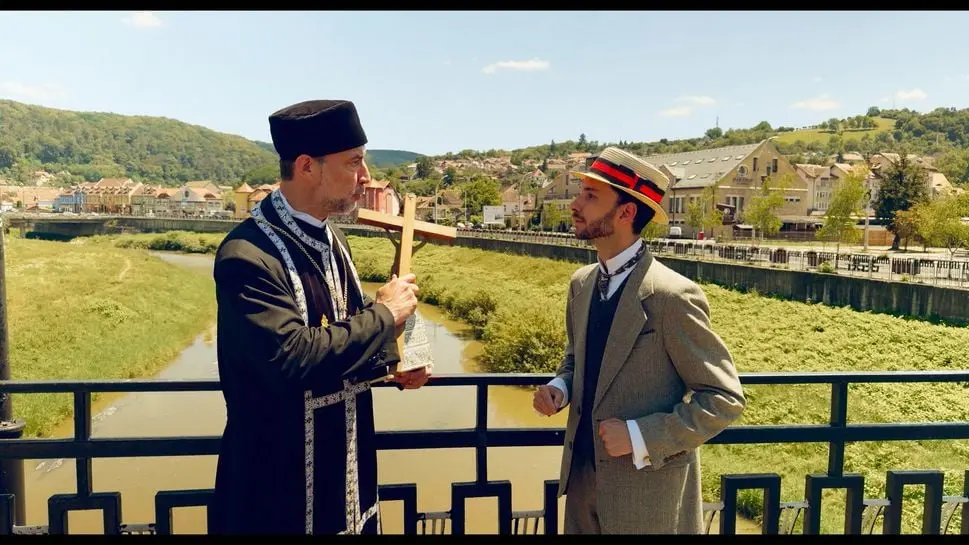
Beyond Time’s Coverage: What No One Else Is Talking About
The conversation around Dracula has mostly focused on its visual weirdness or its novelty. But what makes the film truly important goes much deeper:
A. It’s a Global Wake-Up Call
Unlike Hollywood, Romania doesn’t have billion-dollar studios or endless VFX teams. For Jude and other independent filmmakers, AI isn’t a toy — it’s a lifeline. But that also highlights a global divide: while wealthy studios debate AI ethics, smaller industries are already using it to survive.
B. It Exposes the “Invisible Labor” Problem
Every AI-generated image is built on human work — art, photography, performance — used to train algorithms without consent. By making AI outputs visible on-screen, Jude indirectly critiques this silent exploitation, exposing how creativity gets absorbed into corporate models.
C. It Redefines Authorship
In traditional cinema, the director is the “author.” But in Dracula, authorship dissolves. The AI’s contribution blurs the line between creator and tool. The film asks: can we still call it art when no one fully controls it?
D. It Predicts the Future of “AI Slop” Cinema
Jude’s deliberate embrace of “bad” AI imagery mocks the flood of low-effort AI content now hitting the internet — what critics call AI slop. It’s a warning: if filmmakers use AI only to cut costs, not to challenge meaning, cinema could drown in shallow, soulless output.
A Turning Point for the Film Industry
Dracula might not be a mainstream hit, but it marks a historical moment: the first serious film to treat AI as both co-creator and cultural antagonist.
For filmmakers, it opens new creative pathways. For studios, it raises existential questions about cost, labor, and ethics. For audiences, it challenges what we even mean when we say, “I watched a film.”
And perhaps most importantly, it shows that AI art doesn’t have to replace human creativity — it can expose the systems that already threaten it.
Frequently Asked Questions (FAQ)
Q: Did AI actually direct parts of Dracula?
Not exactly. Radu Jude and his human team remained in control of the narrative and editing. However, large portions of the film’s visuals and concepts were generated using AI tools, integrated directly into the production process.
Q: Does using AI make the film less artistic?
No — in this case, it’s the opposite. Jude uses AI’s awkward imperfections as a storytelling device. The “flaws” become part of the art, reflecting the tension between human creativity and machine automation.
Q: Could AI eventually make entire films on its own?
Technically, yes — but emotionally and culturally, not yet. While AI can generate scripts, imagery, and even voiceovers, storytelling still requires human context, intention, and emotional truth.
Q: How are film unions reacting to AI tools?
Unions like SAG-AFTRA and the Writers Guild are demanding transparency and compensation for AI use. They’re pushing for rules that ensure human creators aren’t replaced or digitally cloned without consent.
Q: Should films disclose when they use AI?
Many critics and filmmakers believe yes. As with CGI or stunt coordination, AI use should be credited. Transparency builds trust — and helps viewers understand how modern cinema is evolving.
Q: What does this mean for future filmmakers?
It means a dual challenge: learn to work with AI while defending the value of human artistry. Future directors may need to be part storyteller, part technologist — balancing emotion and code.
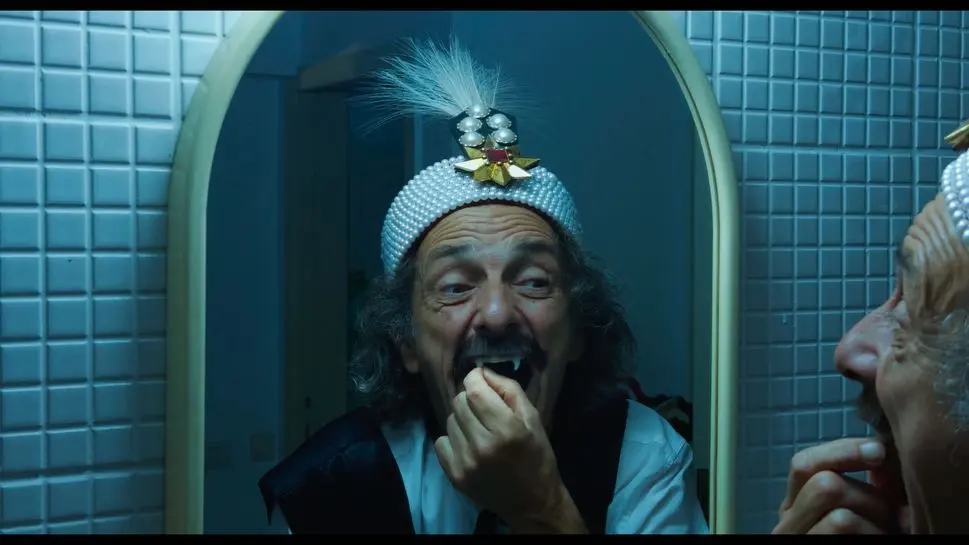
Final Take: The Monster Is Us
In Dracula (2025), the monster isn’t a vampire lurking in the shadows — it’s us. It’s our obsession with efficiency, automation, and convenience. It’s our willingness to hand over creativity to machines because it’s cheaper and faster.
But the film also leaves room for hope. It reminds us that even as technology evolves, the soul of art lies not in tools — but in intention.
Radu Jude’s Dracula isn’t just a movie about AI. It’s a mirror held up to the industry — and to every artist wondering whether the machine will take their place.
Maybe the real question isn’t “Can AI make movies?”
It’s “Can we still make meaning?”
Sources TIME

