

IBM, one of the oldest and most influential names in technology, has announced plans to cut thousands of jobs as it accelerates its shift toward artificial intelligence (AI) and cloud-based services.
The layoffs, described as part of a “global workforce rebalancing,” reflect both the company’s ambition to lead in the AI era — and the human cost of automation-driven transformation that’s reshaping the tech industry.
While IBM has not disclosed an exact number, analysts estimate that the cuts will affect a low single-digit percentage of its roughly 270,000 global employees — translating to several thousand roles.
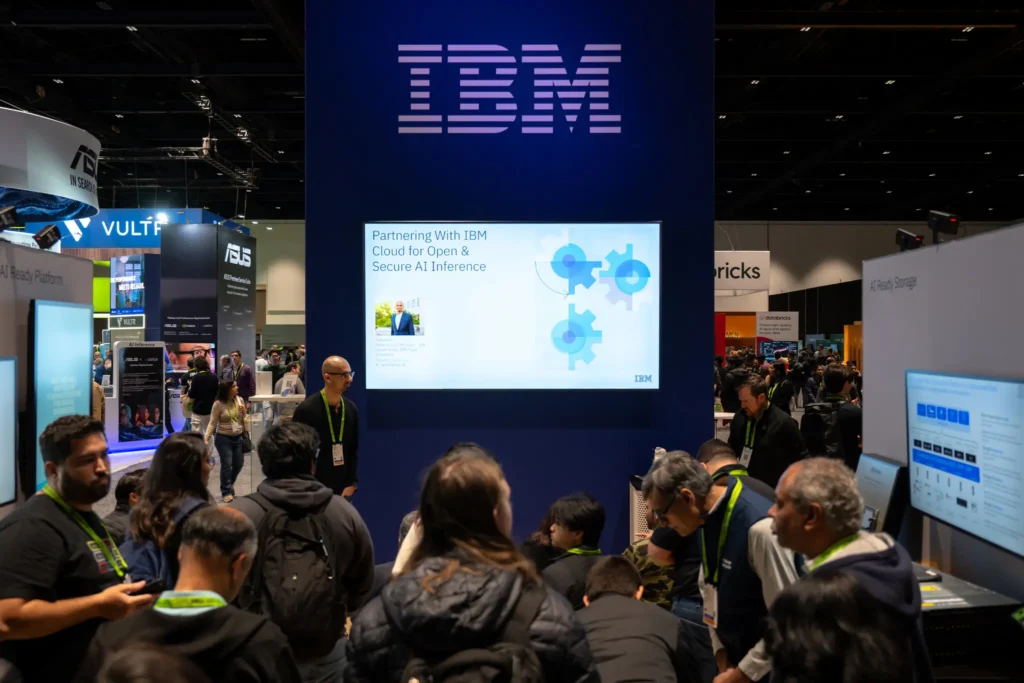
IBM’s Pivot: From Legacy Tech to AI Leadership
The layoffs come as IBM intensifies its focus on software, cloud, and AI infrastructure, positioning itself to compete in a world increasingly driven by automation and data intelligence.
Under CEO Arvind Krishna, IBM has been rebranding itself as a leader in enterprise AI solutions, building on products like Watsonx — its AI and data platform — while moving away from lower-margin legacy services.
According to the company, the job cuts are not simply cost-cutting but a strategic restructuring — reallocating talent toward areas of future growth such as AI development, hybrid cloud services, and software innovation.
Still, the timing of the move — amid record corporate enthusiasm for AI — underscores a growing tension: as companies race to embrace automation, human workers are often the first to feel the impact.
What’s Really Driving the Layoffs
While IBM describes the move as a “workforce optimization,” the deeper story reflects several converging forces shaping the tech sector today:
1. Automation and Efficiency
AI is increasingly capable of handling administrative, support, and routine technical work. Tasks that once required large human teams — from IT maintenance to HR processing — are now being streamlined or replaced by AI tools.
2. Strategic Realignment
IBM’s focus has shifted toward areas of higher profitability: software, AI consulting, and cloud integration. This means roles tied to hardware, legacy systems, and back-office functions are becoming less critical to its long-term strategy.
3. Cost Management and Investor Pressure
Like many large corporations, IBM faces pressure to sustain margins while investing heavily in emerging technologies. Cutting staff in slower-growth divisions frees up capital for AI innovation and acquisitions.
4. Competitive Catch-Up
With giants like Microsoft, Google, and Amazon already investing billions in AI infrastructure, IBM’s restructuring is part of a broader industry race to remain relevant in an AI-dominated future.
Beyond the Headlines: What the Story Misses
Most coverage of IBM’s layoffs focuses on the numbers — but the deeper issues are systemic and far-reaching.
The Human Impact
Thousands of skilled employees will be displaced or reassigned. Many of these workers come from long-standing IBM divisions — IT support, human resources, and legacy hardware — where roles are increasingly automated. For them, the transition to “AI-era” work is neither automatic nor easy.
Regional Disparities
While U.S. employment may stay relatively stable, the cuts are expected to disproportionately affect offshore service centers and outsourced labor hubs in regions like India and Southeast Asia. These workers face fewer retraining options and weaker job protections.
Reskilling and Redeployment Challenges
IBM has spoken about retraining programs for affected workers, but the scale of those efforts remains unclear. Historically, only a fraction of displaced workers in tech transitions are successfully redeployed into new roles within the same company.

Automation Paradox
While AI is eliminating some roles, it’s also creating new ones — in software engineering, data management, cloud infrastructure, and sales. The problem? These new jobs often require different skills, leaving a gap between displacement and opportunity.
Public Relations vs. Reality
IBM insists the move is about “rebalancing,” not layoffs. But to many employees, that distinction rings hollow. As AI-driven efficiencies grow, job cuts may become an annual feature of “strategic transformation.”
The Bigger Picture: An Industry-Wide Shift
IBM is far from alone. Nearly every major tech company is undergoing a similar recalibration. Microsoft, Google, Amazon, and Meta have all announced workforce reductions this year — even as they report record profits and expand AI divisions.
This signals a larger transformation: AI isn’t just changing how companies operate — it’s redefining what kinds of work they value.
Roles centered on repetitive, process-driven tasks are shrinking. Meanwhile, demand is rising for hybrid skill sets: engineers who understand AI ethics, managers who can interpret data, and creatives who can collaborate with intelligent tools.
The long-term challenge won’t be how fast AI grows — but how effectively workers and institutions can adapt.
What This Means for You
Whether you work in tech or any other industry, IBM’s restructuring offers a clear warning — and a roadmap:
- Upskill constantly. Learn how AI and automation intersect with your role. Data literacy, problem-solving, and creative thinking are future-proof skills.
- Stay flexible. Career paths are no longer linear. The ability to pivot — across roles, industries, and technologies — is becoming a competitive advantage.
- Engage with ethics and governance. As AI replaces traditional processes, new regulatory, ethical, and cultural questions will define how work evolves.
- Focus on human strengths. Emotional intelligence, leadership, communication, and creativity remain uniquely human. AI may simulate these traits — but it doesn’t live them.
Frequently Asked Questions (FAQ)
Q: How many jobs is IBM cutting?
IBM hasn’t released an exact figure but estimates suggest several thousand jobs will be affected — around 2–3% of its global workforce.
Q: Is AI directly replacing these workers?
Indirectly, yes. While not every cut is “AI-driven,” automation is reducing demand for many support and administrative functions that used to be handled by humans.
Q: Are new jobs being created in other areas?
Yes — IBM is hiring aggressively in AI research, software engineering, cloud management, and consulting. However, the workers being laid off may not have the necessary skills to transition immediately.
Q: Will other companies follow IBM’s lead?
Almost certainly. The entire tech sector is shifting toward AI-centric models, and similar workforce “rebalancing” efforts are already underway across major firms.
Q: What can affected employees do?
Upskilling is key. Fields like data analytics, cybersecurity, AI ethics, and project management offer strong pathways for displaced tech workers. Many online and employer-funded programs now focus on retraining for AI-era jobs.
Q: Does this mean AI is destroying more jobs than it creates?
Not necessarily — but it is changing which jobs exist. AI creates high-value roles but eliminates low- and mid-level positions faster than workers can retrain, leading to temporary (and painful) mismatches in the labor market.

In Summary
IBM’s latest layoffs are more than a corporate move — they’re a mirror reflecting a global shift in how work is defined.
AI promises efficiency, productivity, and innovation, but it also exposes fault lines in how we value human labor. For companies, the challenge is to harness AI responsibly; for workers, it’s to evolve with it.
In the end, IBM’s story isn’t just about job cuts. It’s about a new era of competition — between humans, machines, and the systems that must learn to balance both.
Sources The New York Times

