
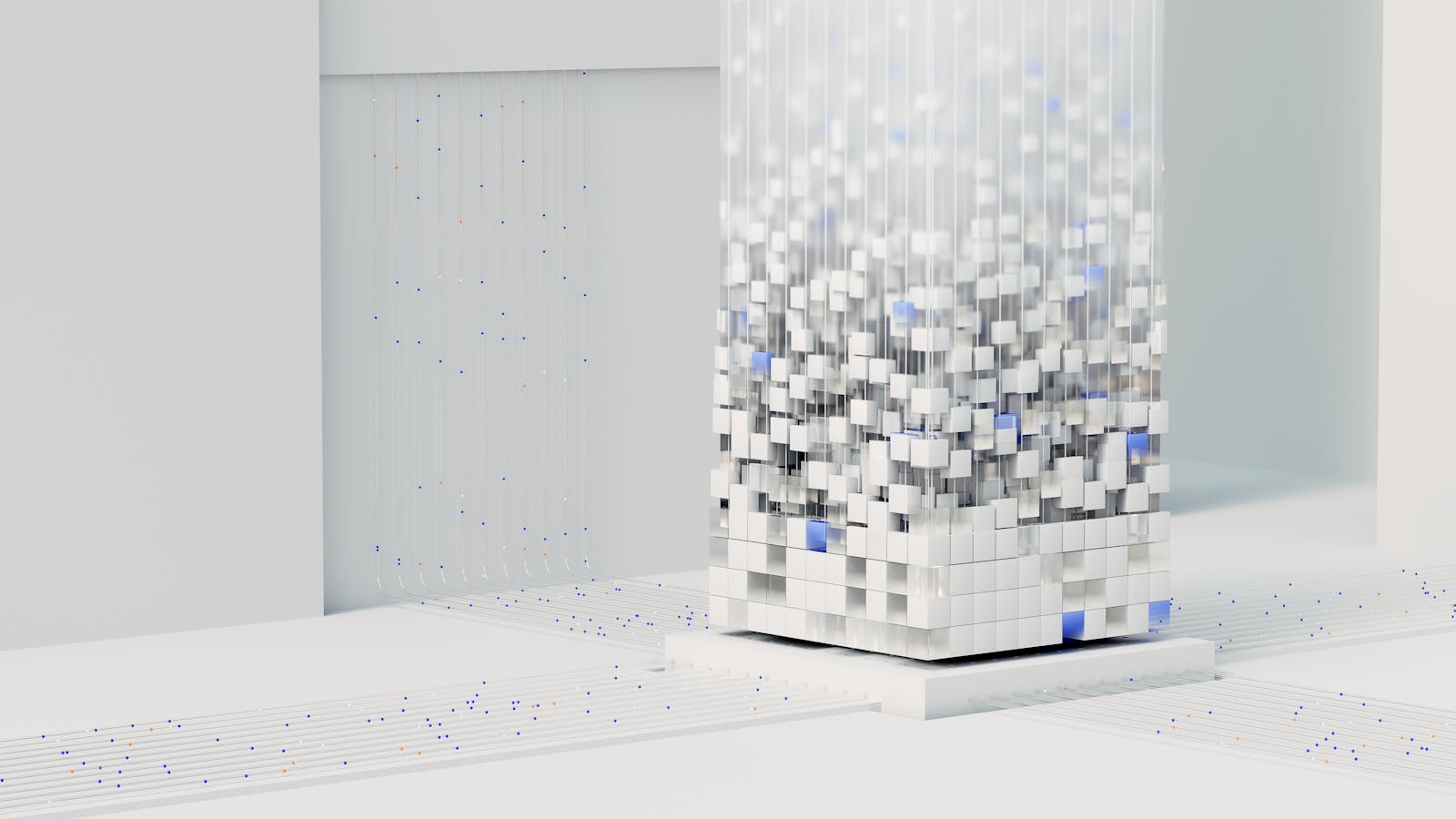
The world is fixated on artificial intelligence — skyrocketing valuations, trillion-dollar market caps, and unprecedented infrastructure spending. But behind the noise, another transformation is beginning to take shape. It’s quieter, slower, and harder to hype, but potentially just as consequential: a shift toward deep tech, advanced physical infrastructure, and the fusion of AI with real-world systems.
If the last decade was dominated by software, APIs, and cloud services, the next decade may be defined by biology, materials, robotics, energy, and next-gen hardware — all supercharged by the intelligence layer AI provides.
This is the revolution few are watching, but everyone will feel.

The AI Bubble… and What It’s Distracting Us From
Yes, we’re in an AI boom. Possibly a bubble. Companies are spending billions on chips, GPUs, data centers, and models that aren’t yet fully monetized. Investors are pouring money into anything with “AI” in the pitch deck.
But bubbles don’t just collapse — they leave behind infrastructure that powers the next era.
Just like:
- the dot-com crash left behind broadband
- the mobile boom birthed the app economy
- the crypto hype pushed forward distributed computing and secure hardware
The AI bubble is building the computational foundation for something even bigger.
And that “something” is starting to emerge.
The Next Tech Wave: Intelligence Moving Into the Physical World
The biggest shift underway is this:
AI is escaping the screen. It’s moving into factories, labs, hospitals, power grids, cars, and molecular biology.
Here’s what’s brewing beneath the hype:
1. The Rise of Intelligent Robotics
Robots aren’t new — but robots that can learn, adapt, and reason are.
AI-driven robotics is accelerating:
- warehouse automation
- humanoid factory assistants
- autonomous construction
- surgical robotics
- agriculture robots that harvest or inspect crops
The missing ingredient was intelligence — and now it’s here.
2. Breakthroughs in Materials and Manufacturing
AI is accelerating the discovery of:
- new alloys
- superconducting candidates
- strong lightweight composites
- advanced ceramics
- next-gen battery materials
Entire industries — aviation, manufacturing, automotive, energy — are being reshaped by faster material cycles.
3. The Bio-Revolution
AI + biology = massive disruption.
Think:
- AI-designed drugs
- personalized medicine
- synthetic biology factories
- gene editing
- protein engineering
- bio-manufacturing of chemicals and materials
AI acts as a “molecular search engine,” compressing years of lab work into hours.
4. Energy & Climate Tech
Energy was slow for decades. Now it’s racing ahead:
- fusion startups
- AI-optimized power grids
- small modular reactors
- ultra-efficient solar
- hydrogen production techniques
- grid-scale storage innovation
AI helps simulate, optimize, and validate new approaches faster than traditional engineering cycles.

5. New Computing Paradigms
Beyond AI chips, other frontiers are emerging:
- neuromorphic computing
- quantum processors
- photonic chips
- low-power edge AI
- distributed compute networks
As AI workloads explode, hardware innovation becomes a necessity, not a luxury.
Why This Revolution Is Harder to See
Unlike AI chatbots, deep-tech breakthroughs aren’t flashy.
You don’t “go viral” with a new material or a fusion reactor design.
You don’t get millions of views from a supply-chain optimization model.
And early-stage hardware has long timelines — years, not months.
But the signals are there:
- record funding in climate tech
- revived interest in robotics and manufacturing
- governments building national AI + HPC infrastructure
- deep-tech incubators expanding
- a talent shift: more engineers entering hard sciences
The next tech boom may be defined not by apps, but by atoms + intelligence.
What Happens When the AI Bubble Pops?
If the AI bubble slows or bursts, here’s what likely remains:
- massive surplus compute
- cheap, abundant GPUs
- huge, optimized data centers
- mature AI tooling
- a workforce skilled in AI workflows
- advanced models usable across industries
And those assets become fuel for:
- robotics
- biotech
- energy innovation
- quantum/hardware
- next-gen manufacturing
AI becomes the “general-purpose engine” behind everything else.
The Future: A Convergence, Not a Replacement
This isn’t “AI vs. the next revolution.”
It’s AI unleashing the next revolution.
Just as electricity amplified everything…
Just as the internet connected everything…
AI is becoming the intelligence layer that accelerates every other field.
That’s why this moment is so important.
The real story isn’t the bubble.
It’s what’s quietly being built underneath it.
Frequently Asked Questions
Q1. Is there really an AI bubble?
Yes — in valuations, hype, and expectations. But the underlying technology is real, and bubbles often fuel long-term infrastructure.
Q2. What is the “next big thing” after AI?
Not a single technology — but a convergence of robotics, biotech, new energy, and advanced hardware, all enabled by AI.
Q3. Why isn’t this revolution getting more attention?
Deep-tech breakthroughs take longer, are harder to explain, don’t have flashy demos, and often require specialized knowledge.
Q4. Will AI fade when the bubble bursts?
No. AI will likely shift from hype-driven consumer tools to essential infrastructure powering real-world innovation.
Q5. Which industries will be transformed the most?
Manufacturing, energy, healthcare, robotics, logistics, biotech, and advanced computing.
Q6. Why does compute infrastructure matter?
The enormous GPU and data-center buildout will accelerate breakthroughs in science, simulation, and engineering — the foundation of most deep-tech sectors.
Q7. Will smartphones and software still matter?
Yes — but physical world tech will grow much faster than in the last decade.
Q8. What skills will be most valuable?
AI + domain expertise in biology, mechanics, materials, energy, robotics, or hardware engineering.
Q9. Are governments involved?
Very much so. National labs, defense agencies, and public-private partnerships are driving major investments in AI-supercomputing, fusion, and advanced manufacturing.
Q10. What timeline are we looking at?
Early signals now; mainstream impact over 5–10 years; foundational transformation over 20.
Sources Financial Times

