
Artificial intelligence didn’t just improve in 2025 — it matured. While flashy demos still grabbed headlines, Google’s research breakthroughs revealed something more important: AI is becoming smarter, more efficient, more reliable, and far more embedded in the real world than ever before.
Behind the scenes, Google advanced AI across multiple dimensions — from reasoning and scientific discovery to efficiency, safety, and creativity. Together, these breakthroughs signal a shift away from novelty and toward practical intelligence that actually scales.
This article expands on Google’s 2025 research highlights, explores what often goes unnoticed, and explains why these advances matter far beyond the lab.
1. The Rise of World-Aware Multimodal AI
What Changed in 2025
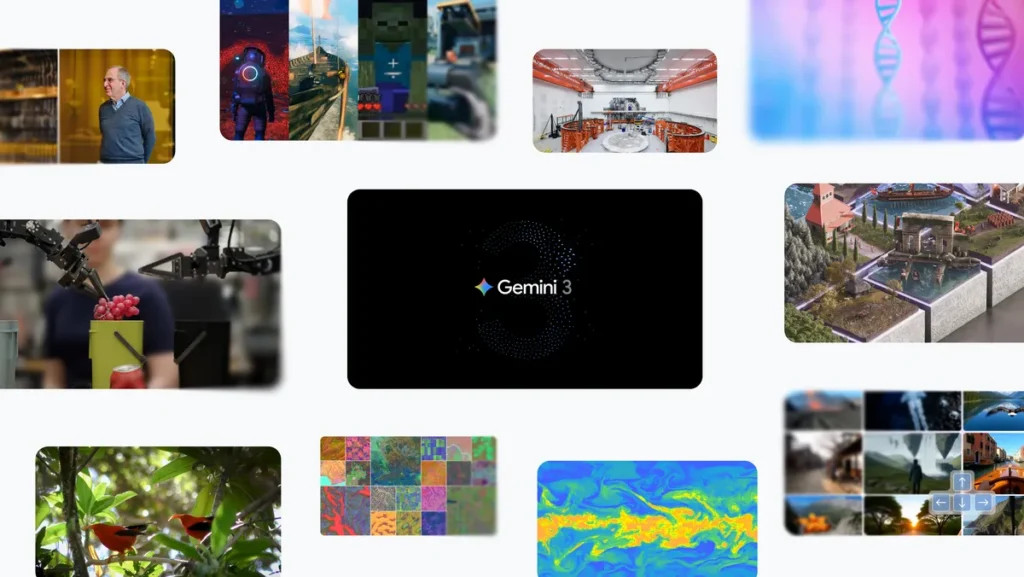
AI systems are no longer confined to text. Google made major progress in multimodal intelligence — models that understand text, images, video, audio, and code together.
These systems don’t just “see” and “read.” They connect meaning across formats.
Why This Is Bigger Than It Sounds
The real breakthrough is cross-context reasoning:
- Understanding cause and effect in videos
- Linking visual scenes with language explanations
- Maintaining memory across long, complex interactions
This brings AI closer to how humans experience the world — unlocking applications in robotics, accessibility, education, and real-time analysis.
2. AI Accelerating Scientific Discovery
What Improved
Google demonstrated how AI can drastically speed up research in:
- Drug discovery
- Protein structure analysis
- Climate modeling
- Materials science
AI systems now explore massive hypothesis spaces in days instead of years.
What’s Often Overlooked
AI doesn’t replace scientists — it extends human intuition. The strongest results come when AI proposes novel possibilities and humans guide validation, interpretation, and ethics.
Science is becoming a human–AI partnership.
3. Smaller, Smarter, and More Efficient AI Models
The Quiet Shift
2025 marked a move away from “bigger is better.” Google focused heavily on:
- Models that need less data
- Lower energy consumption
- Higher performance per parameter
Why This Matters
Efficiency is now essential:
- It lowers environmental impact
- Enables AI on phones and edge devices
- Makes AI more affordable and global
- Reduces dependence on massive infrastructure
The future of AI isn’t just smarter — it’s leaner.
4. AI That Reasons, Plans, and Acts
What’s New
AI systems improved at:
- Multi-step reasoning
- Long-term planning
- Tool usage and task execution
Instead of predicting the next word, AI increasingly evaluates options, simulates outcomes, and selects actions.
Why It’s Important
This is foundational for:
- Autonomous AI agents
- Complex workflow automation
- Robotics and real-world decision-making
AI is transitioning from reactive to goal-directed intelligence.
5. Safety and Responsibility Move to the Core
What Improved
Google advanced research in:
- Reducing hallucinations
- Bias detection and mitigation
- Model interpretability
- Alignment and evaluation frameworks
Safety is now built into model development — not added later.
The Deeper Shift
Responsible AI isn’t about filters alone. It’s about:
- Knowing where systems fail
- Making limitations transparent
- Monitoring behavior after deployment
This marks a more mature AI ecosystem.
6. AI as a Creative Collaborator
What Changed
Generative tools became more controllable and expressive across:
- Writing
- Music
- Visual art
- Video
Why It Matters
The most powerful use of AI isn’t replacement — it’s co-creation. AI is becoming a creative partner that amplifies human ideas instead of overriding them.
7. Learning With Less Data
The Breakthrough
Google showed AI systems that learn effectively with:
- Smaller datasets
- Fewer labeled examples
- Self-supervised and transfer learning
Why This Unlocks Everything
Data scarcity has held AI back in:
- Medicine
- Law
- Science
- Low-resource languages
These advances enable privacy-friendly, specialized, and globally inclusive AI.
8. The Infrastructure That Makes It All Possible
Behind the Scenes
Google also advanced:
- AI-specific hardware
- Faster training pipelines
- Distributed learning systems
- Energy-aware infrastructure
Why It’s Critical
Breakthroughs don’t happen in isolation. Hardware, software, and systems design increasingly determine what AI can achieve.
Infrastructure is now innovation.
What Google’s 2025 Breakthroughs Really Signal
Taken together, these advances show a clear direction:
- AI is becoming more capable and more dependable
- Progress is shifting from spectacle to usefulness
- Efficiency and responsibility matter as much as raw power
- AI is embedding itself into science, creativity, and daily tools
This is the transition from experimental AI to foundational intelligence.
What Comes Next
Based on these trends, the next phase of AI will likely focus on:
- Autonomous agents with long-term goals
- Stronger reasoning and memory
- Deeper human–AI collaboration
- Energy-efficient intelligence
- Clearer evaluation and governance standards
The central challenge is no longer technical alone — it’s intentional.
Frequently Asked Questions (FAQ)
Are these breakthroughs only useful to Google?
No. Many of these advances influence the broader AI ecosystem through shared research practices and downstream applications.
Does this mean AI is close to human intelligence?
No. AI is improving rapidly, but human-level understanding and consciousness remain far beyond current systems.
Why is efficiency such a big focus now?
Because unchecked scaling is expensive, energy-intensive, and unsustainable. Efficiency enables long-term progress.
How will everyday users notice these advances?
Through smarter assistants, better search, safer AI tools, improved creative software, and more reliable AI products.
Should people be concerned?
Concern is healthy. The solution is transparency, governance, and responsible design — not stopping innovation.
Final Thoughts
Google’s 2025 AI research marks a turning point. The focus is no longer just on what AI can do — but on how well, how safely, and how sustainably it does it.
The next era of artificial intelligence won’t be defined by hype.
It will be defined by intelligence that works, scales, and earns trust.
Sources Google

