
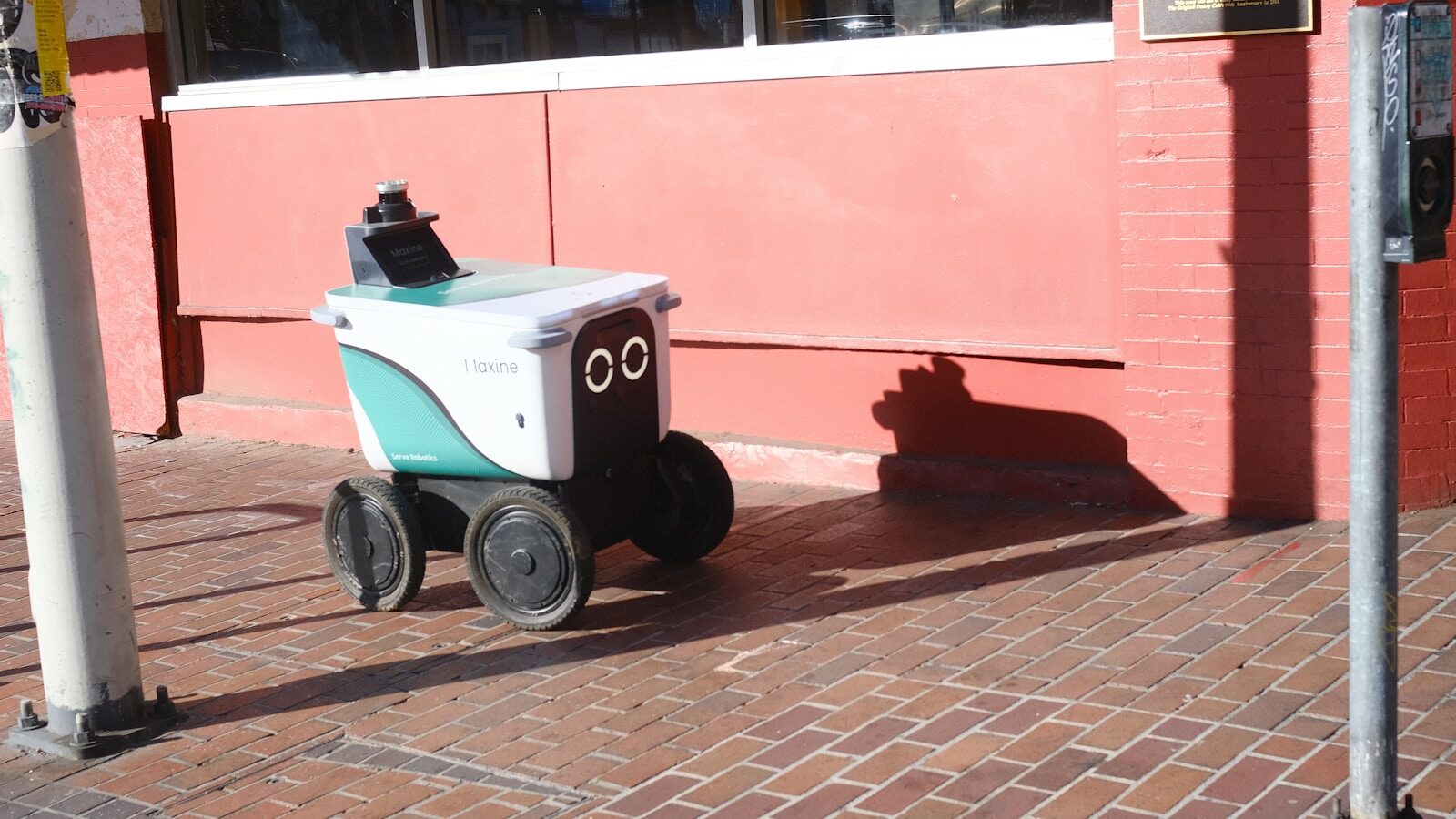
They were supposed to symbolize the future: small, boxy robots quietly rolling down sidewalks, delivering burritos and bubble tea with machine efficiency. Instead, in some American cities, food-delivery robots are becoming targets of vandalism, mockery, and even outright aggression.
Kicked. Tipped over. Graffitied. Blocked. Stolen from.
The backlash against these autonomous couriers is not just about broken machines. It reveals deeper tensions about automation, public space, inequality, and the emotional undercurrents of a rapidly changing economy.
This article explores why food-delivery robots are provoking anger, what the incidents reveal about public attitudes toward automation, how companies and cities are responding, and what this means for the future of urban robotics.
The Rise of Sidewalk Robots
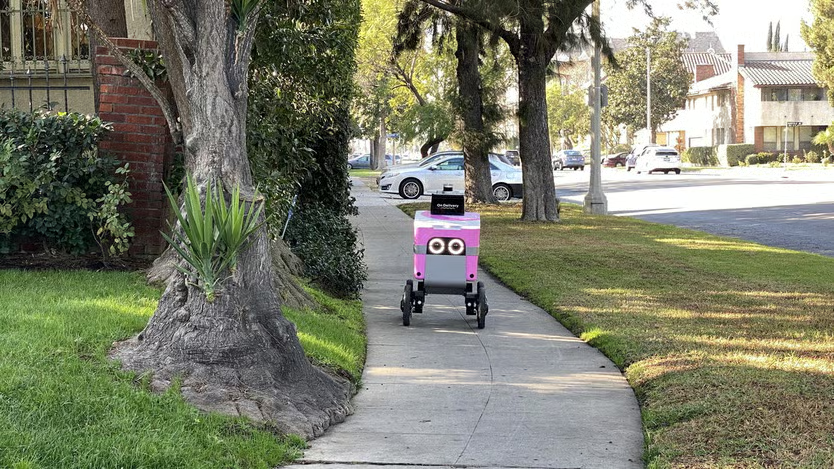
Over the past decade, startups and tech companies have deployed autonomous delivery robots in cities and college campuses across the United States.
These robots typically:
- Travel at low speeds
- Use cameras and sensors to navigate
- Operate within limited geographic zones
- Deliver small orders within a few miles
They promise lower labor costs, faster delivery times, and reduced emissions compared with car-based delivery.
For companies, they are a glimpse of automated logistics at scale.
The Backlash on the Ground
Despite their harmless appearance, reports show:
- Robots being pushed into streets
- Orders stolen mid-delivery
- Devices covered in graffiti
- Students riding them like toys
- People deliberately blocking their path
Some incidents are playful. Others are hostile.
The reaction raises an important question: Why do small delivery robots provoke such strong emotions?
Automation Anxiety Made Visible
Unlike algorithmic automation happening behind screens, delivery robots are:
- Physical
- Visible
- Navigating shared public space
They embody automation in a tangible way.
For some observers, they symbolize:
- Job displacement
- Corporate encroachment
- Economic precarity
The anger directed at robots may reflect broader frustration with technological change.
The Public Space Question
Sidewalks were not originally designed for autonomous machines.
Critics argue that delivery robots:
- Obstruct pedestrians
- Create accessibility challenges
- Privilege corporate use of public infrastructure
Urban space is contested. Robots entering sidewalks highlight unresolved questions about who gets priority.
Economic Tensions Beneath the Surface
Food-delivery robots exist in an ecosystem where:
- Gig workers face unstable wages
- Restaurants struggle with thin margins
- Consumers expect cheap, fast service
Some view robots as:
- Replacing low-wage jobs
- Accelerating inequality
- Further concentrating profits among tech firms
Even if the actual job displacement is modest, perception drives reaction.
Why People Target Machines
Psychologically, robots make easy targets.
They:
- Do not retaliate
- Do not express pain
- Represent corporations rather than individuals
Acting out against a machine can feel like acting out against a system.
The Role of Novelty
In many cities, delivery robots remain new and unusual.
Humans often test unfamiliar technology:
- By touching it
- Interacting with it
- Challenging its boundaries
Some vandalism may reflect curiosity or experimentation rather than anger.
Company Responses
To mitigate abuse, companies are implementing:
- Tamper alerts
- GPS tracking
- Remote monitoring
- Audible warnings
- Law enforcement partnerships
Some robots even use cameras to record incidents.
But increased surveillance introduces privacy concerns.
City-Level Regulation
Municipalities are grappling with:
- Permitting requirements
- Sidewalk access limits
- Safety standards
- Insurance obligations
Balancing innovation with public comfort is becoming a local policy issue.
What Often Goes Unsaid
Robots Are Testing Public Tolerance
Food-delivery bots serve as an early indicator of how society may react to broader robotic integration.
If small sidewalk robots face hostility, more advanced autonomous systems may encounter similar resistance.
Cultural Attitudes Matter
Acceptance varies by region.
Communities with:
- High tech familiarity
- University populations
- Younger demographics
tend to show more tolerance.
Automation Isn’t Just Technical — It’s Emotional
Resistance to robots may reflect:
- Fear of economic insecurity
- Distrust of big tech
- Generalized frustration
The robots become symbols.
The Long-Term Outlook
Several outcomes are possible:
- Normalization – As robots become common, hostility declines.
- Regulation – Cities limit deployment.
- Design Adaptation – Robots evolve to better coexist with pedestrians.
Public acceptance will likely shape the pace of expansion.
Frequently Asked Questions
Are delivery robots actually replacing jobs?
Currently, their scale is limited. They supplement rather than fully replace delivery workers, but long-term effects remain uncertain.
Are these robots safe?
Most operate at slow speeds and include obstacle detection systems, but concerns about accessibility and sidewalk congestion persist.
Why do people vandalize them?
Motivations range from curiosity and amusement to anger about automation and corporate presence in public space.
Can companies prevent abuse?
They can reduce it through monitoring and design improvements, but eliminating it entirely is difficult.
Will robots become common in cities?
Adoption depends on regulation, cost-effectiveness, and public acceptance.
Final Thoughts
Food-delivery robots are small machines with outsized symbolic weight.
They represent convenience, efficiency, and technological progress. But they also embody economic disruption, corporate expansion, and the uneasy future of work.
The anger directed at them is less about metal and circuits — and more about the anxieties of a society navigating rapid change.
Whether these robots become accepted fixtures of city life or flashpoints of resistance will depend not just on engineering — but on trust, fairness, and how the benefits of automation are shared.
Because in the end, it’s not robots people are fighting.
It’s what they believe the robots stand for.
Sources The Economic

