

When Travis Kalanick helped launch Uber, he reshaped transportation by connecting people with drivers through software. Now, the controversial entrepreneur believes an even bigger transformation is on the horizon—one driven not by apps, but by humanoid robots working in the physical world.
Kalanick has recently spoken about what he calls a new “golden age” of robotics, where advances in artificial intelligence, automation and manufacturing could bring millions of robots into warehouses, factories and everyday workplaces. According to this vision, robots will not only assist humans but could eventually become a large-scale workforce capable of performing physical tasks across industries.
This shift represents a profound evolution in how technology interacts with the real world. After decades in which the digital economy dominated innovation, the next wave of disruption may come from what Kalanick describes as “atoms”—the physical systems that power manufacturing, logistics and infrastructure.

The Transition from Software to “Atoms”
Over the past twenty years, the technology industry has largely focused on digital services such as social media, e-commerce and cloud computing. These innovations transformed communication, entertainment and business operations but remained largely confined to software.
Kalanick argues that the next frontier of innovation lies in the physical economy—industries that involve moving goods, manufacturing products or managing infrastructure.
Examples include:
- Warehousing and logistics
- Manufacturing and assembly
- Construction and infrastructure
- Agriculture and food production
- Retail fulfillment systems
These industries rely heavily on manual labor and often face worker shortages. Robotics and AI could provide new solutions by automating tasks that require physical effort.
Why Humanoid Robots Are Gaining Attention
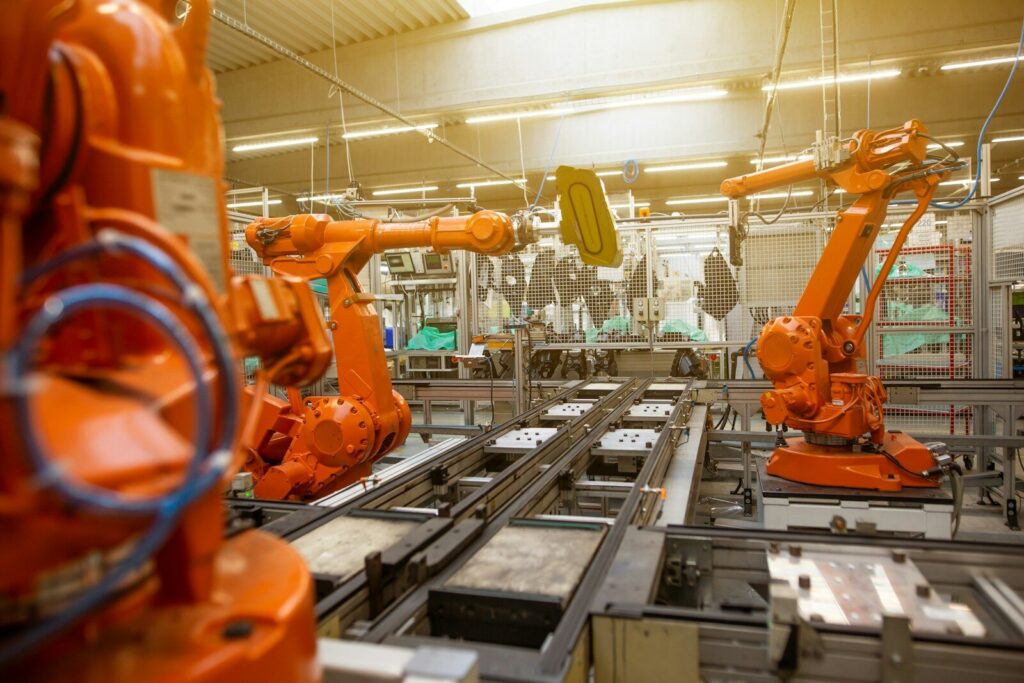
Traditional industrial robots have existed for decades, particularly in manufacturing. However, they are usually designed for highly specific tasks and operate in controlled environments.
Humanoid robots represent a different approach.
These robots are designed to resemble the human form with arms, legs and dexterous hands. The advantage of this design is flexibility: they can perform tasks originally designed for human workers.
For example, humanoid robots could potentially:
- pick items from shelves in warehouses
- transport goods within factories
- operate machinery designed for human hands
- perform repetitive tasks in logistics centers
This adaptability could allow robots to work in existing environments without requiring companies to redesign entire facilities.
The Role of Artificial Intelligence in Robotics
Humanoid robots are becoming more viable thanks to rapid advances in artificial intelligence.
AI technologies enable robots to:
- recognize objects through computer vision
- understand spoken instructions
- learn tasks through demonstration
- adapt to new environments
Machine learning systems allow robots to improve performance over time, making them more capable in dynamic settings.
Large AI models—similar to those used in language and image generation—are increasingly being adapted to train robots in physical tasks.
The Logistics Industry as a Testing Ground
One of the first major industries likely to adopt humanoid robots is logistics.
Warehouses and distribution centers require workers to:
- sort packages
- load and unload shipments
- manage inventory
- move goods across large facilities
These tasks are repetitive and physically demanding, making them ideal candidates for automation.
Major logistics companies already use robotic systems to move shelves and transport packages, but humanoid robots could expand automation into areas previously reserved for human workers.
The Economics of Robot Labor
For robots to become widely adopted, they must be economically competitive with human labor.
Several factors are driving improvements in robot economics:
Falling Hardware Costs
Advances in manufacturing are reducing the cost of sensors, processors and mechanical components.
AI Efficiency
Better software allows robots to perform tasks more effectively, reducing operational costs.
Labor Shortages
Many industries face difficulty recruiting workers for physically demanding jobs, increasing the value of automation.
24/7 Operation
Unlike human workers, robots can operate continuously without breaks.
Over time, these factors may make robotic labor increasingly attractive for businesses.
The Companies Racing to Build Humanoid Robots
A growing number of technology companies and startups are competing to develop advanced humanoid robots.
Key players include:
- Tesla, which is developing the Optimus humanoid robot
- Boston Dynamics, known for its advanced robotic systems
- Figure AI, a robotics startup focused on industrial automation
- Agility Robotics, which builds robots designed for warehouse work
These companies are investing heavily in AI-driven robotics platforms capable of performing real-world tasks.
The competition suggests that humanoid robotics may soon become a major technology industry.
Challenges Facing Humanoid Robots
Despite rapid progress, significant obstacles remain.
Technical Complexity
Replicating human dexterity and balance is extremely difficult. Even simple tasks like grasping objects require advanced sensors and control systems.
Safety Concerns
Robots operating in workplaces must meet strict safety standards to avoid harming human workers.
Cost Barriers
While prices are falling, humanoid robots remain expensive compared to traditional automation systems.
Infrastructure Integration
Companies must integrate robotic systems into existing operations without disrupting productivity.
Overcoming these challenges will determine how quickly humanoid robots become mainstream.
The Future of Work in a Robotic Economy
The rise of humanoid robots raises important questions about the future of work.
Some analysts believe robots will primarily assist human workers by handling repetitive tasks while humans focus on complex decision-making.
Others worry about potential job displacement if robots become capable of performing large numbers of physical jobs.
Historically, technological revolutions have created new industries even as they replaced certain roles. The robotics economy could lead to new careers in:
- robot maintenance and repair
- AI training and development
- robotics engineering
- automation management
The transition may reshape labor markets but not necessarily eliminate human work entirely.
Frequently Asked Questions (FAQs)
1. What does Travis Kalanick mean by a “golden age of robotics”?
He believes advances in artificial intelligence and hardware are making humanoid robots viable for real-world tasks, potentially triggering rapid growth in robotics adoption.
2. Why are humanoid robots important?
Humanoid robots can operate in environments designed for humans, allowing companies to automate tasks without redesigning facilities.
3. Which industries will adopt robots first?
Logistics, warehousing, manufacturing and construction are among the industries most likely to adopt robotic workers.
4. Will robots replace human workers?
Robots may automate some tasks, but they are also likely to create new roles in robotics development, maintenance and management.
5. Why is robotics advancing so quickly now?
Improvements in artificial intelligence, computer vision, sensors and manufacturing technologies are making robots more capable and affordable.
6. How soon could humanoid robots become common?
Some companies expect limited commercial deployments within the next few years, though widespread adoption may take longer.
7. What risks are associated with humanoid robots?
Potential concerns include safety issues, job displacement and ethical questions about automation in the workforce.
Conclusion
The idea of humanoid robots working alongside humans once seemed like science fiction. Today, advances in artificial intelligence and robotics are bringing that possibility closer to reality.
Travis Kalanick’s vision of a robotic “golden age” reflects a broader shift in the technology industry—from digital platforms to the physical world of factories, warehouses and infrastructure.
If these technologies succeed, the coming decades could see a new economic transformation where machines not only process information but also perform physical work on a global scale.
The robot economy may be arriving sooner than many people expect.
Sources Business Insider

