
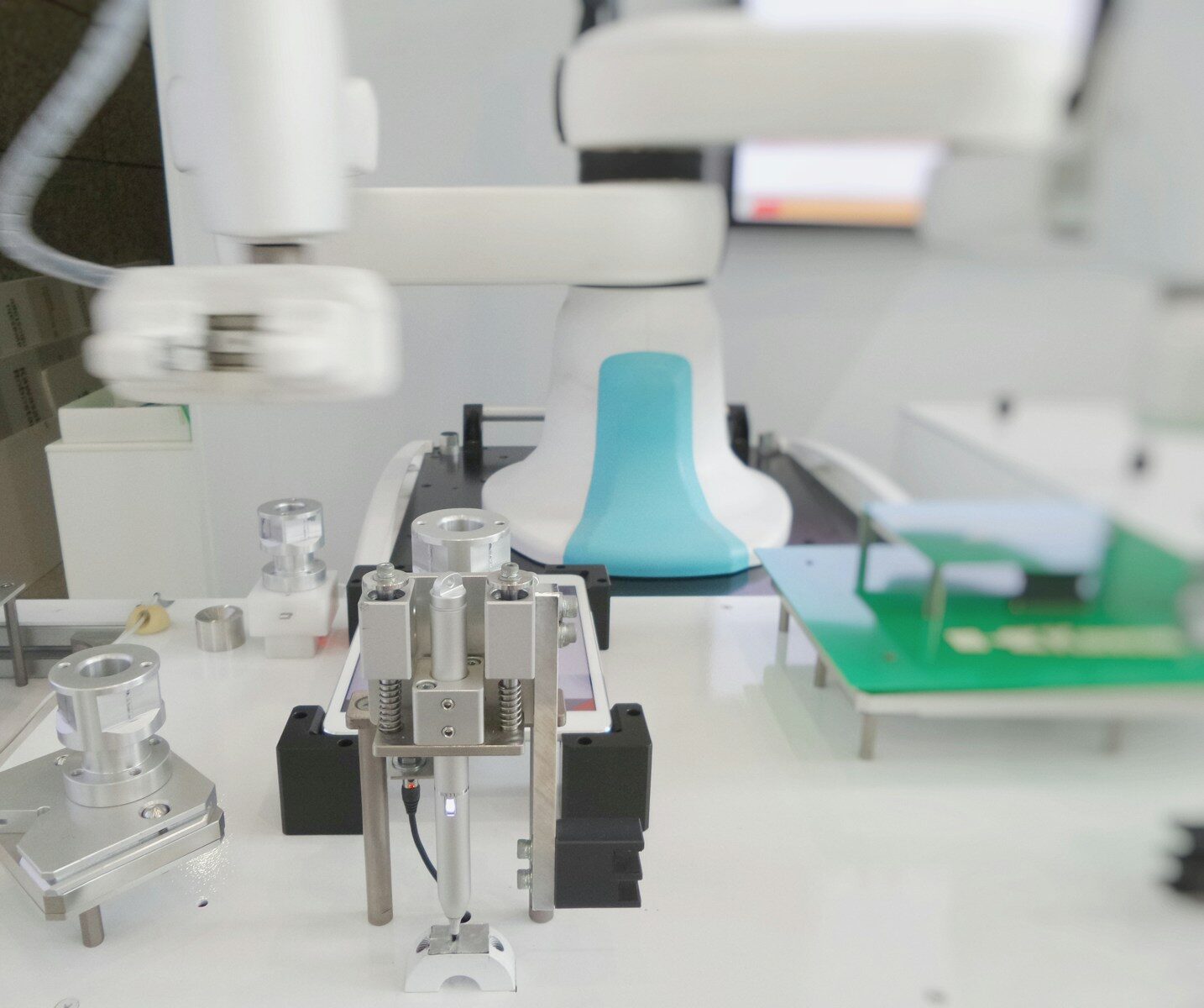
Artificial intelligence has already transformed how we write, code and analyze data—but the next frontier may be even more ambitious: fully automated scientific research. OpenAI is now pushing toward a bold goal—creating AI systems capable of acting as independent researchers, able to generate hypotheses, run experiments, analyze results and even produce new scientific discoveries.
This vision goes far beyond today’s chatbots or coding assistants. It represents a future where AI doesn’t just assist scientists—it actively participates in the scientific process itself.
If successful, this shift could dramatically accelerate innovation across fields such as medicine, climate science, physics and biotechnology. But it also raises profound questions about the nature of discovery, the role of human expertise and the future of knowledge creation.

What Is an “AI Researcher”?
A fully automated AI researcher would be a system capable of performing the entire scientific workflow with minimal human input.
This includes:
- reviewing existing research literature
- identifying knowledge gaps
- generating hypotheses
- designing experiments
- running simulations or controlling lab equipment
- analyzing results
- writing research papers
In essence, it would function as a digital scientist, capable of working continuously and exploring far more possibilities than any human researcher could.
Why OpenAI Is Pursuing This Goal
The motivation behind building AI researchers lies in the limitations of traditional science.
Scientific discovery is often:
- slow and resource-intensive
- constrained by human cognitive limits
- dependent on trial-and-error experimentation
- limited by access to data and expertise
AI has the potential to overcome many of these barriers.
By automating parts—or all—of the research process, AI could:
- analyze vast datasets instantly
- explore thousands of hypotheses simultaneously
- identify patterns humans might miss
- reduce the time required for major breakthroughs
This could significantly accelerate progress in critical areas such as drug discovery and climate modeling.
The Building Blocks of an AI Scientist
Creating a fully autonomous research system requires combining multiple advanced technologies.
1. Large Language Models (LLMs)
LLMs allow AI to:
- read and summarize scientific papers
- generate hypotheses
- write research reports
They serve as the “thinking” component of the system.
2. Simulation and Modeling Systems
AI researchers must be able to test ideas.
This involves:
- running virtual experiments
- modeling physical or biological systems
- predicting outcomes before real-world testing
3. Data Integration
Scientific research relies on large datasets.
AI systems must:
- access diverse data sources
- clean and organize information
- identify relevant patterns
4. Robotics and Lab Automation
In experimental sciences, AI must interact with the physical world.
This includes:
- controlling laboratory equipment
- conducting chemical or biological experiments
- collecting real-world data
5. Feedback Loops
An AI researcher must learn from results.
This involves:
- refining hypotheses
- adjusting experimental designs
- improving predictions over time
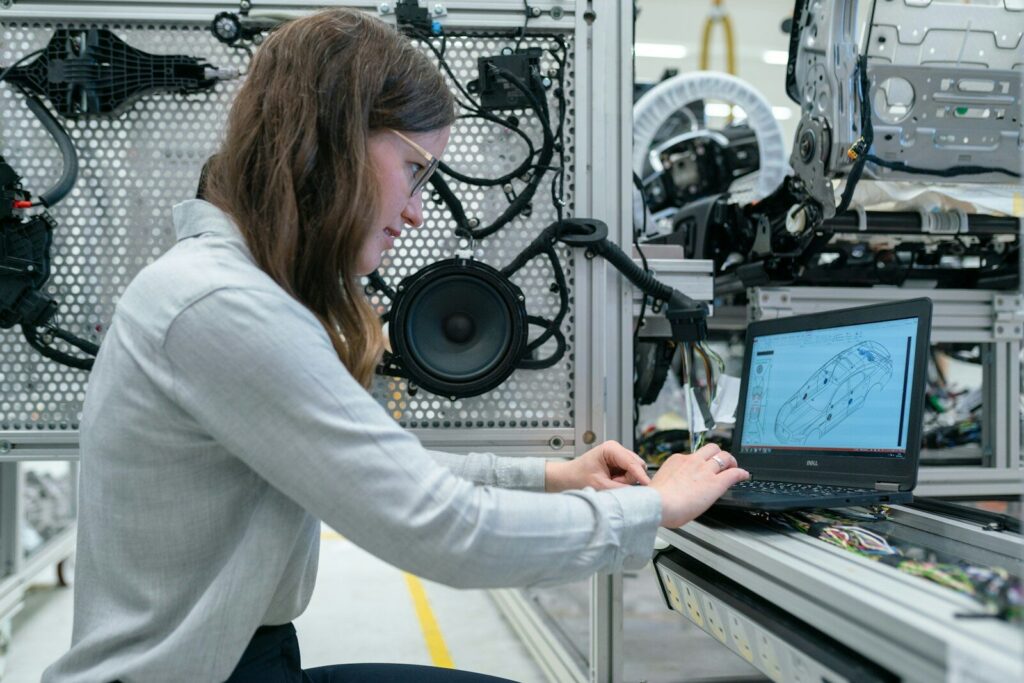
The Concept of “Closed-Loop Science”
One of the most important ideas behind AI researchers is closed-loop science.
In this model:
- AI generates a hypothesis
- Designs an experiment
- Runs the experiment (virtually or physically)
- Analyzes the results
- Updates its understanding
- Repeats the process
This continuous loop allows AI to iterate rapidly, potentially achieving breakthroughs much faster than traditional research methods.
Potential Breakthrough Areas
AI researchers could have transformative impact across multiple fields.
Medicine and Drug Discovery
AI could:
- identify new drug candidates
- simulate how molecules interact with the human body
- accelerate clinical research
This could reduce the time required to develop new treatments.
Climate Science
AI systems could model complex environmental systems and predict the impact of climate interventions.
Materials Science
AI could design new materials with specific properties, such as stronger alloys or more efficient batteries.
Physics and Fundamental Research
AI may help uncover patterns in large datasets from experiments like particle accelerators or space observations.
The Role of Human Scientists
Despite the ambition of fully automated research, human scientists will remain essential.
Humans provide:
- domain expertise
- ethical judgment
- creative intuition
- validation of results
AI is more likely to function as a collaborative partner rather than a complete replacement.
Challenges and Limitations
Building an AI researcher is extremely complex.
Reliability and Accuracy
AI-generated hypotheses and conclusions must be validated to avoid errors or misleading results.
Data Bias
AI systems depend on existing data, which may contain biases or gaps.
Experimental Constraints
Not all experiments can be simulated—many require real-world testing.
Ethical Concerns
AI-driven research could raise issues such as:
- misuse of scientific knowledge
- lack of accountability for discoveries
- potential risks in sensitive fields like biotechnology
The Competitive Race for AI Science
OpenAI is not alone in this effort.
Other organizations pursuing similar goals include:
- Google DeepMind
- Anthropic
- major research institutions
- biotech companies
This competition is accelerating progress toward AI-driven discovery.
The Future of Scientific Discovery
If AI researchers become viable, they could fundamentally change how science is conducted.
Possible outcomes include:
- faster discovery cycles
- lower research costs
- democratization of scientific tools
- new forms of interdisciplinary research
However, the success of this vision will depend on careful integration of AI systems with human oversight.
Frequently Asked Questions (FAQs)
1. What is a fully automated AI researcher?
It is an AI system capable of performing the entire scientific process, from hypothesis generation to experimentation and analysis.
2. Can AI replace human scientists?
No. AI is more likely to assist and augment scientists rather than replace them entirely.
3. What industries could benefit most?
Medicine, climate science, materials science and biotechnology are among the fields that could see major impact.
4. How does AI generate scientific ideas?
AI analyzes large datasets and existing research to identify patterns and propose new hypotheses.
5. What are the risks of AI-driven research?
Risks include errors, bias, misuse of knowledge and ethical concerns around sensitive applications.
6. How soon could AI researchers become reality?
Early versions are already emerging, but fully autonomous systems may take years to develop.
7. Why is OpenAI investing in this?
Because accelerating scientific discovery could unlock major breakthroughs and position the company at the forefront of AI innovation.

Conclusion
The idea of a fully automated AI researcher represents one of the most ambitious goals in artificial intelligence. By combining language models, simulation systems, robotics and data analysis, companies like OpenAI are pushing the boundaries of what machines can achieve.
If successful, AI-driven research could dramatically accelerate scientific progress, unlocking solutions to some of humanity’s biggest challenges.
But as with any powerful technology, the outcome will depend on how it is developed and used. The future of science may not belong solely to humans or machines—but to the collaboration between both.
Sources MIT Technology Review

