

In recent months, a growing number of technology leaders have offered a familiar explanation for waves of layoffs sweeping across the industry: artificial intelligence. From Silicon Valley giants to fast-growing startups, executives are increasingly framing job cuts as a necessary step in adapting to an AI-driven future.
But is AI truly the main cause—or is it becoming a convenient narrative for deeper economic and strategic shifts?
The reality is more complex. While artificial intelligence is undeniably transforming how companies operate, the sudden surge in layoffs reflects a mix of factors, including cost-cutting, shifting business models and post-pandemic corrections. AI is part of the story—but not the whole story.
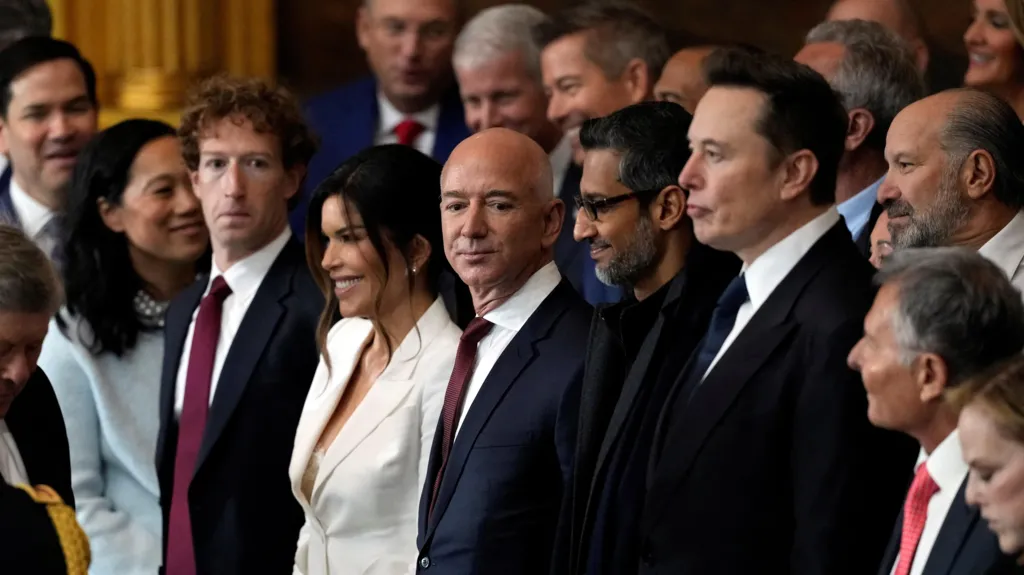
The New Corporate Narrative: “AI Made Us Do It”
Across earnings calls, internal memos and public statements, a pattern has emerged.
Executives are citing AI as a reason for:
- reducing headcount
- restructuring teams
- reallocating resources toward AI development
- streamlining operations
The message is clear: companies must become more efficient and AI-driven to remain competitive.
This framing serves two purposes:
- Strategic justification – positioning layoffs as forward-looking decisions
- Investor signaling – demonstrating commitment to AI transformation
In an era where AI is seen as the next major growth engine, aligning with that narrative can boost market confidence.
The Reality Behind the Layoffs
While AI is influencing workforce decisions, several other factors are playing major roles.
1. Post-Pandemic Overhiring
During the COVID-19 pandemic, tech companies expanded rapidly to meet surging digital demand.
As growth normalized, many firms found themselves overstaffed.
Layoffs became a way to rebalance.
2. Economic Pressure
Rising interest rates, inflation and slower growth have forced companies to cut costs.
Reducing payroll is often one of the fastest ways to improve financial performance.
3. Shift Toward Profitability
After years of prioritizing growth, many companies are now focusing on profitability.
This shift often involves:
- cutting non-essential roles
- consolidating teams
- automating processes
4. Organizational Restructuring
Companies are reorganizing to prioritize AI initiatives.
This can lead to:
- elimination of legacy roles
- creation of new AI-focused positions
- redeployment of resources
Where AI Is Actually Replacing Work
Despite the broader context, AI is genuinely impacting certain types of jobs.
Routine Administrative Tasks
AI tools can handle:
- data entry
- scheduling
- basic reporting
Customer Support
Chatbots and automated systems can resolve common inquiries without human agents.
Content and Marketing
AI can generate:
- articles
- social media posts
- advertising copy
Software Development Support
AI coding assistants can:
- generate code
- identify bugs
- automate testing
These capabilities reduce the need for some entry-level or repetitive roles.
The Jobs AI Is Creating
At the same time, AI is creating new opportunities.
Emerging roles include:
- AI engineers and researchers
- machine learning specialists
- data analysts
- AI product managers
- prompt engineers and AI trainers
The challenge is that these jobs often require different skills than those being displaced.
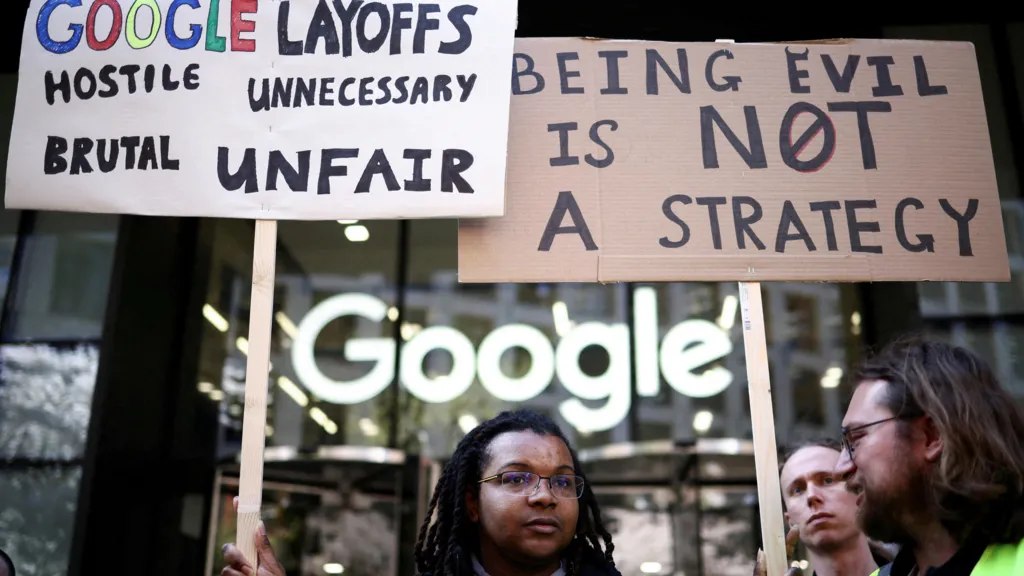
The PR Advantage of Blaming AI
Blaming AI for layoffs can serve as a strategic communication tool.
1. Deflecting Responsibility
Attributing cuts to technology can make decisions seem inevitable rather than managerial.
2. Framing Layoffs as Innovation
Companies can present layoffs as part of a transformation rather than a setback.
3. Aligning With Market Trends
Investors are highly focused on AI.
Positioning as an “AI-first” company can boost valuations.
However, critics argue that this narrative can oversimplify complex decisions and obscure accountability.
Worker Concerns and Public Perception
For employees, the rise of AI-linked layoffs is unsettling.
Common concerns include:
- job security
- skill obsolescence
- lack of transparency from employers
- limited opportunities for retraining
There is also a growing perception that AI is being used as a justification rather than a direct cause.
This can erode trust between workers and employers.
The Global Impact
The trend is not limited to the tech sector.
Industries such as:
- finance
- media
- retail
- logistics
are also exploring AI-driven efficiencies.
As adoption spreads, workforce impacts may become more widespread.
The Long-Term Outlook
AI is likely to reshape the labor market in several ways:
Automation of Repetitive Work
Certain tasks will increasingly be handled by machines.
Transformation of Roles
Jobs will evolve to include working alongside AI systems.
Demand for New Skills
Skills in data analysis, AI usage and digital tools will become more important.
Shift in Workforce Structure
Companies may operate with smaller teams supported by AI.
The key question is not whether AI will affect jobs—but how quickly and how fairly the transition will occur.
A More Honest Perspective
While AI is a powerful force, it is rarely the sole reason for layoffs.
More accurate explanations often include:
- strategic realignment
- financial pressures
- changes in consumer demand
AI may accelerate these trends—but it does not fully explain them.
Understanding this distinction is important for both workers and policymakers.
Frequently Asked Questions (FAQ)
Q: Are companies really laying off workers because of AI?
AI is a factor, but layoffs are usually driven by multiple reasons, including economic conditions and restructuring.
Q: Which jobs are most affected by AI?
Roles involving repetitive or routine tasks are most vulnerable to automation.
Q: Is AI creating new jobs?
Yes. AI is generating demand for new roles, particularly in technology and data-related fields.
Q: Why do companies emphasize AI in layoff announcements?
It helps position layoffs as part of a forward-looking strategy and aligns with investor expectations.
Q: Should workers be worried about AI replacing jobs?
Workers should be aware of changes and focus on developing skills that complement AI.
Q: Is this trend happening globally?
Yes. AI-driven workforce changes are occurring across multiple industries worldwide.
Q: Can governments regulate AI’s impact on jobs?
Governments can introduce policies for retraining, education and worker protection, but regulation is still evolving.

Conclusion
The growing tendency of tech CEOs to attribute layoffs to artificial intelligence reflects both reality and narrative.
AI is transforming the workplace—but it is also being used as a symbol of change, a justification for difficult decisions and a signal to investors.
The truth lies somewhere in between.
As the AI revolution continues, the challenge will be ensuring that its benefits are shared broadly—and that workers are not left behind in the process.
Because in the end, the story of AI and jobs is not just about technology—it’s about how society chooses to manage change.
Sources BBC

