

Artificial intelligence is often presented in two extremes.
On one side:
- It’s the ultimate productivity tool
- A breakthrough that will improve everything
On the other:
- It’s dangerous
- Uncontrollable
- Potentially existential
But what if this fear isn’t accidental?
What if some AI companies actually benefit from you being afraid of their technology?
This idea is gaining attention—and it reveals a complex mix of psychology, business strategy, and power.

The Paradox: Fear and Excitement at the Same Time
AI companies often send mixed messages:
- “This technology will change the world for the better”
- “This technology could be extremely dangerous”
At first glance, this seems contradictory.
But it may be strategic.
Because fear can:
- Capture attention
- Signal importance
- Justify control
Why Fear Can Be Useful
1. It Signals Power
If something is seen as dangerous, it’s also seen as powerful.
When companies emphasize risks like:
- Job loss
- Loss of control
- Existential threats
They are also communicating:
“This technology is incredibly important—and we are the ones building it.”
2. It Attracts Investment
Fear-driven narratives can:
- Increase urgency
- Encourage funding
- Justify massive spending
Investors are more likely to support something that:
Feels both transformative and risky
3. It Shapes Regulation
By highlighting risks, companies can influence:
- How governments regulate AI
- Who gets to set the rules
- What standards are applied
In some cases, this can lead to:
Regulations that favor large, established players
Because:
- They can afford compliance
- Smaller competitors may struggle
4. It Builds Public Attention
Fear spreads faster than optimism.
Dramatic headlines about AI:
- Go viral
- Spark debate
- Keep the topic in the spotlight
This keeps AI:
At the center of global conversation
The Psychology Behind It
Humans are wired to respond strongly to fear.
Fear:
- Grabs attention
- Triggers emotional reactions
- Makes information more memorable
So when AI is framed as:
- A threat
- A risk
- A powerful unknown
People are more likely to:
- Pay attention
- Talk about it
- Engage with it
Is the Fear Justified?
This is where things get nuanced.
Some concerns are real:
Legitimate Risks:
- Job displacement
- Misinformation
- Bias in AI systems
- Security threats
These are serious issues that require attention.
Exaggerated Narratives:
Some warnings may be:
- Overstated
- Speculative
- Focused on distant future scenarios
This can create:
- Confusion
- Unnecessary panic
- Distrust
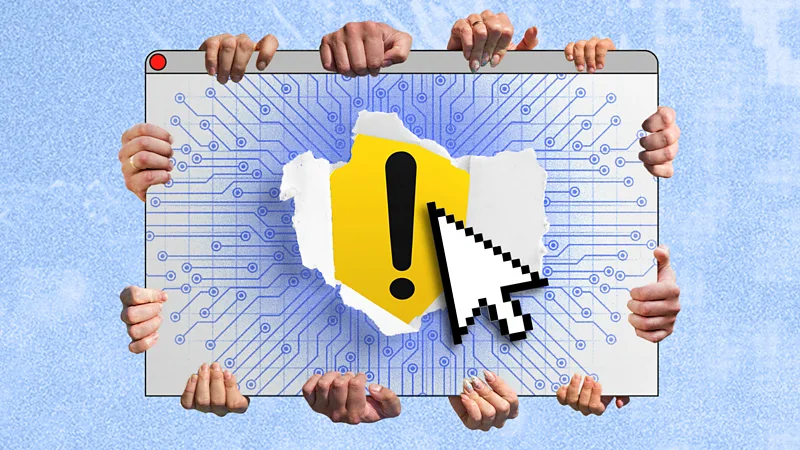
The Power Dynamic: Who Controls the Story?
The way AI is framed matters.
If companies control the narrative, they can influence:
- Public perception
- Policy decisions
- Market behavior
This creates a situation where:
The story about AI becomes almost as important as the technology itself.
The Risk of Fear-Driven Narratives
While fear can be useful, it also has downsides.
1. Public Distrust
Too much fear can:
- Reduce trust in AI
- Slow adoption
- Create resistance
2. Policy Overreaction
Governments may:
- Overregulate
- Limit innovation
- React based on fear rather than evidence
3. Innovation Imbalance
If only large companies can navigate fear-based regulation:
- Smaller players may be excluded
- Competition may decrease
What This Means for Society
We are entering a phase where:
AI is not just a technology—it’s a narrative battle
Between:
- Optimism vs caution
- Innovation vs control
- Opportunity vs risk
How to Think About AI More Clearly
Instead of reacting to extremes, a balanced approach is key.
Ask Better Questions:
- What are the real risks today?
- What is speculation?
- Who benefits from this narrative?
Focus on Reality:
- AI is powerful—but not magical
- It has limits
- It requires human oversight
Stay Informed:
Understanding AI helps reduce:
- Fear
- Misinformation
- Overreaction
The Bigger Picture: Fear, Power, and the Future
Every major technology in history has faced fear:
- Electricity
- The internet
- Automation
AI is no different—but the scale is larger.
What’s unique now is:
The speed, visibility, and global impact of AI
Frequently Asked Questions (FAQ)
1. Do AI companies intentionally create fear?
Not always intentionally—but fear can be a byproduct of how risks are communicated and can benefit companies strategically.
2. Is AI actually dangerous?
It has real risks, but most are manageable with proper oversight and regulation.
3. Why do companies talk about AI risks so much?
To:
- Highlight importance
- Influence policy
- Show responsibility
4. Should we be afraid of AI?
Concern is reasonable. Fear without understanding is not helpful.
5. How can I stay informed?
- Follow credible sources
- Learn basic AI concepts
- Question extreme claims
6. Will fear slow down AI development?
It might influence regulation, but development is unlikely to stop.
7. What’s the biggest takeaway?
AI fear isn’t just about technology—
It’s also about who controls the narrative and why.

Final Thoughts
The idea that AI companies might benefit from fear is uncomfortable—but important to consider.
Because in a world shaped by powerful technologies:
- Perception influences reality
- Narratives shape decisions
- Fear can drive both caution and control
The goal isn’t to ignore risks.
It’s to understand them clearly—without being driven by fear alone.
Because the future of AI shouldn’t be decided by panic…
But by informed, balanced thinking.
Sources BBC

