
Artificial intelligence isn’t just lifting software companies anymore.
Now, it’s reshaping industrial giants, aerospace leaders, and the broader stock market itself.
Companies like Boeing and Honeywell are gaining renewed investor attention as optimism around AI, automation, and industrial technology accelerates across global markets.
The AI trade is no longer limited to Silicon Valley—it’s spreading into the real economy.
And investors are paying close attention.
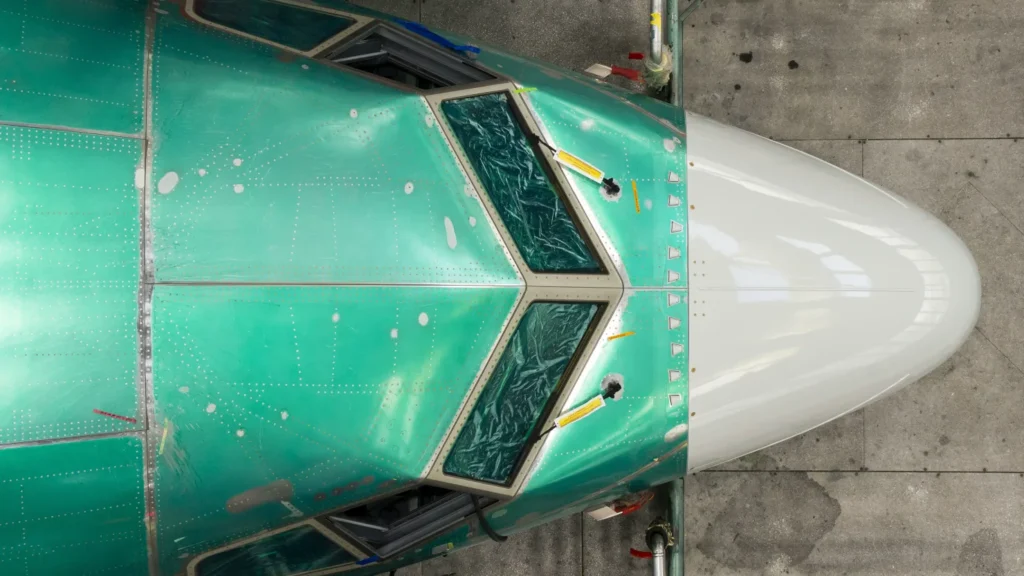
The “AI Trade” Explained
The phrase “AI trade” refers to:
The wave of investor enthusiasm surrounding companies expected to benefit from artificial intelligence growth.
Initially, this focused heavily on:
- Chipmakers
- Cloud providers
- Software firms
But now, the trend is expanding into:
- Aerospace
- Manufacturing
- Industrial automation
- Defense technology
Why Boeing Is Rallying
Boeing’s momentum is tied to several factors beyond traditional aviation demand.
1. AI-Powered Manufacturing
Modern aerospace production increasingly relies on:
- Predictive analytics
- Automation systems
- AI-assisted engineering
AI helps Boeing:
- Improve efficiency
- Reduce production errors
- Optimize maintenance processes
2. Defense and National Security Spending
Governments worldwide are increasing investment in:
- Defense technology
- Autonomous systems
- AI-enhanced military capabilities
Boeing benefits from:
The intersection of aerospace and AI-driven defense modernization
3. Operational Recovery
Investors are also watching Boeing’s efforts to:
- Stabilize production
- Resolve supply chain issues
- Improve delivery timelines
AI tools are helping:
- Streamline logistics
- Enhance operational visibility
Why Honeywell Is Gaining Attention
Honeywell sits at the center of several high-growth trends:
- Industrial automation
- Smart infrastructure
- AI-enabled systems
1. Industrial AI Integration
Honeywell develops technologies used in:
- Factories
- Energy systems
- Buildings
- Aviation
AI allows these systems to:
- Predict failures
- Optimize energy usage
- Automate operations
2. Smart Manufacturing Demand
Manufacturers are increasingly adopting:
- AI-driven monitoring
- Robotics
- Digital twins
This boosts demand for:
Intelligent industrial platforms
3. Infrastructure Modernization
Global investment in:
- Smart cities
- Energy efficiency
- Automation
Creates long-term growth opportunities.
The Bigger Shift: AI Is Moving Into Physical Industries
The first wave of AI focused on:
- Software
- Chatbots
- Digital platforms
The next wave is about:
Applying AI to physical industries
Including:
- Aerospace
- Manufacturing
- Logistics
- Transportation
Why Investors Are Expanding Beyond Pure AI Companies
AI chipmakers and software firms have already seen huge rallies.
Now investors are searching for:
- Secondary beneficiaries
- Infrastructure plays
- Real-world AI applications
Industrial companies offer:
- Tangible use cases
- Stable cash flow
- Long-term contracts

The Role of Automation
AI and automation are increasingly connected.
In industries like aerospace and manufacturing, AI helps:
- Monitor equipment
- Predict maintenance needs
- Reduce downtime
- Improve precision
This can significantly lower costs.
The Defense Connection
Another major factor driving industrial AI growth is defense spending.
Governments are investing heavily in:
- Autonomous systems
- AI-assisted surveillance
- Smart weapons platforms
Companies with aerospace and defense exposure are positioned to benefit.
Why Wall Street Loves the AI Narrative
Markets are driven by:
- Growth expectations
- Future potential
- Productivity gains
AI represents all three.
Investors believe AI could:
- Improve profit margins
- Increase efficiency
- Create entirely new revenue streams
But There Are Risks
Despite optimism, challenges remain.
1. High Expectations
AI valuations may become:
- Overheated
- Difficult to justify financially
2. Infrastructure Costs
Deploying AI at industrial scale requires:
- Massive investment
- Specialized systems
- Skilled labor
3. Regulatory Pressure
As AI expands into critical industries:
- Governments may increase oversight
4. Supply Chain Constraints
Industries still face:
- Component shortages
- Manufacturing bottlenecks
- Semiconductor dependency
The New Industrial Revolution?
Some analysts believe AI is triggering:
A new industrial revolution powered by intelligent systems
Unlike previous digital waves, this one affects:
- Physical production
- Infrastructure
- Real-world operations
What This Means for Workers
AI adoption could:
Create Demand For:
- Engineers
- AI specialists
- Automation experts
Reduce Need For:
- Repetitive manual roles
- Certain operational tasks
The Global Competition
Countries worldwide are competing to:
- Modernize industry
- Lead in AI deployment
- Secure strategic supply chains
This creates:
A global race for industrial AI leadership
Frequently Asked Questions (FAQ)
1. What is the “AI trade”?
Investor enthusiasm around companies expected to benefit from AI growth.
2. Why are Boeing and Honeywell benefiting?
Because AI is increasingly important in aerospace, manufacturing, and industrial automation.
3. How is AI used in aerospace?
For predictive maintenance, automation, logistics, engineering, and defense systems.
4. What is industrial AI?
AI applied to factories, infrastructure, manufacturing, and physical operations.
5. Are industrial companies becoming tech companies?
In many ways, yes—they increasingly rely on software, AI, and automation.
6. What are the risks of the AI investment boom?
Overvaluation, high infrastructure costs, regulation, and supply chain challenges.
7. What’s the biggest takeaway?
AI is no longer confined to digital platforms—
It’s becoming the engine behind the next generation of industrial growth.

Final Thoughts
The rise of AI is expanding far beyond Silicon Valley.
It’s entering:
- Factories
- Aircraft systems
- Energy infrastructure
- Defense networks
And companies like Boeing and Honeywell are showing how traditional industries can become major AI beneficiaries.
Because the future of artificial intelligence won’t just live in apps and servers.
It will be built into the machines, systems, and industries that power the real world.
Sources CNBC

