
For decades, the global fear around automation sounded simple:
More robots = fewer jobs.
China is now attempting something far more complicated.
The country is rapidly becoming the world’s largest robotics powerhouse while simultaneously trying to preserve employment, social stability, and consumer confidence. At first glance, those goals appear contradictory. But for Beijing, the challenge is not choosing between robots and workers.
It is figuring out how to keep both.
And that balancing act may become one of the defining economic experiments of the AI era.

China’s Robot Boom Is Happening at Massive Scale
China already operates more industrial robots than any other country on Earth.
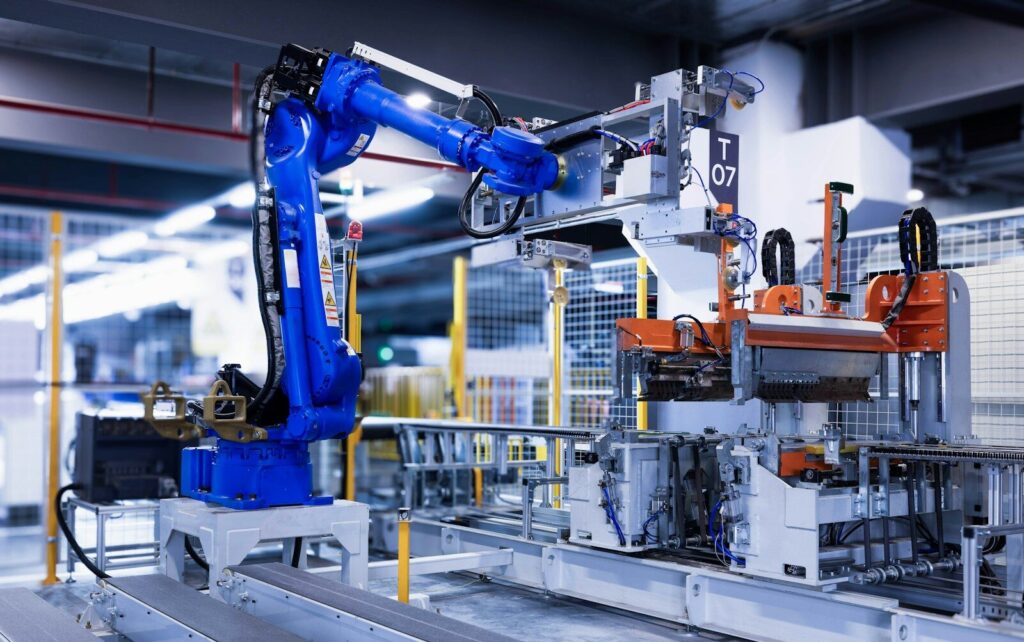
Factories across automotive manufacturing, electronics, logistics, warehousing, and semiconductor production are aggressively automating operations. Industrial robotics installations in China have surged over the past decade as the country attempts to move beyond low-cost manufacturing toward advanced industrial production.
Now the country is accelerating again.
Chinese policymakers increasingly view robotics and AI as essential for:
- boosting productivity
- competing with the United States
- offsetting demographic decline
- maintaining manufacturing dominance
- reducing dependence on foreign technology
Humanoid robots have become a particular obsession.
Chinese firms are pouring investment into next-generation robotics platforms capable of working in factories, warehouses, healthcare environments, and eventually consumer settings. Startups from Shanghai to Shenzhen are racing to build systems that combine AI reasoning with physical-world automation.
But unlike Silicon Valley’s more aggressive automation rhetoric, China’s government faces a serious political constraint:
It cannot afford mass unemployment.
Why China Cannot Simply Replace Workers
China’s economic model still depends heavily on employment stability.
Millions of workers rely on manufacturing jobs directly or indirectly. Even as China modernizes, factory employment remains deeply connected to:
- migrant worker income
- regional economic stability
- consumer spending
- social order
And China is already facing economic pressure from:
- weak consumer confidence
- property market instability
- youth unemployment
- slowing growth
- demographic decline
Replacing large numbers of workers too quickly with robots could worsen those problems dramatically.
This creates a paradox:
China wants automation because it needs productivity growth.
But it also needs people employed because employment supports social stability.
The Demographic Crisis Driving Automation
One reason China is pushing so aggressively into robotics is demographic reality.
China’s workforce is shrinking.
The country faces:
- declining birth rates
- rapid aging
- rising labor costs
- fewer young factory workers
Many younger Chinese workers increasingly reject traditional factory labor entirely. Researchers and labor economists have noted that younger generations often prefer service-sector work, digital jobs, or gig-economy opportunities over repetitive manufacturing roles.
This means automation is not always replacing workers.
Sometimes there simply are not enough workers available.
That distinction matters enormously.
In some sectors, robots are filling labor shortages rather than causing layoffs.
China’s Real Goal: Human-Robot Collaboration
The popular image of automation usually involves robots replacing humans completely.
But the reality inside many Chinese factories looks different.
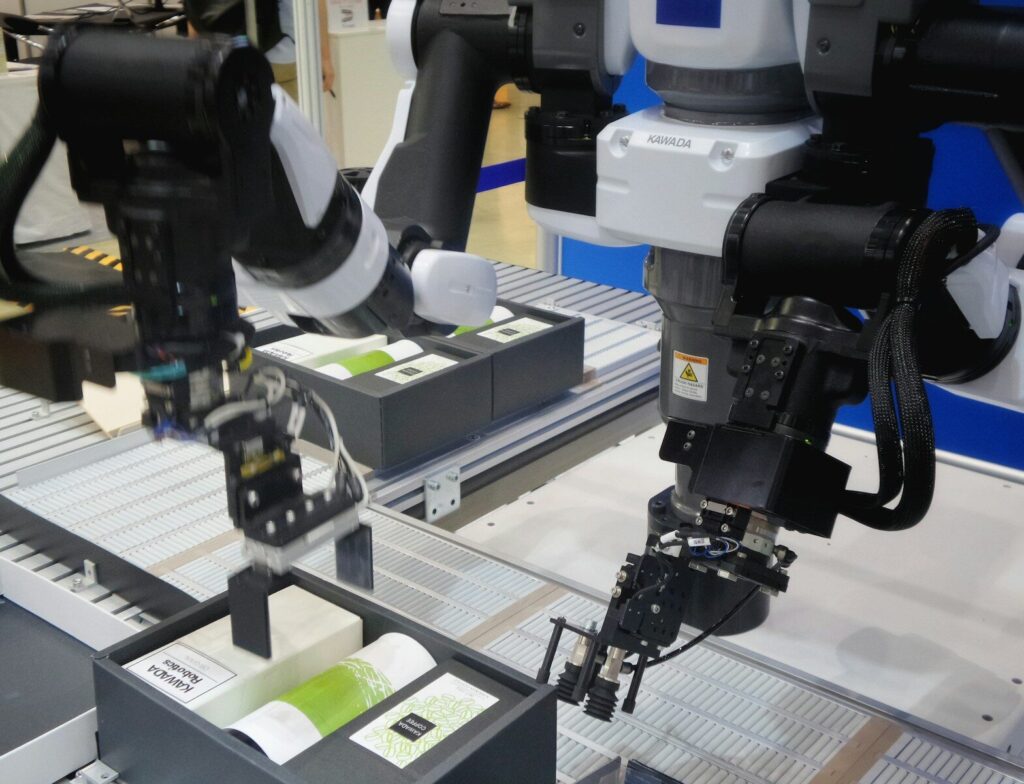
Increasingly, companies are experimenting with hybrid systems where:
- robots handle repetitive tasks
- humans supervise workflows
- workers manage exceptions
- AI supports decision-making
- people and machines operate together
Recent research suggests partial automation often makes more economic sense than full automation because achieving near-perfect AI reliability remains extremely expensive and technically difficult.
That is especially true in:
- complex manufacturing
- logistics
- construction
- quality control
- real-world environments with unpredictability
In many cases, robots improve worker productivity rather than eliminate workers entirely.
China appears to understand this better than many Western “AI replaces everything” narratives.
The Rise of Humanoid Robots — and the Hype Problem
China’s robotics ambitions increasingly focus on humanoid robots.
Companies are developing machines capable of:
- warehouse handling
- assembly-line assistance
- package movement
- eldercare support
- inspection tasks
The idea sounds futuristic — almost science fiction.
But reality remains messier.
Despite massive excitement, many humanoid robots are still limited in reliability, flexibility, and real-world usefulness. Industry analysts caution that current systems often struggle outside carefully controlled environments.
Factories are predictable.
The real world is not.
That is why many robotics deployments still focus on narrow, repetitive industrial tasks rather than fully autonomous “human replacement” systems.
The robot revolution is real.
The robot takeover is still heavily exaggerated.
Why China’s Strategy Differs From Silicon Valley
There is a philosophical difference emerging between China and parts of the American tech industry.
Some Silicon Valley executives openly discuss AI replacing large portions of human labor.
China’s leadership talks differently.
Chinese policymakers increasingly frame robotics as:
- industrial upgrading
- productivity enhancement
- workforce support
- economic modernization
—not mass labor elimination.
Partly this reflects politics.
China’s government prioritizes social stability heavily. Large-scale unemployment would create economic and political risks Beijing wants to avoid.
But it also reflects economic reality.
Consumer economies still require consumers.
If workers lose income at scale, demand weakens.
That becomes dangerous for growth.
The Psychological Cost of Automation
Even when workers keep their jobs, automation can still create anxiety.
Research on robot adoption in China has found mixed effects:
- physical strain often decreases
- dangerous work can become safer
- productivity may rise
But mental stress and job insecurity can also increase, especially among older and less-educated workers.
This is one of the least discussed parts of the automation transition.
Economic disruption is not only financial.
It is emotional.
Workers fear:
- becoming obsolete
- losing bargaining power
- wage stagnation
- permanent uncertainty
Governments worldwide — not just China — are struggling with this challenge.
The Bigger Global Question
China’s balancing act may preview the future for every major economy.
Countries everywhere face the same tension:
- automation increases productivity
- productivity can reduce labor demand
- societies still depend on widespread employment
Historically, technological revolutions eventually created new industries and jobs. Economists often point to previous automation waves where displaced workers gradually shifted into new sectors.
But the AI era may move faster than previous industrial transitions.
And that speed creates political pressure.
The real issue may not be whether robots destroy jobs completely.
It may be whether societies can adapt quickly enough.
China’s Long-Term Gamble
China is effectively betting on three things happening simultaneously:
- Robots increase productivity
- New industries create new forms of work
- Human workers remain economically necessary
That is a difficult balance to maintain.
Too little automation, and China risks losing industrial competitiveness.
Too much automation, and employment instability could rise dangerously.
So China’s strategy increasingly looks like this:
Automate aggressively — but not recklessly.
That may end up becoming the global model.
Frequently Asked Questions (FAQ)
Why is China investing so heavily in robots?
China wants to boost productivity, strengthen manufacturing, compete globally in AI and robotics, and offset labor shortages caused by an aging population.
Is China trying to replace workers with robots?
Not entirely. China appears focused more on human-robot collaboration and industrial upgrading than full workforce replacement.
Why can’t China simply automate everything?
Because large-scale unemployment could damage economic growth, consumer spending, and social stability.
What industries in China are using robots most heavily?
Manufacturing, automotive production, logistics, warehousing, electronics assembly, and semiconductor production are among the biggest adopters.
Are humanoid robots already common in China?
Not yet. Interest and investment are growing rapidly, but most humanoid robots remain limited in real-world capability and deployment scale.
Could robots help solve China’s labor shortages?
Yes. China’s shrinking workforce and aging population are major reasons the country is accelerating automation.
Are workers worried about robots in China?
Many are. Research shows automation can improve physical safety while also increasing stress and concerns about job security.
Will robots eventually replace most factory workers globally?
Probably not completely. Most experts now believe partial automation and human-machine collaboration are more economically realistic than total replacement in many industries.
Sources The Economist

