

While the public is obsessing over AI stocks, billionaire founders, and futuristic chatbots, some of the world’s wealthiest family investors are doing something far less flashy.
They are buying:
- car dealerships
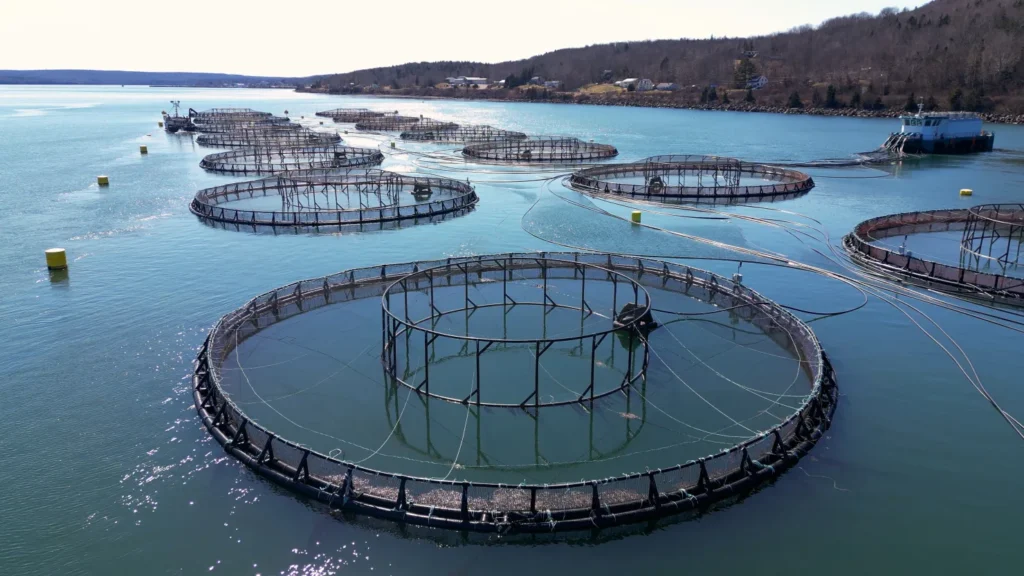
- fisheries
- waste management companies
- infrastructure businesses
- industrial services
- agriculture assets
- logistics operations
In other words:
the kinds of businesses Silicon Valley spent years calling “boring.”
Why?
Because many wealthy investors increasingly believe artificial intelligence is about to create massive economic disruption across white-collar industries — and they want businesses that are harder for AI to destroy.
This is not anti-technology investing.
It is survival investing for the AI era.
🧠 The Big Shift: Investors Are Rethinking What “Safe” Means
For years, “safe” investments often meant:
- software
- scalable digital businesses
- SaaS companies
- internet platforms
- tech-enabled services
But AI is rewriting that logic.
Because AI directly threatens many business models built around:
- information processing
- repetitive cognitive labor
- digital workflows
- software subscriptions
- routine professional services
Suddenly, investors are asking uncomfortable questions:
- What happens if AI dramatically reduces software pricing power?
- What happens if white-collar labor becomes cheaper?
- What happens if entire categories of digital work become automated?
Those questions are now reshaping capital allocation globally.
⚙️ Why “Old Economy” Businesses Suddenly Look Attractive Again
The businesses attracting long-term family investors tend to share several traits:
They operate in the physical world
AI can generate text.
It cannot easily:
- repair roads
- collect garbage
- maintain heavy machinery
- process seafood
- manage industrial logistics
- operate construction equipment
Physical operations remain difficult to automate fully.
They own real assets
Many investors increasingly prefer businesses tied to:
- land
- infrastructure
- utilities
- fleets
- warehouses
- industrial facilities
Why?
Because AI may disrupt digital business models faster than physical asset ownership models.
They provide essential services
Families are prioritizing sectors people still need during technological upheaval:
- food
- transportation
- waste removal
- energy
- repair services
- healthcare support
In uncertain environments, necessity matters more than hype.
🚗 Why Car Dealerships Became Surprisingly Popular
At first glance, car dealerships sound deeply unsexy.
But investors increasingly see them as:
- cash-generating
- locally entrenched
- difficult to fully digitize
- supported by long-term service demand
Even if vehicle sales fluctuate, dealerships still profit heavily from:
- maintenance
- financing
- repairs
- parts
- insurance relationships
And importantly:
physical servicing still requires humans.
AI can optimize scheduling.
It cannot rotate tires.
At least not yet.
🐟 Fisheries, Agriculture, and “Tangible Businesses” Are Back
One fascinating trend is the return of interest in industries many younger investors ignored for years:
- fisheries
- agriculture
- food processing
- industrial manufacturing
- transportation networks
Why?
Because AI disruption affects digital labor faster than physical supply chains.
Wealthy investors increasingly believe:
“real economy” businesses may become strategic safe havens during AI volatility.
This mirrors historical patterns during major technological shifts.
When uncertainty rises, capital often flows toward tangible assets.
📉 Investors Are Quietly Worried About Software
One of the biggest unspoken fears in finance right now involves software.
For decades, software companies enjoyed:
- massive margins
- subscription revenue
- scalable labor models
- pricing power
AI may weaken all four.
Some investors fear AI agents could dramatically reduce the value of:
- SaaS subscriptions
- repetitive enterprise tools
- support-heavy software platforms
- workflow applications
Wall Street executives increasingly acknowledge that AI creates both enormous opportunity and enormous disruption risk for software firms.
This doesn’t mean software disappears.
But it may become:
- cheaper
- more commoditized
- more competitive
- less profitable in some categories
That possibility changes investment strategy significantly.

🏗️ “Picks and Shovels” Investing Is Dominating Again
Many sophisticated investors are now focusing on what’s known as:
“picks and shovels” investing
Instead of betting on which AI company wins, they invest in:
- data centers
- power infrastructure
- utilities
- semiconductors
- networking systems
- industrial energy systems
The logic is simple:
no matter who wins the AI race, the infrastructure still gets used.
Blackstone executives described this strategy as one of the safer ways to benefit from AI growth while reducing direct disruption risk.
🌍 AI Is Creating a Two-Speed Economy
One major structural shift is emerging:
AI-accelerated sectors
- software
- finance
- marketing
- consulting
- customer service
- administrative operations
These sectors may experience rapid productivity changes and labor disruption.
AI-resistant sectors
- infrastructure
- physical maintenance
- logistics
- agriculture
- industrial operations
- utilities
These industries change more slowly because they depend heavily on real-world execution.
That divergence is becoming a central theme in investment strategy.
🧩 Why Family Investors Think Differently From Venture Capitalists
Family offices often invest differently from traditional venture capital firms.
VCs typically chase:
- rapid growth
- disruptive technology
- short-to-medium-term exits
Family investors often prioritize:
- wealth preservation
- resilience
- generational durability
- downside protection
And AI uncertainty makes resilience extremely valuable.
Some family offices increasingly view overexposure to AI-sensitive sectors as a concentration risk.
So instead of chasing the next AI startup, they are buying:
businesses that still function even if AI radically reshapes the economy.
⚠️ The AI Fear Is Not Just About Technology
This trend reflects something deeper than market strategy.
It reflects uncertainty about:
- labor markets
- middle-class stability
- software economics
- corporate profitability
- consumer demand
Even investors enthusiastic about AI increasingly admit:
nobody fully understands the second-order effects yet.
That uncertainty encourages defensive positioning.
📊 History Suggests Technological Revolutions Create Winners — But Also Survivors
During past technological revolutions:
- railroads destroyed some industries while enriching others
- automobiles disrupted horses but boosted manufacturing
- the internet killed newspapers but created e-commerce giants
AI may follow the same pattern.
But historically:
survival often mattered more than predicting every winner perfectly.
That’s why many wealthy investors now prioritize durability over hype.
🔥 The Hidden Irony: AI May Increase the Value of Human Labor in Some Sectors
One fascinating possibility is emerging:
As AI automates cognitive work, certain physical and skilled labor jobs may become relatively more valuable.
Examples include:
- electricians
- mechanics
- plumbers
- industrial technicians
- logistics operators
- infrastructure specialists
Why?
Because physical-world complexity remains difficult for software alone to solve.
Ironically, the AI boom could increase demand for some traditional trades.
🔮 What Happens Next?
Three major investment trends are likely to accelerate:
1. More capital flows into “real economy” assets
Infrastructure and physical operations may attract growing institutional investment.
2. AI-sensitive sectors become more volatile
Software and white-collar service industries may face intense repricing pressure.
3. Hybrid businesses outperform
Companies combining physical assets with AI-enhanced efficiency may dominate long term.
❓ Frequently Asked Questions (FAQ)
Why are wealthy investors avoiding some AI-exposed businesses?
Because AI may rapidly disrupt sectors dependent on repetitive digital labor and software pricing models.
What businesses are considered more AI-resistant?
Examples include:
- infrastructure
- utilities
- logistics
- agriculture
- repair services
- industrial operations
Why are family offices investing differently?
Family investors often focus more on long-term preservation and resilience than short-term growth hype.
Is software becoming a bad investment?
Not necessarily. But investors increasingly believe AI will create clear winners and losers across software categories.
What does “picks and shovels” investing mean?
It refers to investing in foundational infrastructure supporting AI growth rather than betting directly on AI applications.
Could AI increase inequality between industries?
Yes. Some sectors may become dramatically more productive while others remain labor-intensive and structurally stable.
Are physical businesses safer from AI?
Generally, businesses requiring real-world execution are harder to automate fully.
Is this similar to past technological revolutions?
Very much so. Major innovations historically reshaped capital flows and forced investors to rethink which industries were durable.

🧠 Final Thought
The smartest investors in the world are not panicking about AI.
But many are quietly repositioning for a world where software abundance changes the economics of entire industries.
And that may become one of the defining investment themes of the next decade:
In an age where intelligence becomes cheap, tangible reality may become more valuable than ever.
Sources CNBC

