
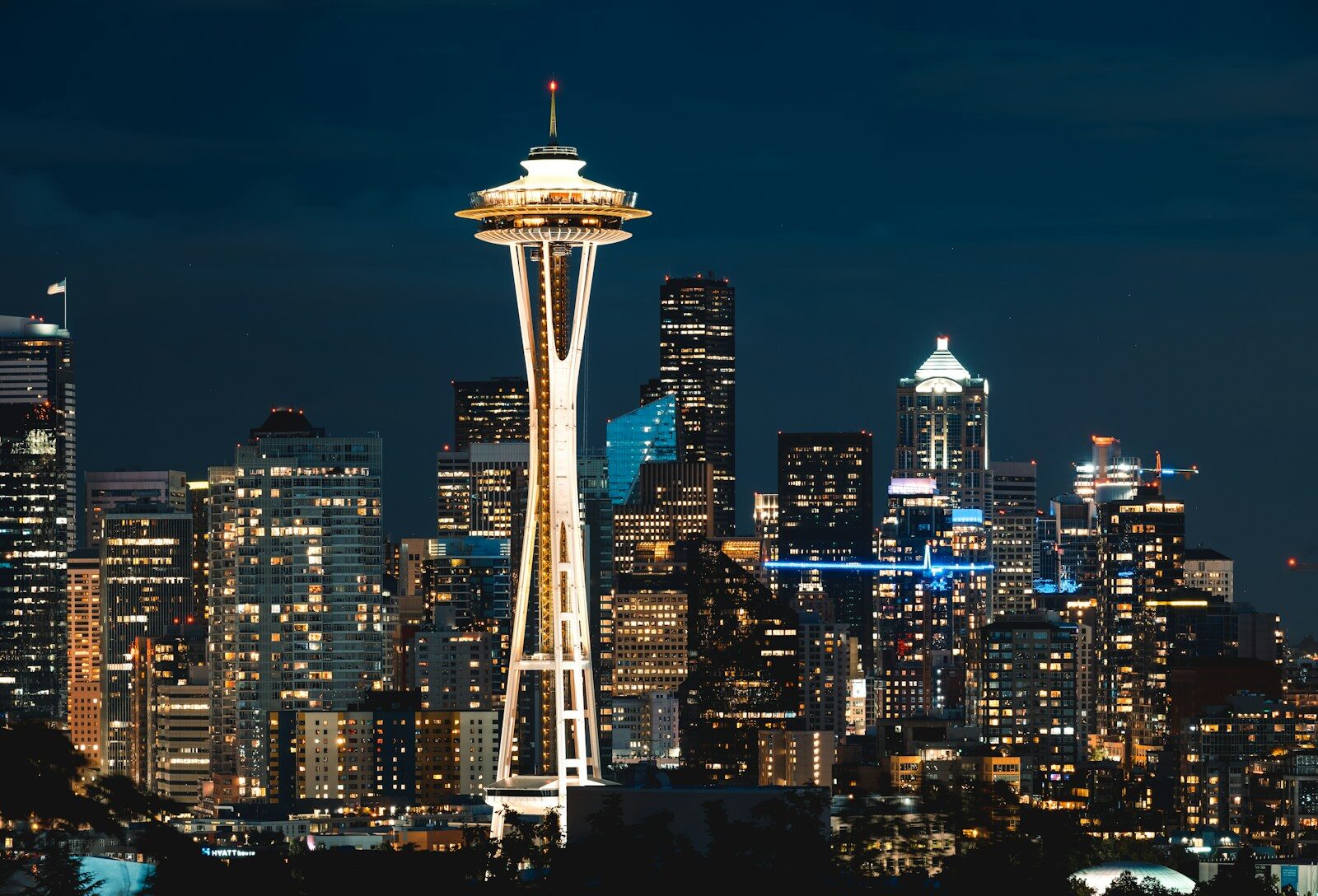
For a few years, downtown office towers across America looked like monuments to a fading era.
Remote work emptied buildings.
Layoffs swept through the tech industry.
Commercial real estate markets weakened.
“Work from home forever” became Silicon Valley gospel.
But now something unexpected is happening in Seattle:
Big technology companies are leasing office space again.
And the force quietly reshaping this rebound is artificial intelligence.
After years of uncertainty, major firms are once again expanding their physical footprints in one of America’s most important tech hubs. The difference now is that the office recovery is no longer driven primarily by:
- E-commerce
- Cloud software
- Social media
- Mobile apps
Instead, the AI race is rapidly becoming the central engine behind a new wave of corporate expansion.
And this new phase of tech growth may transform cities, labor markets, infrastructure, and commercial real estate in ways many people did not expect after the pandemic.
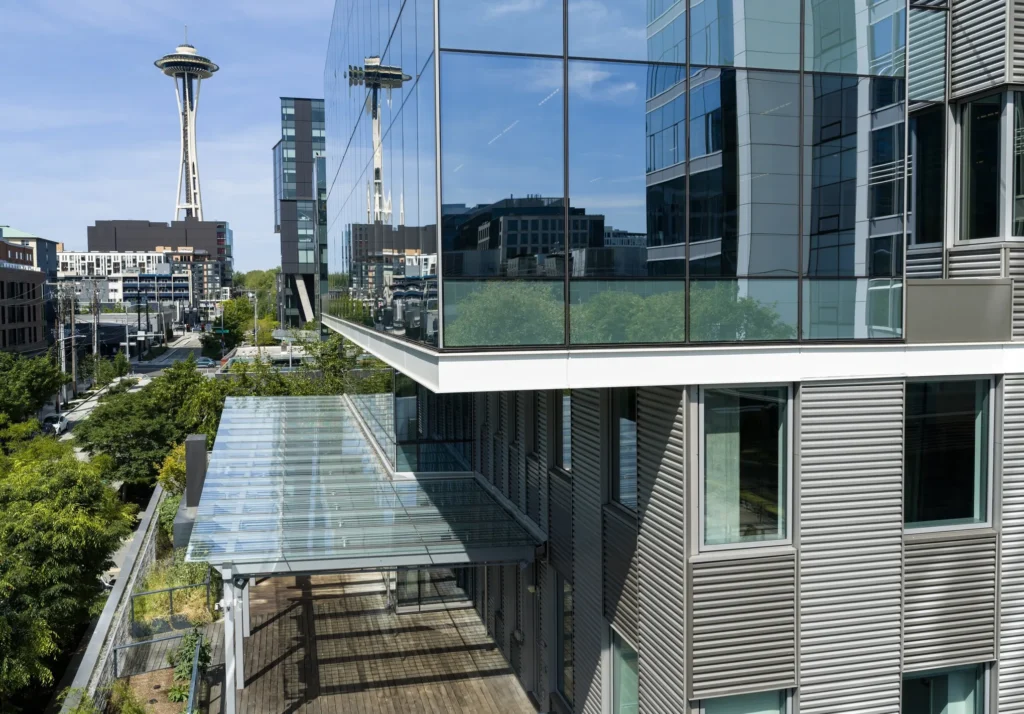
Why Seattle Matters So Much in the AI Economy
Seattle has long been one of America’s most influential technology centers.
The region already hosts major operations connected to:
- Cloud computing
- Software engineering
- Artificial intelligence research
- E-commerce infrastructure
- Enterprise technology
Unlike some tech hubs built mainly around startups, Seattle developed deep engineering ecosystems tied to large-scale technology infrastructure.
That matters enormously in the AI era.
Modern AI requires:
- Massive computing power
- Cloud systems
- Advanced networking
- Research talent
- Specialized hardware
- Data infrastructure
Seattle sits directly inside that ecosystem.
Which is why office demand is starting to rise again even after years of remote-work disruption.
The AI Boom Is Reversing Some Pandemic-Era Assumptions
After COVID-19, many analysts predicted:
- Permanent remote work dominance
- Reduced office demand
- Urban commercial decline
- Shrinking downtown business districts
Some of those trends remain real.
But AI development introduced a major complication:
Elite technical collaboration often works better in person.
Companies building advanced AI systems increasingly want teams physically together for:
- Research coordination
- Hardware development
- Security
- Rapid experimentation
- Executive oversight
- Competitive secrecy
The AI race moves extremely fast.
Firms fear losing momentum if collaboration slows.
That urgency is helping revive demand for premium office space.
Why AI Companies Suddenly Need More Physical Space
At first glance, AI seems like a purely digital business.
In reality, AI expansion creates enormous physical infrastructure needs.
Companies require space for:
- Engineers
- Researchers
- Data scientists
- Chip development teams
- AI operations staff
- Cloud infrastructure coordination
- Legal and policy divisions
Even more importantly:
AI growth drives demand for massive computing infrastructure connected to data centers and cloud systems.
The AI economy may appear virtual…
…but it relies heavily on physical concentration of talent and hardware.
The Best Office Spaces Are Winning Again
One major shift in commercial real estate:
Not all office space is recovering equally.
Many companies now prefer:
- High-end buildings
- Centralized locations
- Modern infrastructure
- Flexible layouts
- Energy-efficient systems
- Premium amenities
Older office properties still struggle in many cities.
But elite buildings in major tech hubs increasingly attract demand again.
This creates what economists sometimes call:
“Flight to quality.”
Companies want fewer offices overall…
but better offices.
Especially when competing aggressively for top AI talent.
AI Talent Competition Is Becoming Intense
One reason firms continue expanding physically:
The war for AI talent is exploding.
Top AI researchers and engineers now command extraordinary salaries and influence.
Companies compete fiercely to recruit specialists in:
- Machine learning
- Large language models
- AI infrastructure
- Robotics
- Cloud computing
- Chip optimization
Office environments increasingly function as recruiting tools themselves.
Modern tech campuses aim to attract workers through:
- Collaboration spaces
- Amenities
- Prestige
- Networking opportunities
- Innovation culture
In the AI economy, human talent remains the most valuable resource.
Remote Work Is Not Dead — But It Is Changing
The office rebound does not necessarily mean a return to 2019 work culture.
Hybrid work remains widespread.
Many companies now operate through combinations of:
- Remote flexibility
- Partial office schedules
- Team collaboration days
- Distributed operations
However, AI competition appears to be strengthening arguments for more in-person coordination at least among elite technical teams.
This creates a new divide:
Some workers retain flexibility.
Others face increasing pressure to return physically.
Especially inside highly competitive AI divisions.
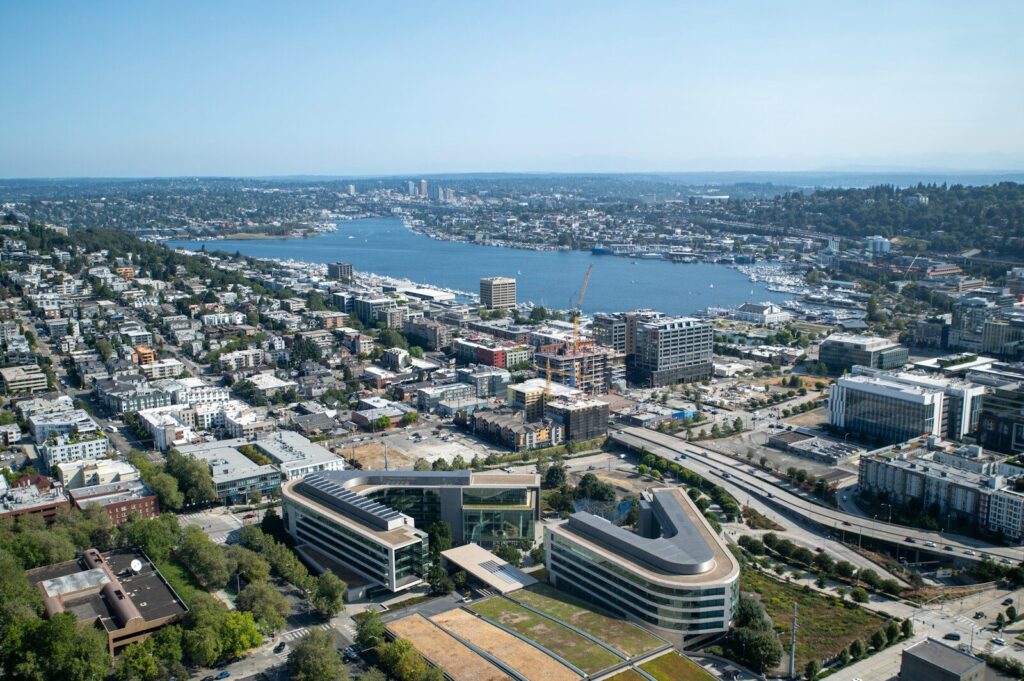
Seattle’s Downtown Economy Could Benefit Significantly
The return of office leasing affects far more than landlords.
When tech workers return downtown, they also support:
- Restaurants
- Retail stores
- Transit systems
- Cafes
- Service industries
- Apartment demand
Large office districts operate as economic ecosystems.
Pandemic-era emptiness severely damaged many urban business centers.
Renewed tech expansion could therefore help stabilize broader city economies.
Especially in technology-heavy regions like Seattle.
But Housing Pressure Could Intensify Again
Seattle already struggled with:
- High housing costs
- Affordability problems
- Gentrification pressures
- Uneven economic growth
A new AI-driven expansion wave could intensify these issues.
Highly paid AI workers may further increase:
- Real estate demand
- Rent prices
- Cost-of-living pressures
This pattern has appeared repeatedly during previous tech booms.
Economic growth often brings prosperity…
but not evenly distributed prosperity.
That tension may return aggressively in AI-heavy cities.
AI Growth Also Changes Urban Infrastructure Needs
AI expansion is not just about office towers.
The broader ecosystem requires:
- Power infrastructure
- Fiber networks
- Transportation systems
- Data centers
- Energy capacity
- Water resources for cooling systems
Modern AI systems consume enormous computational resources.
That means the AI economy increasingly intersects with physical infrastructure planning.
Cities competing for AI investment may need to rethink:
- Energy policy
- Zoning
- Real estate development
- Transit expansion
The AI boom could reshape urban planning itself.
Investors Are Watching Commercial Real Estate Carefully
Commercial real estate suffered major stress after remote work expanded.
Now investors are trying to determine:
- Which cities recover fastest
- Whether office demand stabilizes
- Which sectors drive leasing growth
- How AI changes workspace needs
Seattle’s rebound matters because it may signal broader national trends.
If AI-driven office demand expands elsewhere, commercial real estate markets could partially recover after years of pessimism.
But the recovery may remain uneven and concentrated in elite tech corridors.
AI Companies Are Becoming the New Anchor Tenants
Historically, major office districts relied on:
- Banks
- Law firms
- Insurance companies
- Government offices
Increasingly, AI firms may become the next generation of anchor tenants shaping urban business districts.
This reflects a broader economic transition:
Artificial intelligence is evolving from a niche industry into foundational infrastructure across the global economy.
And cities positioned near AI ecosystems may gain enormous advantages.
The AI Economy Is Creating a New Corporate Geography
Not every city will benefit equally from AI growth.
AI expansion tends to cluster around regions with:
- Research universities
- Engineering talent
- Cloud infrastructure
- Venture capital
- Existing technology ecosystems
Seattle already possesses these advantages.
That could deepen geographic inequality between:
- High-tech AI hubs
and - Regions left outside the new economy
This divide may become one of the defining economic issues of the next decade.
Why Tech Companies Are Expanding Despite Economic Uncertainty
At first glance, aggressive expansion seems surprising given:
- Layoffs
- Economic volatility
- High interest rates
- Global instability
But AI changed corporate psychology.
Many executives now fear:
Falling behind in AI may become existential.
That fear drives:
- Hiring
- Infrastructure investment
- Office leasing
- Research expansion
The current AI race increasingly resembles a strategic arms competition among technology giants.
And companies are spending accordingly.
The Bigger Picture
The resurgence of tech office leasing in Seattle reveals something larger than commercial real estate recovery.
It signals that artificial intelligence is beginning to reshape the physical geography of economic power.
For years, many believed the future of work would become fully decentralized.
The AI era may partially reverse that assumption.
Because while software can operate anywhere, innovation ecosystems still depend heavily on:
- Talent concentration
- Infrastructure density
- Research collaboration
- Competitive speed
That reality may pull power, money, and opportunity back toward elite technology hubs.
And once again, cities like Seattle could become central battlegrounds in the race to control the next era of computing.
The office towers filling back up are therefore not merely symbols of post-pandemic recovery.
They are early signs that the AI economy is starting to physically reorganize modern urban life itself.
Frequently Asked Questions (FAQ)
Why is tech office leasing increasing in Seattle?
Seattle is benefiting from growing AI investment, cloud infrastructure expansion, and demand for high-skilled engineering collaboration.
How is AI affecting office demand?
AI development often requires close collaboration among engineers, researchers, and executives, increasing demand for premium office spaces.
Is remote work ending?
Not completely.
Many companies continue hybrid work models, but some AI-focused teams are returning to offices more frequently.
Why are tech companies expanding despite layoffs?
Many firms believe AI competition is strategically critical and fear falling behind rivals in the rapidly evolving AI market.
What kinds of workers are most in demand?
Companies are heavily recruiting:
- AI researchers
- Machine learning engineers
- Data scientists
- Cloud infrastructure specialists
- Hardware optimization experts
Could AI growth increase housing costs in Seattle?
Potentially yes.
High-paying AI jobs may increase housing demand and worsen affordability pressures in tech-heavy cities.
Why are premium office buildings recovering faster?
Companies increasingly prefer modern, high-quality offices with better infrastructure, amenities, and collaborative environments.
How does AI affect urban infrastructure?
AI growth increases demand for:
- Electricity
- Data centers
- Fiber networks
- Cooling systems
- Transportation infrastructure
Why is Seattle strategically important in AI?
The city already has strong cloud computing, software engineering, and technology ecosystems that support advanced AI development.

Could AI reshape city economies long term?
Very likely.
AI investment may increasingly influence:
- Real estate markets
- Infrastructure planning
- Employment patterns
- Economic concentration
- Urban development strategies
Sources The Seattle Times

