

From the labs of IBM, Google and Microsoft to global technology road‑maps, quantum computing is no longer sci‑fi—it’s hurtling toward the mainstream. But while the headlines talk about “a seismic shift in computing,” the reality is far more nuanced. Let’s unpack what’s coming, what still holds the field back, and what it means for business, society and you.
Why Quantum Matters
Traditional computers use bits—0 or 1. Quantum computers use qubits, which can be 0 and 1 (and many states in between) thanks to quantum mechanics. That means certain types of problems—especially ones involving simulation, optimization, cryptography—could be solved in ways absolutely impossible for classical machines.
Here’s why this matters:
- Massive speed‑ups: Companies like Google claim new quantum algorithms run thousands of times faster than today’s supercomputers for specific tasks.
- New kinds of problems: Drug design, materials discovery, climate modelling, supply‑chain optimization—all get a major boost.
- New risk profiles: Current encryption and cybersecurity models rely on classical hardness; quantum threatens to upend that.
- Global tech leadership: Big tech and nations are pouring billions into quantum—who leads may decide who dominates next‑gen computing.
What the Big Players Are Doing
IBM
IBM is pushing hard on the “fault‑tolerant quantum computer” roadmap. Its recent chip named Loon promises to show a path to useful quantum machines by 2029.
IBM also stresses open ecosystems (research + industry) so that quantum isn’t locked away as elite tech—anyone can contribute.
Google continues its “move fast” strategy—focusing on superconducting qubits and quantum supremacy milestones. It has released new algorithms that push the boundary of what quantum advantage looks like.
Microsoft
Microsoft is taking a slightly different tack: focusing on stability and scalability, including topological qubits (less susceptible to error) and major global investments (for instance a new quantum lab in Denmark).
What the Rising Quantum Tide Has Still to Tackle
While the promise is vast, there are critical obstacles:
- Error rates and coherence
Physical qubits are extremely fragile. Noise, interference, temperature, quantum decoherence—all introduce errors. The companies above are deeply invested in error‑correction methods and new materials. - Scalability
A system with a few dozen or even a few hundred qubits is exciting—but the kinds of problems we hope quantum will solve often require thousands or even millions of logical qubits. That’s a leap. - Useful vs theoretical advantage
Achieving “quantum supremacy” (doing something a classical computer practically can’t) is one thing; creating quantum computers that deliver useful, economically valuable outputs is another. Many experts stress we’re still in the former phase. - Industrialisation & ecosystem
It’s not just about building the machine; it’s about tooling, programming languages, algorithms, cloud access, enterprise readiness. The software stack, user skill sets, integration into business workflows—these take time. - Ethics, security and regulation
When quantum can break today’s cryptography or simulate materials for weaponised use—governance becomes a major concern. - Time horizon and investment risk
Many companies and governments are betting on quantum appearing in the next 5‑10 years. But if the timeline slips, there’s risk of over‑investment, hype backlash and capital wasted.
What the Original Coverage Left Out
The article gave a good overview of the big shift happening. Here are areas that could use deeper context:
- Differentiation of architectures: Qubits come in many flavours (superconducting, ion‑trap, topological). Companies’ strategic bets vary. That matters for which machines will scale.
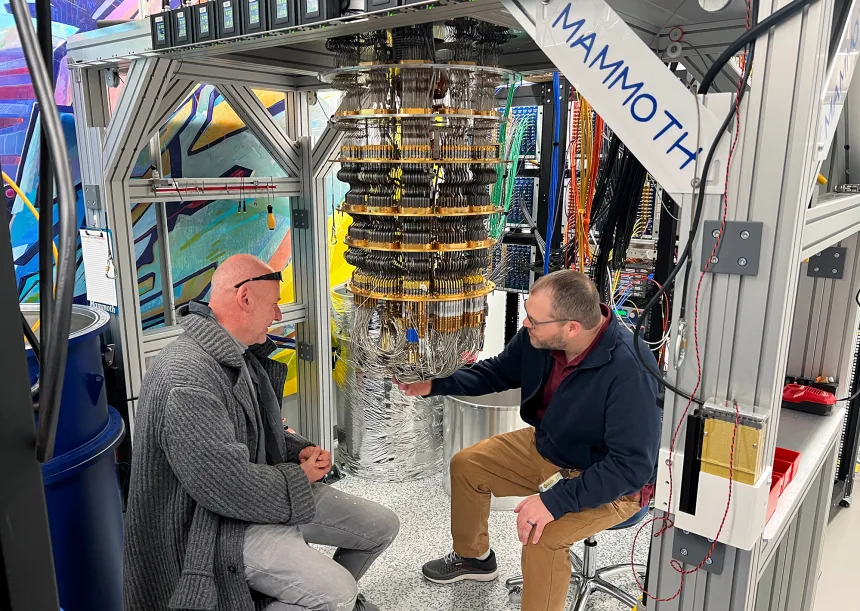
- Cost / energy footprint: Quantum machines require extreme cooling (millikelvins), massive cryogenic infrastructure and dense wiring. The total cost of ownership and energy use will matter.
- Business‑model disruption: It’s not enough to build a quantum computer; companies need commercial models: quantum‑as‑a‑service, industry‑specific solutions, hybrid classical‑quantum workflows.
- Industrial readiness by sector: Some sectors are more ready than others. For example, defence, pharma, materials science may leap ahead; others may wait.
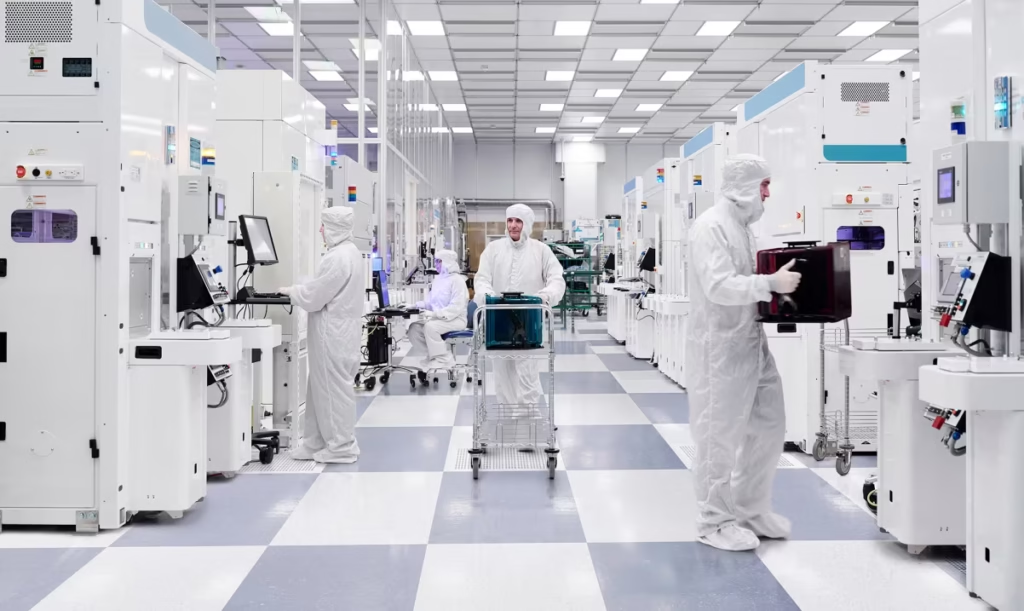
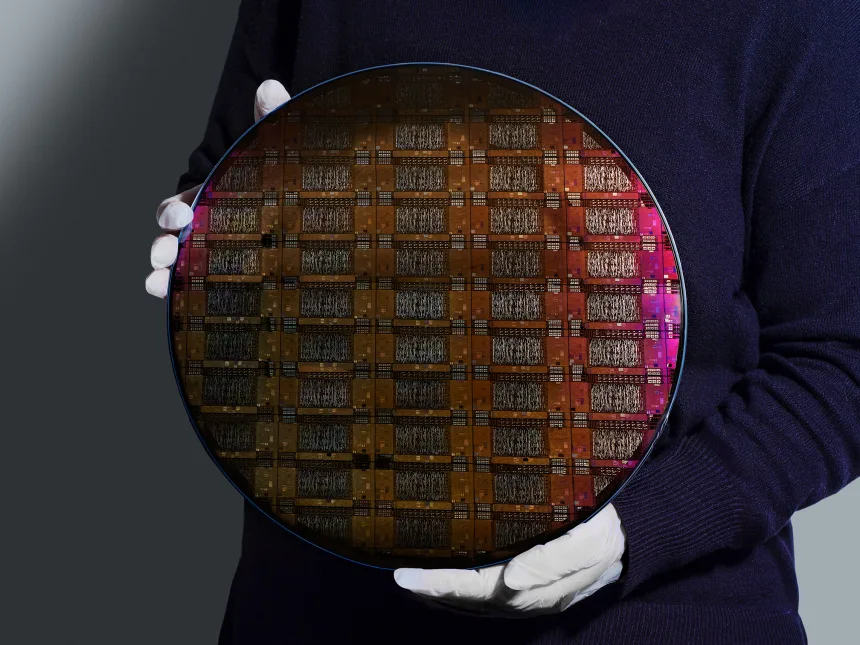
- Geopolitical and supply‑chain risks: Chips, rare materials, clean‑room production, specialised cooling—countries with weaker infrastructure may lag or become dependent on others.
- Transition period complexity: This isn’t a “switch on and done” moment—it’s likely to be a transitional decade where classical and quantum coexist, hybrid solutions dominate, and many projects will fail.
What This Means for Businesses, Society & Individuals
For businesses
- Start exploring quantum—not necessarily buying or deploying, but building awareness, defining use‑cases, training staff, forming partnerships.
- Focus on hybrid readiness: quantum + classical computation working together.
- Identify where quantum could create competitive advantage: faster R&D, logistics optimisation, code‑breaking, new materials.
- Monitor cost‑benefit and timing. Don’t over‑commit prematurely.
For society & policy‑makers
- Invest in skills and education: quantum literacy will matter.
- Develop frameworks for quantum security and governance (especially cryptography, data integrity).
- Encourage open research and international collaboration to avoid an “arms race” only.
- Watch how quantum may exacerbate inequalities: digital divide could become quantum divide.
For tech professionals & individuals
- Learn quantum basics: superposition, entanglement, qubits, quantum error‑correction.
- Consider future‑proofing your skill‑set: quantum computing concepts, quantum‑aware programming, hybrid classical/quantum architectures.
- Keep realistic timelines in mind. If you’re expecting quantum to fully replace all computing in 2 years—you’ll be disappointed. Patience and persistence matter.
Frequently Asked Questions (FAQ)
Q1: When will quantum computers become useful for real‑world applications?
A1: There’s no exact date—but many companies (IBM, Google) believe by the late 2020s or early 2030s we’ll see quantum computers doing commercially meaningful work. That said, smaller “quantum‑helping” roles (e.g., acceleration, optimisation) might appear sooner.
Q2: Will quantum computing replace classical computing entirely?
A2: No. Quantum will augment—not replace—classical for the foreseeable future. Many tasks remain best suited to classical machines. Quantum will excel at specific domains (e.g., optimisation, simulation, cryptography) while classical handles general workloads.
Q3: Which industries will be impacted first?
A3: Likely candidates: pharmaceuticals (drug discovery), materials science, chemicals, logistics and supply‑chain optimisation, finance (complex modelling), defence and cryptography. These tasks map well to quantum strengths.
Q4: Is quantum computing just hype with no real progress?
A4: Progress is real—as seen in new chips, algorithms, labs. But there is still a gap between lab prototypes and wide‑scale utility. It’s not hype‑only, but it’s also not “done”.
Q5: What barriers remain that might delay quantum’s impact?
A5: Key issues: error‑rates and coherence, scalability (thousands/millions of qubits), cost and energy requirements, industry‑ready software/hardware stack, availability of quantum talent, regulation and security.
Q6: Can I invest in quantum computing now?
A6: Yes—but with caution and realism. Direct hardware companies are risky; you might look at software, cloud services, quantum‑adjacent firms. Time‑horizon and diversification are critical.
Q7: What should I learn if I’m a developer or student interested in quantum?
A7: Basics of quantum mechanics (superposition, entanglement), qubit architectures, quantum programming languages (Qiskit, Cirq, Q#), hybrid classical/quantum algorithms, quantum error correction, quantum‑aware business use‑cases.
Final Thoughts
Quantum computing isn’t just another tech upgrade—it promises a paradigm shift in computation. But the path to that future is rugged, filled with engineering fire‑storms, high costs and long timelines. The tide is rising, but we’re still figuring out how to build the boats.
For businesses, governments and individuals alike, the smart play isn’t to panic about missing a “quantum wave”—it’s to position, learn, adapt and signal readiness. Because when the quantum tide finally turns fully, those who prepared earlier will ride, not scramble.
Sources CNN

