
Artificial intelligence is rapidly reshaping healthcare, making diagnostics faster and more precise. From radiology to colonoscopy, AI tools are helping doctors detect abnormalities with stunning speed. But a new study raises an urgent question: Are these tools making doctors better—or slowly making them worse?
Here’s what the research uncovered, why it matters, and how we can ensure technology enhances human skill instead of replacing it.

🧪 The Study That Sparked Concern
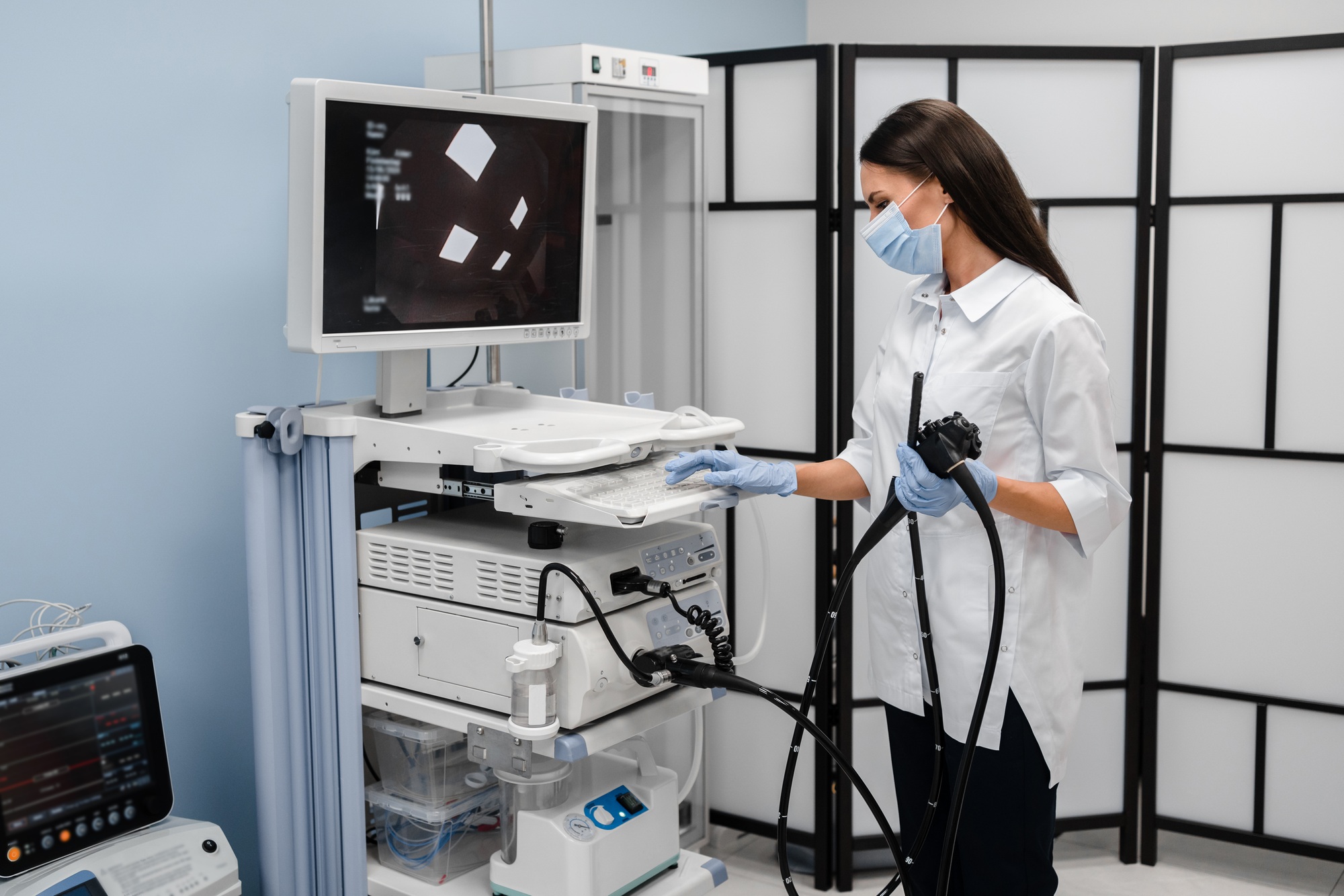
In one of the first real-world investigations of AI’s long-term impact on medical skills, researchers observed over 1,400 colonoscopy procedures across four endoscopy centers in Poland. The focus? How AI assistance affected the performance of experienced doctors.
Here’s what they found:
- When doctors used AI tools to assist colonoscopies, their adenoma detection rate (ADR) remained solid—around 25.3%.
- But when those same doctors performed procedures without AI, their performance dropped significantly, with ADR falling from 28.4% to 22.4%—a decrease of roughly 20%.
In simple terms: when doctors got used to AI help, they became less effective on their own.
🧠 Why Is This Happening?
Researchers compare this phenomenon to the “Google Maps effect”: if you stop navigating for yourself, you slowly forget how. Doctors relying on AI might unconsciously:
- Pay less attention to visual details
- Scan more narrowly, waiting for the AI to highlight something
- Lose confidence when AI is suddenly unavailable
Over time, this can create a dangerous dependency—especially in settings where AI might malfunction, be unavailable, or offer incorrect advice.
⚖️ The Fine Line: Support vs. Substitution
This study doesn’t mean AI is bad for medicine. Quite the opposite—AI tools can help save lives by spotting things humans might miss.
But it does highlight a risk that’s often overlooked: the erosion of human skill. If clinicians become too dependent on the tech, their instincts, pattern recognition, and decision-making could suffer.
🔍 What Experts Are Saying
- Medical leaders warn of “de-skilling” in the era of AI. As automation grows, the need to protect core clinical abilities becomes more urgent.
- Researchers advocate for “human-centered AI”—technology that supports doctors without letting them disengage.
- Usability, design, and training matter as much as the algorithm itself. Doctors should always remain the decision-makers.
❓ Frequently Asked Questions
1. Does AI actually lower doctor performance?
Only when over-relied upon. When used properly, AI boosts accuracy. But this study shows that skills may decline if doctors become passive users.
2. Is AI still useful in medicine?
Absolutely. It helps detect cancer earlier, streamline diagnoses, and reduce error—but it must be part of a balanced, skill-building system.
3. Can these skills be recovered?
Yes—with ongoing training, regular evaluations without AI support, and conscious strategies to keep clinicians fully engaged.
4. Should hospitals stop using AI?
No. But they should use it responsibly, ensuring doctors stay in control and maintain their diagnostic sharpness.
5. What’s the risk to patients?
If doctors lose skill or over-trust AI, subtle issues might be missed—especially if the AI isn’t functioning or makes an error.
6. What’s the solution?
Strategies like:
- “AI-off” training days
- Mixed workflows with and without AI
- Designing tools that require active engagement
…can help ensure AI becomes an assistant—not a crutch.
🩺 Final Thoughts
AI is revolutionizing healthcare—but we can’t let it replace the human instinct, attention, and wisdom that great doctors rely on. This isn’t about rejecting technology—it’s about mastering it without losing ourselves in the process.
As we enter the next chapter of AI-powered medicine, let’s make sure our doctors remain not just informed—but empowered.

Sources NPR

