
Artificial intelligence is rapidly changing the way people create visual content. What once required professional graphic designers, photographers, or digital artists can now be accomplished in seconds through simple text prompts. From realistic photographs and artistic illustrations to marketing materials and product mockups, AI image generators are becoming an essential part of the modern creative workflow.
Adding to the growing competition in generative AI, Meta has introduced a new AI image generation system designed to create high-quality visuals from natural language prompts. The launch strengthens Meta’s position in the increasingly competitive AI market, where technology companies are racing to develop more powerful, faster, and more accurate generative models.
The introduction of another advanced image generation model reflects a broader trend across the industry. AI is no longer viewed as a niche creative tool—it is becoming a core technology for content creation, advertising, education, software development, entertainment, and business productivity.

What Is an AI Image Generator?
An AI image generator is a machine learning system that creates images based on written descriptions.
Instead of manually drawing or editing graphics, users simply describe what they want.
For example:
“A futuristic city at sunset with flying vehicles and lush rooftop gardens.”
The AI interprets the prompt and generates one or more original images matching the description.
Modern systems can produce:
- realistic photography
- digital paintings
- anime-style artwork
- concept art
- product visualizations
- logos
- illustrations
- architectural renderings
The technology has improved dramatically over the past few years, producing images with greater realism, consistency, and creative flexibility.
How Modern AI Image Models Work
Most advanced image generators are built using deep learning techniques trained on enormous datasets containing billions of image-text relationships.
These models learn to associate:
- objects
- colors
- lighting
- composition
- artistic styles
- textures
- spatial relationships
When users enter prompts, the AI predicts visual patterns that correspond to the requested description.
Recent advances also improve:
- prompt understanding
- text rendering
- facial consistency
- object relationships
- image editing
- multimodal reasoning
These improvements allow AI to create increasingly sophisticated visual content.
Why Meta Is Investing Heavily in Generative AI
Meta views artificial intelligence as one of its most important long-term strategic priorities.
The company’s AI investments extend across multiple areas.
These include:
- image generation
- video generation
- conversational AI
- recommendation systems
- augmented reality
- virtual reality
- AI assistants
- developer tools
Generative AI has become particularly important because it can enhance many of Meta’s products and platforms by helping users create content more easily and efficiently.
Competition in the AI Image Generation Market
Meta enters an increasingly crowded market.
Major technology companies and AI startups are developing image generation systems focused on different strengths, including:
- photorealism
- artistic creativity
- speed
- editing capabilities
- commercial design
- enterprise workflows
- multimodal AI
Competition is driving rapid innovation, resulting in higher-quality outputs, faster generation times, and more advanced creative features.
Business Applications Are Expanding Quickly
AI-generated images are becoming valuable across many industries.
Marketing
Businesses can rapidly produce advertisements, banners, and promotional graphics.
E-commerce
Retailers generate product mockups, lifestyle images, and promotional visuals without expensive photoshoots.
Education
Teachers create customized illustrations, diagrams, and learning materials.
Architecture
Designers visualize buildings, interiors, and urban planning concepts.
Entertainment
Studios accelerate concept art, storyboarding, and pre-production workflows.
Publishing
Authors and publishers generate book covers, editorial illustrations, and visual assets.
The ability to create customized visuals in minutes significantly reduces production time.
AI Is Changing Creative Workflows
Rather than replacing creative professionals entirely, AI is increasingly becoming a collaborative tool.
Designers often use AI for:
- brainstorming ideas
- rapid prototyping
- exploring concepts
- creating mood boards
- generating variations
- refining compositions
Human creativity remains essential for directing projects, making artistic decisions, and ensuring outputs align with client goals.
AI accelerates production but does not eliminate the need for creative judgment.
Challenges Facing AI Image Generation
Despite impressive progress, several challenges remain.
Copyright
Questions continue regarding how training data should be collected and whether creators should receive compensation when their work contributes to AI training.
Misinformation
Highly realistic AI-generated images may be used to create misleading or deceptive content if appropriate safeguards are absent.
Bias
Training data may unintentionally reflect societal biases, influencing generated images.
Developers continue working to improve fairness and representation.
Authenticity
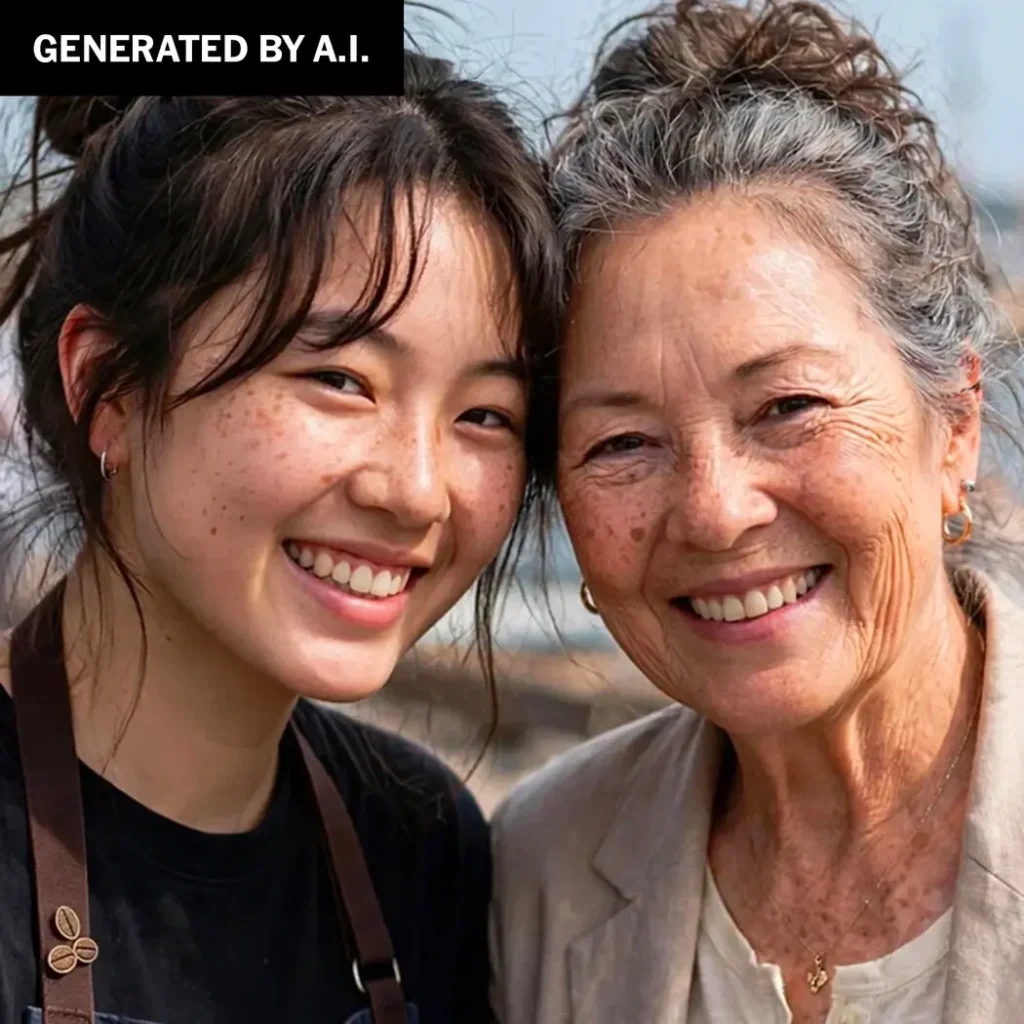
As AI-generated images become increasingly realistic, distinguishing synthetic content from genuine photography becomes more difficult.
This raises important questions for journalism, advertising, and public trust.
Safety Features Are Becoming More Important
AI companies increasingly implement safeguards designed to reduce harmful uses.
Common protections include:
- content moderation
- prompt restrictions
- abuse detection
- watermarking
- provenance technologies
- identity protection
These measures aim to encourage responsible use while preserving creative flexibility.
Multimodal AI Is the Next Frontier
Image generation is increasingly integrated with other AI capabilities.
Future systems may seamlessly combine:
- text
- images
- video
- audio
- animation
- 3D models
- interactive interfaces
Rather than generating individual images, AI may soon produce complete multimedia experiences from simple instructions.
The Future of Personalized Content
AI enables highly personalized visual creation.
Businesses may eventually generate unique marketing materials tailored to each customer.
Educational platforms could produce customized illustrations for every learner.
Game developers may generate personalized environments based on player preferences.
This shift toward individualized content represents one of the most significant long-term opportunities for generative AI.
The Role of Human Creativity
Although AI can generate remarkable visuals, it lacks personal experiences, emotional understanding, cultural nuance, and artistic intention.
Human creators remain responsible for:
- defining creative direction
- evaluating quality
- understanding audiences
- making ethical decisions
- communicating meaning
The strongest creative workflows increasingly combine AI efficiency with human imagination.
What the Future May Hold
AI image generation will likely continue improving in several areas.
Future developments may include:
- higher resolution
- faster generation
- better prompt accuracy
- stronger editing tools
- improved character consistency
- realistic physics
- seamless video generation
- real-time collaborative creation
As these technologies mature, AI-generated visuals are expected to become a routine part of both personal creativity and professional content production.
The Bottom Line
Meta’s latest AI image generator represents another major milestone in the rapid evolution of generative artificial intelligence. As text-to-image models become more powerful, they are reshaping how individuals and businesses create visual content, lowering barriers to creativity while dramatically increasing speed and accessibility.
At the same time, the growth of AI-generated imagery brings important responsibilities. Issues surrounding copyright, misinformation, authenticity, and ethical use will require continued attention from technology companies, regulators, creators, and users alike.
Ultimately, the future of digital creativity is unlikely to be defined by humans or AI working independently. Instead, it will be shaped by collaboration between human imagination and increasingly capable intelligent tools. Those who learn to combine artistic vision with AI-assisted creation will be well positioned to thrive in the next generation of digital content production.
Frequently Asked Questions (FAQ)
1. What is Meta’s AI image generator?
Meta’s AI image generator is a text-to-image system that creates original images from written prompts. It uses advanced deep learning models to generate realistic or artistic visuals based on natural language descriptions.
2. How do AI image generators work?
They are trained on large datasets containing images paired with descriptive text. The models learn relationships between language and visual concepts, allowing them to generate new images that match user prompts.
3. Can AI image generators replace graphic designers?
Not entirely. AI is excellent for accelerating ideation, prototyping, and routine content creation, but human designers remain essential for creative direction, storytelling, branding, strategy, and ensuring outputs meet specific project goals.
4. Are AI-generated images subject to copyright concerns?
Yes. Ongoing debates involve how training data is collected, whether artists should receive compensation, ownership of AI-generated content, and the legal treatment of synthetic media across different jurisdictions.
5. What industries benefit most from AI image generation?
Marketing, advertising, e-commerce, education, entertainment, architecture, publishing, product design, gaming, media, and social content creation are among the sectors rapidly adopting AI-generated imagery to improve efficiency and reduce production costs.
Sources The New York Times

