

For years, the world’s largest technology companies have positioned themselves as leaders in the fight against climate change—pledging carbon neutrality, renewable energy adoption and ambitious sustainability goals. But as artificial intelligence surges forward, a growing contradiction is becoming impossible to ignore.
Behind the scenes, the rapid expansion of AI-powered data centers is driving a massive increase in energy consumption—often forcing companies to rely on fossil fuels to keep up with demand.
This tension between innovation and sustainability is raising a critical question: Can Big Tech meet its climate goals while fueling the AI revolution?
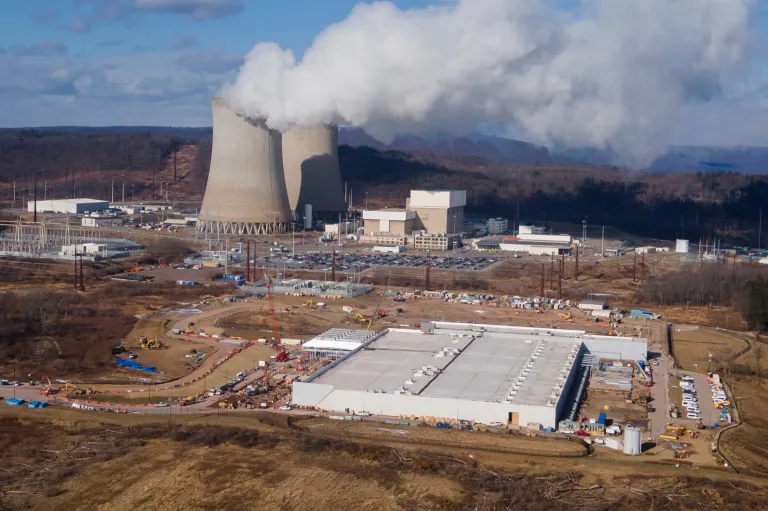
The AI Boom Is Fueling an Energy Explosion
Artificial intelligence systems—especially large language models and advanced machine learning platforms—require enormous computing power.
Training and running these systems depends on:
- high-performance GPUs
- massive data centers
- continuous, high-volume energy consumption
A single advanced AI model can consume as much electricity as thousands of homes during training.
And once deployed, these models require constant power to serve millions—or even billions—of users.
Data Centers: The Hidden Backbone of AI
At the center of this issue are data centers, the physical infrastructure that powers AI.
Modern data centers:
- house tens of thousands of servers
- run 24/7 without interruption
- require extensive cooling systems
- consume vast amounts of electricity
As AI adoption grows, companies are building new data centers at an unprecedented pace.
Some regions are seeing surging demand for electricity, straining local power grids.
Why Renewable Energy Isn’t Enough (Yet)
Many tech companies have committed to using renewable energy sources such as:
- solar
- wind
- hydroelectric power
However, there are limitations.
Intermittency
Renewable energy sources are not always available (e.g., solar at night, wind variability).
Infrastructure Gaps
In some regions, renewable energy infrastructure cannot scale quickly enough to meet demand.
Storage Challenges
Energy storage technologies are still developing and may not fully support continuous data center operations.
As a result, companies sometimes rely on fossil fuels—particularly natural gas—to ensure stable power supply.
The Climate Commitment Dilemma
Big Tech companies have made bold promises, including:
- achieving net-zero emissions
- operating on 100% renewable energy
- reducing carbon footprints
But the rapid growth of AI is complicating these commitments.
Key challenges include:
- rising energy consumption outpacing renewable capacity
- increased reliance on backup fossil fuel sources
- difficulty tracking and offsetting emissions
This creates a gap between public commitments and operational reality.
The Rise of “Carbon Accounting” Complexity
To manage emissions, companies use methods such as:
- carbon offsets
- renewable energy credits
- power purchase agreements
While these strategies can reduce reported emissions, critics argue that they:
- may not reflect actual energy use
- can obscure reliance on fossil fuels
- vary in effectiveness and transparency
This has sparked debate about whether companies are truly reducing their environmental impact—or simply managing perceptions.
AI’s Role in Climate Solutions
Ironically, the same technology contributing to energy demand can also help address climate challenges.
AI is being used to:
- optimize energy grids
- improve renewable energy forecasting
- reduce industrial emissions
- enhance climate modeling
These applications could offset some of AI’s environmental impact—but only if deployed effectively.

The Infrastructure Race: Speed vs Sustainability
The urgency to build AI infrastructure is creating a trade-off.
Speed
Companies want to deploy data centers quickly to stay competitive.
Sustainability
Building environmentally friendly infrastructure takes time and investment.
In many cases, speed is winning.
This leads to decisions such as:
- using existing fossil fuel-based power sources
- delaying sustainability upgrades
- prioritizing performance over efficiency
Government and Regulatory Pressure
Governments are beginning to take notice.
Potential responses include:
- stricter emissions regulations
- incentives for renewable energy use
- limits on data center expansion in certain regions
- requirements for transparency in energy usage
Some regions are already facing pushback from local communities concerned about:
- environmental impact
- energy consumption
- water usage for cooling systems
The Future of Sustainable AI
To align AI growth with climate goals, several solutions are emerging.
Energy-Efficient Hardware
New chips designed to reduce power consumption.
Advanced Cooling Systems
Technologies that minimize energy use in data centers.
Renewable Integration
Direct connections between data centers and renewable energy sources.
AI Optimization
Using AI itself to make systems more energy-efficient.
Nuclear and Alternative Energy
Some companies are exploring nuclear power as a stable, low-carbon energy source.
A Defining Challenge for Big Tech
The clash between AI expansion and climate commitments represents one of the biggest challenges facing the tech industry.
Companies must navigate:
- increasing demand for AI services
- pressure from investors and regulators
- public expectations סביב sustainability
The decisions made now will shape not only the future of AI—but also its environmental impact.
Frequently Asked Questions (FAQ)
Q: Why do AI systems use so much energy?
AI models require powerful computing resources for training and operation, which consume large amounts of electricity.
Q: Are tech companies meeting their climate goals?
Some are making progress, but the rapid growth of AI is creating new challenges.
Q: Why can’t companies rely entirely on renewable energy?
Renewables are intermittent and may not always meet the constant energy demands of data centers.
Q: What are carbon offsets?
They are measures used to compensate for emissions, such as investing in environmental projects.
Q: Can AI help fight climate change?
Yes. AI can improve energy efficiency, climate modeling and resource management.
Q: Are governments regulating data center energy use?
Regulation is increasing, with some regions introducing policies to manage environmental impact.
Q: What is the future of sustainable AI?
It will likely involve more efficient technologies, better integration with renewables and new energy solutions.

Conclusion
The AI revolution is transforming the world—but it is also placing unprecedented demands on the planet’s energy systems.
Big Tech now faces a critical test: can it continue to innovate at scale while staying true to its climate commitments?
The answer will depend on how quickly the industry can adapt—balancing growth with sustainability, and ambition with responsibility.
Because in the race to build the future, the cost cannot be the planet itself.
Sources Fortune

