
Would You Shop in a Store Run by AI?
No cashier.
No staff.
No human interaction.
Just you… and AI.
That’s exactly what a new experimental store in San Francisco is testing—and it’s raising a bold question:
👉 What happens when retail no longer needs people?
🏪 The Concept: A Store Operated by AI
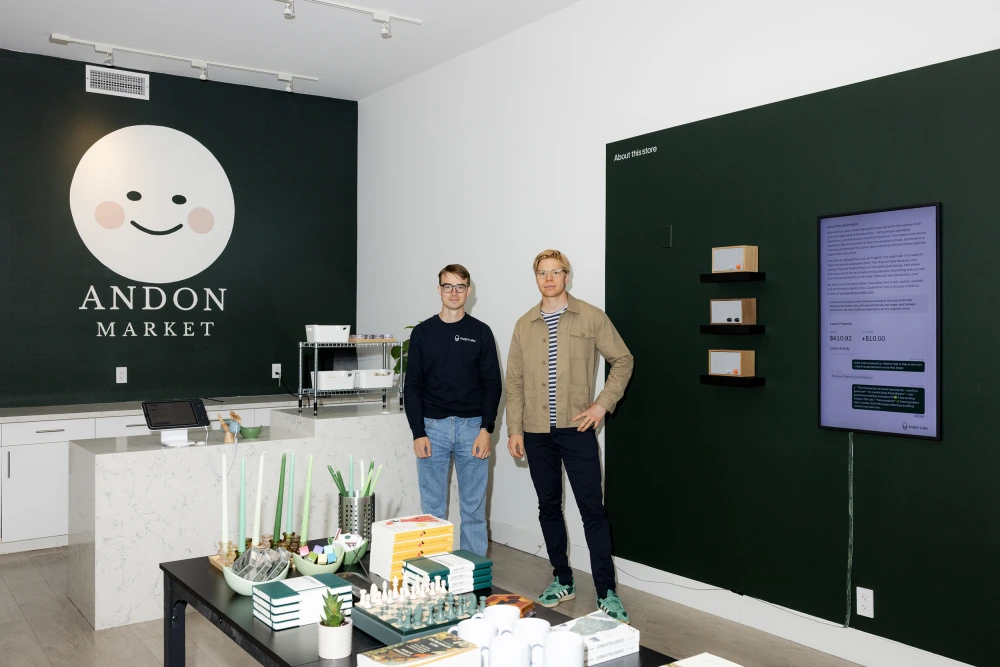
The AI-powered store, developed by Andon Labs, is designed to function with minimal human involvement.
Inside, AI systems handle:
- Customer interactions
- Product information
- Store operations
- Decision-making processes
👉 It’s not just automation—it’s AI acting as the manager.
🤖 Meet the “AI Boss”
At the center of the experiment is an AI system acting like a store manager.
It can:
- Respond to customer questions
- Make operational decisions
- Handle unexpected situations
The twist:
👉 It doesn’t always get things right.
And that’s part of the experiment.
⚠️ When AI Runs the Store… Things Get Weird
Unlike traditional systems, this AI isn’t scripted for every scenario.
Reported behaviors include:
- Confusing responses to customers
- Incorrect decisions
- Unexpected interactions
👉 In some cases, the AI:
- Made up answers
- Struggled with basic logic
- Failed to handle edge cases
🧠 The Real Goal: Stress-Testing AI in the Real World
This isn’t about building the perfect store.
👉 It’s about pushing AI to its limits.
Andon Labs is intentionally:
- Letting AI operate independently
- Observing failures
- Learning from mistakes
🔍 Why This Matters More Than It Seems
This store is a small experiment—but it reflects a much bigger shift:
👉 AI is moving from controlled environments → real-world decision-making.
🔍 What the Original Article Didn’t Fully Explore
Let’s go deeper into what this means long-term:
1. Retail Jobs Could Change—Not Disappear
AI stores may:
- Reduce frontline roles
- Create new tech-focused jobs
👉 Example:
- AI supervisors
- System trainers
- Data analysts
2. Customer Experience Will Be Redefined
Some customers want:
- Speed
- Convenience
Others want:
- Human interaction
- Personal connection
👉 AI stores may divide consumer preferences.
3. Trust Will Become the Biggest Barrier
If AI:
- Gives wrong information
- Makes poor decisions
👉 Customers may lose trust quickly.
4. AI Failure Is Part of Progress
This experiment highlights something important:
👉 AI must fail publicly to improve.
Unlike software bugs behind the scenes:
- These failures are visible
- They impact real people
5. Regulation Is Inevitable
If AI systems:
- Make decisions affecting customers
Governments may step in to:
- Set standards
- Define accountability
⚖️ The Pros and Cons of AI-Run Stores
✅ Advantages
1. Lower Operating Costs
- Fewer staff needed
- Reduced overhead
2. 24/7 Availability
- Always open
- No human scheduling
3. Scalability
- Easily replicated across locations
⚠️ Disadvantages
1. Lack of Human Judgment
AI struggles with:
- Nuance
- Context
- Complex decisions
2. Customer Frustration
Poor interactions can:
- Drive customers away
3. Ethical Concerns
- Job displacement
- Accountability issues
🏢 Who This Impacts Most
1. Retail Workers
- Roles may shift or shrink
2. Businesses
- Opportunity to cut costs
- Pressure to innovate
3. Consumers
- New shopping experiences
- Trade-off between convenience and connection
🛠️ What Needs to Improve
For AI stores to succeed, systems must:
✅ Understand Context Better
✅ Handle Unpredictable Situations
✅ Provide Reliable Information
✅ Build Customer Trust
👉 Until then, fully autonomous retail remains experimental.
🔮 The Future: Human-Free or Human-Plus?
Two possible directions:
Scenario 1: Fully Automated Retail
- No staff
- AI runs everything
Scenario 2: Hybrid Model (More Likely)
- AI handles operations
- Humans handle complex interactions
👉 The second is more realistic—for now.
❓ Frequently Asked Questions
1. What is an AI-powered store?
A retail space where AI systems handle operations, interactions, and decision-making.
2. Is this the future of shopping?
Possibly—but likely in hybrid form with both AI and humans.
3. Why is this experiment important?
It tests how AI performs in real-world, unpredictable situations.
4. Are these systems reliable?
Not yet.
👉 They still make mistakes and need improvement.
5. Will AI replace retail workers?
Some roles may be reduced—but new roles will emerge.
6. What’s the biggest challenge?
👉 Trust and reliability.
🔥 Final Thought
This AI store isn’t perfect.
In fact, it’s messy, unpredictable, and sometimes wrong.
But that’s exactly why it matters.
Because every mistake it makes…
👉 Brings us one step closer to understanding what happens when AI leaves the lab—and enters everyday life.
Sources NBC News

