
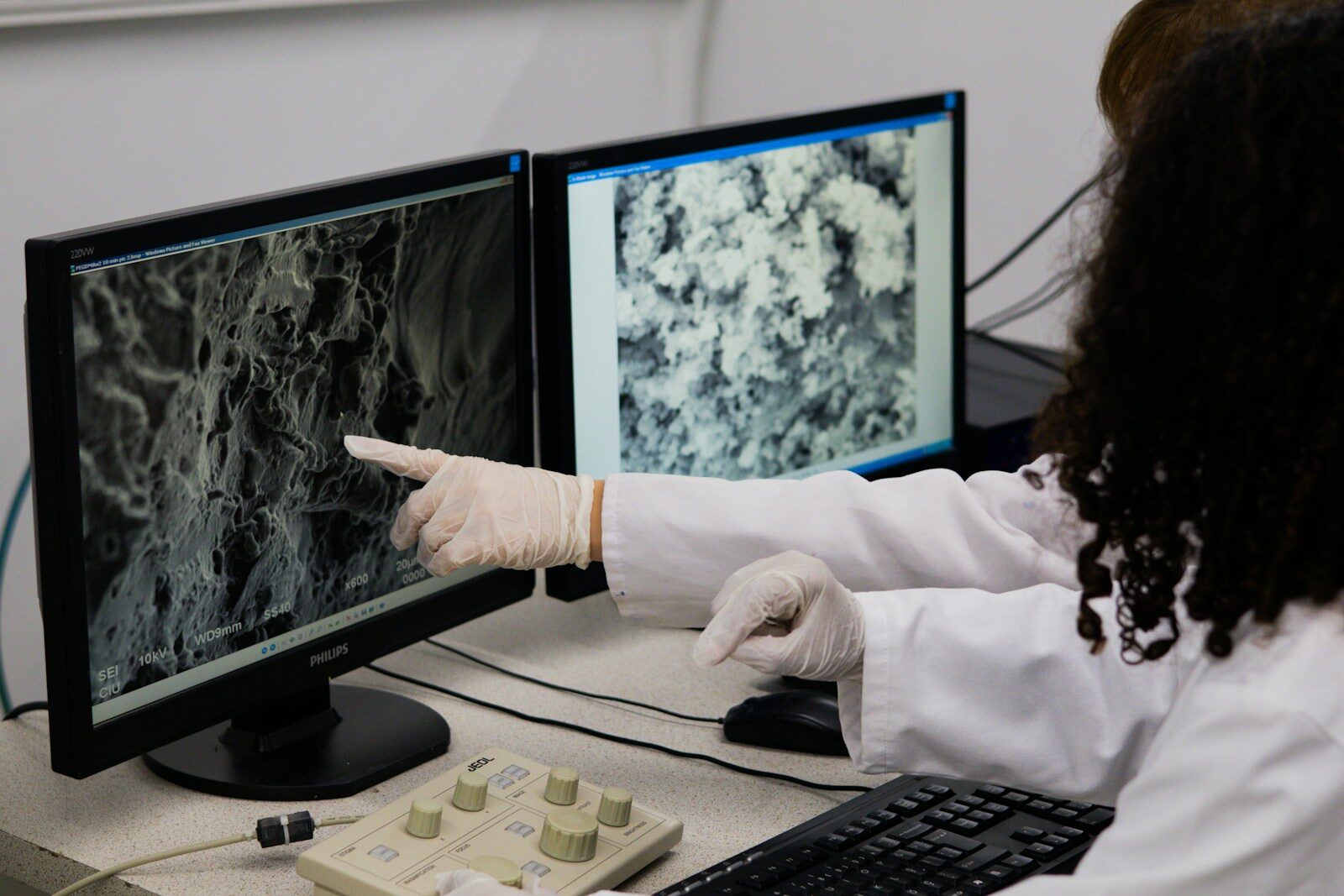
Artificial intelligence is no longer limited to writing text, generating images or assisting with business productivity. One of its most profound impacts is now emerging in scientific research. By combining advanced AI models with large biological datasets, companies like OpenAI and Ginkgo Bioworks are demonstrating how artificial intelligence can dramatically accelerate scientific discovery—particularly in fields such as biotechnology, medicine, agriculture and environmental science.
Traditionally, scientific breakthroughs have required years—or even decades—of experimentation and analysis. But AI-driven research tools are beginning to shorten these timelines by helping scientists analyze enormous datasets, identify hidden patterns and generate new hypotheses faster than ever before.
This new collaboration between AI technology and synthetic biology could mark the beginning of a new era in science where discoveries that once took decades may be achieved in a fraction of the time.

The Challenge of Traditional Scientific Discovery
Scientific discovery has historically been a slow and resource-intensive process. Researchers often rely on a cycle of experimentation that includes:
- Formulating hypotheses
- Conducting experiments
- Collecting data
- Analyzing results
- Revising theories
While this process has led to remarkable breakthroughs—from vaccines to renewable energy technologies—it is often limited by the speed at which humans can analyze complex data.
Modern biology, for example, produces enormous datasets through technologies such as:
- DNA sequencing
- protein analysis
- chemical compound testing
- cellular imaging
Analyzing these datasets manually can take years.
Artificial intelligence offers a way to dramatically accelerate this process.
The Role of AI in Scientific Research
AI systems excel at identifying patterns within large datasets—something that is increasingly important in modern scientific research.
In the context of biology and biotechnology, AI can help scientists:
- analyze genetic sequences
- predict protein structures
- design new molecules
- simulate biological systems
- optimize laboratory experiments
By automating data analysis and hypothesis generation, AI enables researchers to focus on interpreting results and designing new experiments.
What Ginkgo Bioworks Does
Ginkgo Bioworks is a biotechnology company specializing in synthetic biology, the field focused on designing and engineering biological organisms.
The company uses advanced tools to program cells much like software engineers program computers.
Applications of synthetic biology include:
- producing sustainable chemicals and materials
- creating new medicines and vaccines
- engineering microbes for agriculture
- developing environmentally friendly manufacturing processes
To achieve these goals, researchers must analyze massive biological datasets and test thousands of potential genetic designs.
AI tools can dramatically accelerate this work.
How AI Accelerates Biological Engineering
AI models can analyze complex biological systems to identify patterns that human researchers might miss.
For example, AI can help scientists:
Predict Protein Behavior
Proteins are essential biological molecules that perform critical functions in cells. AI models can analyze protein sequences and predict their structure and function.
This capability helps researchers design new proteins with desired properties.
Design Genetic Circuits
Synthetic biologists often engineer genetic “circuits” that control how cells behave.
AI systems can simulate how these circuits will function before experiments begin, reducing the number of failed laboratory trials.
Identify Promising Experiments
Instead of testing thousands of possibilities randomly, AI can prioritize the most promising experimental paths.
This approach significantly reduces research time and costs.

AI as a Scientific Co-Pilot
Rather than replacing scientists, AI acts as a scientific co-pilot.
Researchers still guide experiments, interpret results and apply scientific judgment. However, AI tools help them explore far more possibilities than would otherwise be feasible.
This collaborative model allows:
- faster hypothesis generation
- smarter experiment design
- deeper insights into complex biological systems
In some cases, AI can suggest entirely new directions for research that scientists might not have considered.
Potential Breakthrough Areas
The combination of AI and biotechnology could unlock breakthroughs across multiple industries.
Medicine
AI-assisted biology could accelerate drug discovery, enabling faster development of treatments for diseases such as cancer, Alzheimer’s and rare genetic disorders.
Vaccines
During global health crises, AI could help researchers design vaccines more quickly by analyzing viral genomes and predicting immune responses.
Agriculture
Engineered microbes and crops could help increase food production, improve soil health and reduce reliance on chemical fertilizers.
Environmental Solutions
Synthetic biology combined with AI could create microorganisms that break down pollutants or capture carbon dioxide.
The Role of Large AI Models
Recent advances in AI—including large language models and specialized biological models—have expanded the possibilities for scientific research.
These models can be trained on enormous datasets such as:
- genomic databases
- chemical libraries
- biomedical literature
- protein structure repositories
By combining these data sources, AI systems can generate insights that span multiple scientific disciplines.
This interdisciplinary approach may lead to discoveries that would be difficult for individual researchers to achieve alone.
Challenges and Risks
While AI-powered scientific discovery holds enormous promise, it also raises important challenges.
Data Quality
AI models depend heavily on the quality of training data. Incomplete or biased datasets can lead to inaccurate predictions.
Experimental Validation
AI-generated hypotheses must still be tested in laboratories to confirm their accuracy.
Biosecurity Concerns
Advanced biotechnology tools must be carefully managed to prevent misuse or unintended consequences.
Ethical Considerations
Engineering biological systems raises ethical questions about environmental impact and long-term safety.
Responsible governance will be essential as AI-driven biotechnology continues to advance.
The Future of AI-Driven Science
Many experts believe that AI will become a central tool in scientific research across disciplines.
Future developments could include:
- autonomous laboratories where AI designs and conducts experiments
- AI systems capable of analyzing decades of scientific literature instantly
- real-time collaboration between global research teams through AI platforms
- predictive models that simulate complex biological ecosystems
These innovations could dramatically accelerate the pace of discovery in medicine, energy, agriculture and environmental science.
Frequently Asked Questions (FAQs)
1. How does AI help accelerate scientific discovery?
AI can analyze large datasets, identify patterns and generate hypotheses much faster than humans alone, helping scientists design experiments more efficiently.
2. What role does Ginkgo Bioworks play in biotechnology?
Ginkgo Bioworks engineers biological systems using synthetic biology, enabling the design of microbes and organisms for industrial, medical and environmental applications.
3. Can AI replace human scientists?
No. AI assists scientists by analyzing data and suggesting insights, but human researchers remain essential for designing experiments and interpreting results.
4. What are the biggest benefits of AI in biology?
AI can speed up drug discovery, improve protein design, optimize genetic engineering and help scientists understand complex biological systems.
5. Are there risks to using AI in biotechnology?
Yes. Risks include inaccurate predictions, biosecurity concerns and ethical questions about manipulating biological systems.
6. How could AI impact medicine in the future?
AI could enable faster drug discovery, personalized treatments based on genetics and improved diagnostic tools.
7. Will AI make scientific breakthroughs happen faster?
Most experts believe AI will significantly accelerate discovery by reducing the time needed to analyze data and test new ideas.

Conclusion
The collaboration between artificial intelligence and biotechnology represents one of the most exciting frontiers in modern science. By combining advanced AI models with massive biological datasets, companies like OpenAI and Ginkgo Bioworks are demonstrating how technology can accelerate the pace of discovery.
From new medicines and sustainable materials to environmental solutions and agricultural innovations, AI-driven research could transform how humanity solves some of its most complex challenges.
As these technologies continue to evolve, the partnership between human creativity and machine intelligence may unlock scientific breakthroughs that once seemed impossible.
Sources Scientific American

