
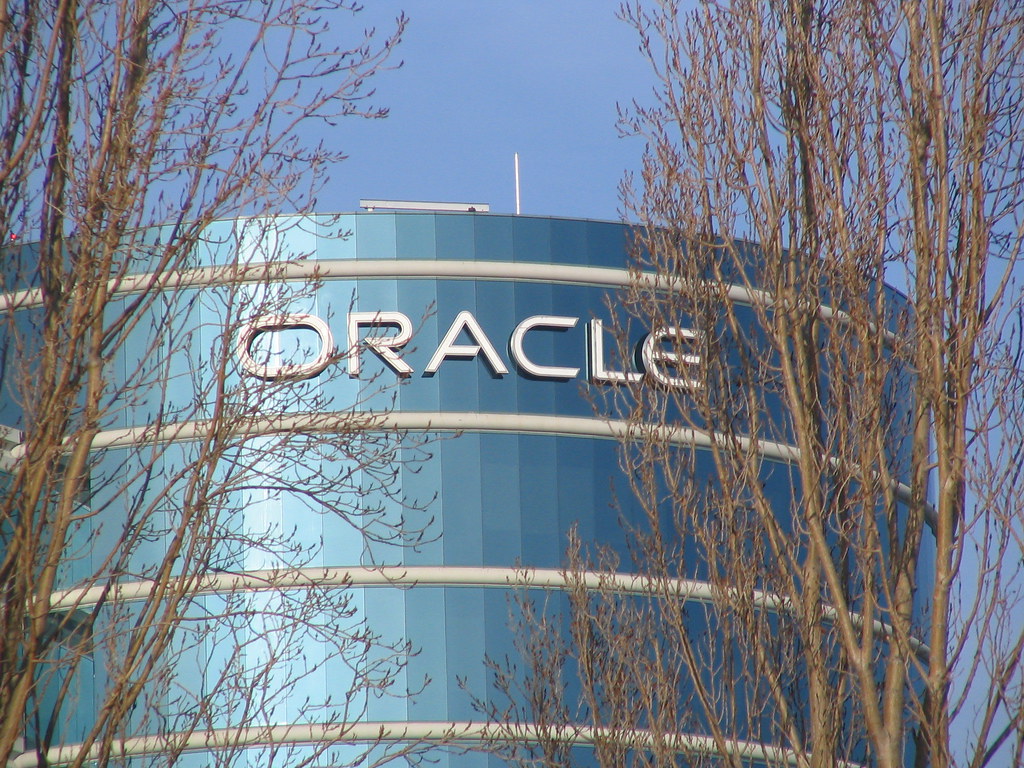
Once dismissed as a legacy tech titan past its prime, Oracle is now riding a wave of momentum that has tech analysts and Wall Street talking. Fueled by smart bets in AI infrastructure and strategic deals with major players, Oracle’s sudden rise is giving serious “dot-com boom” energy—but with a 2025 twist.
Here’s what’s really happening behind Oracle’s AI glow-up, what it means for the future of the cloud, and whether the hype is built to last.

🚀 What’s Fueling Oracle’s AI Ascent?
Oracle’s transformation didn’t happen overnight—but it feels that way. In just months, it has positioned itself as a credible alternative to AI infrastructure giants like AWS, Microsoft Azure, and Google Cloud.
Here’s how they did it:
🔹 1. Mega AI Deals
Oracle locked down major contracts to power AI workloads with its cloud infrastructure. These aren’t just PR wins—they represent serious revenue and validate Oracle as a player in high-performance computing.
🔹 2. Privacy-First, Single-Tenant Cloud
Oracle’s architecture favors isolated environments over shared multi-tenant ones. For companies training sensitive AI models, this is a huge win in terms of privacy, performance, and compliance.
🔹 3. Undercutting on Price and Performance
With aggressive pricing models and network efficiencies, Oracle is undercutting rivals—attracting startups and large-scale AI companies alike that are watching their bottom line.
🔹 4. Enterprise Leverage
Already entrenched in Fortune 500 back offices with its database and ERP products, Oracle is tapping into those existing relationships to sell AI services with little resistance.
🔹 5. Scaling Up—Fast
Oracle is pouring billions into data center expansion across multiple continents. That includes power upgrades, GPU stockpiles, and edge facilities to support lower latency and regional compliance.
🔹 6. A Rebranded Narrative
Oracle isn’t just selling tech—it’s telling a comeback story. And with Larry Ellison back in the spotlight, it’s a narrative that resonates with investors and customers hungry for alternatives.
⚠️ Not So Fast: The Challenges Ahead
Oracle’s resurgence is impressive—but not without risks. Here’s what could slow down the AI fairytale:
- Thin Margins: Winning on low prices may win market share—but can it sustain profits while building expensive infrastructure?
- Customer Concentration: Relying too heavily on a few big AI customers makes Oracle vulnerable if those accounts shift strategy or scale back.
- Operational Pressure: Keeping AI workloads running requires elite talent, constant uptime, and bulletproof security. Scaling fast can lead to cracks.
- Tough Competition: AWS, Google, and Microsoft aren’t standing still. And upstarts in AI-native cloud services are rising fast.
- Energy & Sustainability Backlash: Power-hungry AI data centers are increasingly under scrutiny. Oracle must show it can grow responsibly, not just rapidly.
💡 What Oracle’s Rise Means for the Tech World
Oracle’s big move has implications far beyond its own balance sheet:
🌍 1. Power Shift in the AI Supply Chain
The cloud AI arms race is no longer just a three-player game. Oracle’s entry forces hyperscalers to rethink pricing, architecture, and speed of innovation.
💼 2. More Choice for Enterprises
AI-curious enterprises now have more infrastructure options—especially those needing high performance, security, and compliance.
📉 3. Pressure on Cloud Prices
Oracle’s aggressive pricing may force AWS and Azure to lower costs, benefiting startups and scaling businesses everywhere.
⚖️ 4. Regulatory & Geopolitical Relevance
Oracle’s data center expansion aligns with sovereignty laws and national interests. That matters in regions where data residency and regulation dictate cloud choices.
❓ Frequently Asked Questions
Q: Is Oracle just catching up, or truly innovating in AI?
Both. Oracle didn’t pioneer generative AI tools—but it’s innovating in how it delivers the horsepower behind them. Think of it as building the roads, not the cars.
Q: Why are companies choosing Oracle over AWS or Azure?
Pricing, privacy, and performance. Dedicated infrastructure with predictable costs and strong security is a compelling combo—especially for large-scale model training.
Q: Is Oracle a good option for startups or just large enterprises?
While Oracle has traditionally served big enterprises, its AI push is attracting AI-first startups that want dedicated infrastructure without the overhead of AWS complexity.
Q: What’s Oracle doing about sustainability?
Oracle has promised more investment in renewable energy and efficient cooling systems, but critics say more transparency is needed to back up those claims.
Q: Will Oracle stay ahead, or is this a temporary boom?
It depends on execution. If Oracle can deliver consistent uptime, keep costs low, and grow responsibly, it has a real shot at long-term leadership.
🧠 Final Take: Not Just a Comeback—A Rebrand
Oracle isn’t trying to be the coolest company in Silicon Valley. It’s trying to be the one that powers the future of AI—securely, affordably, and at scale.
That may not sound glamorous, but in a world run by data centers and compute cycles, infrastructure is the new kingmaker. And Oracle? It’s building a throne.

Sources CNN

