
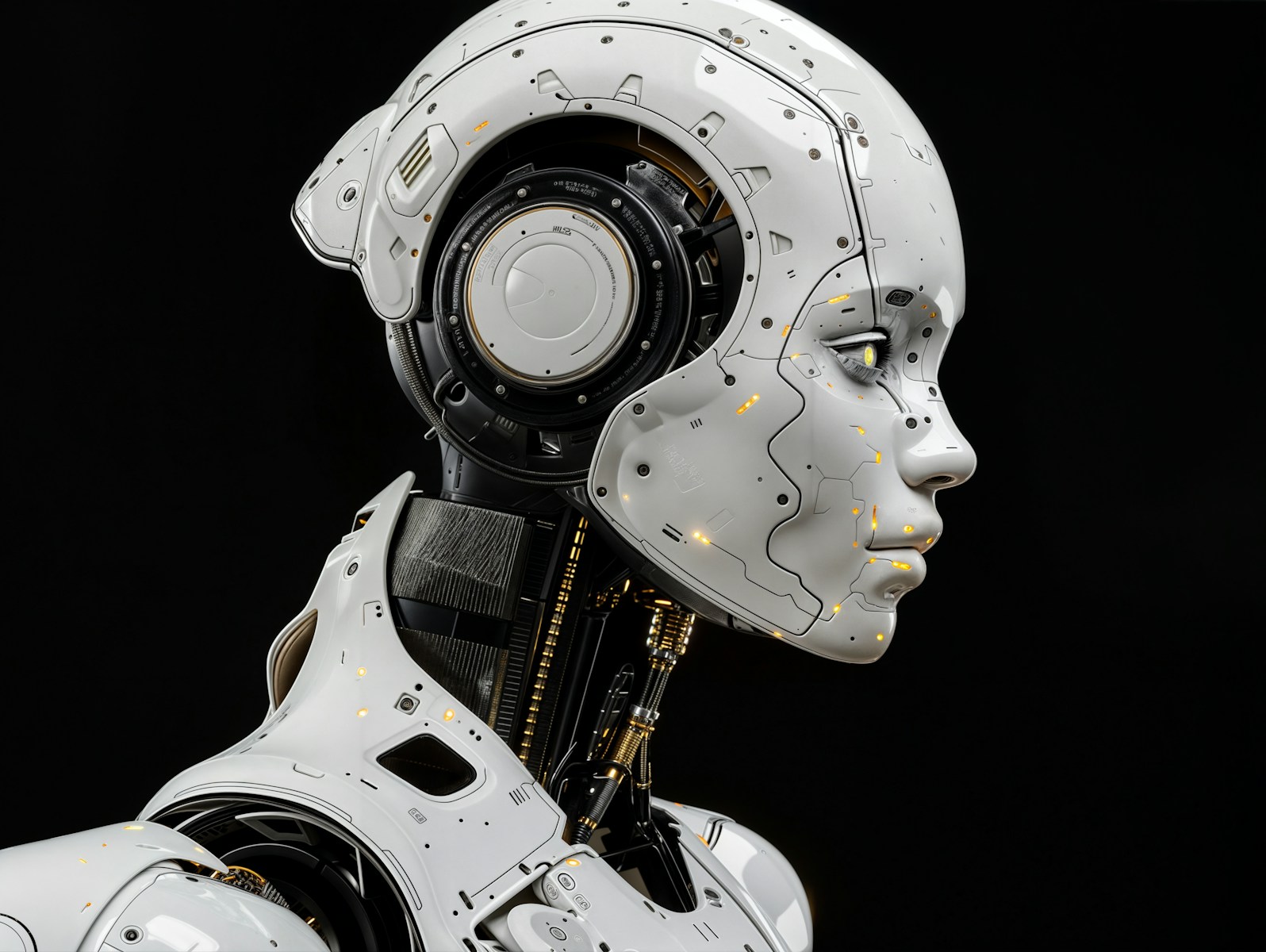
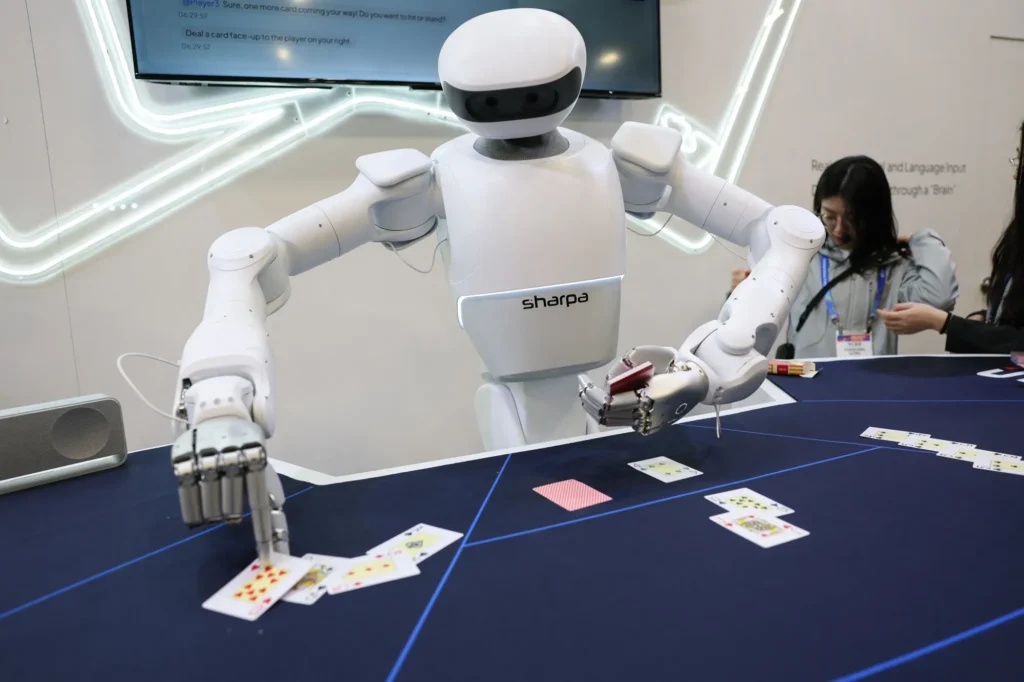
At CES 2026, humanoid robots were everywhere. They poured coffee. They folded laundry. They carried boxes. Some even waved politely at crowds.
And almost all of them did it painfully slowly.
The spectacle was undeniable. Robots that look and move like humans are no longer science fiction — they are standing on convention floors, performing everyday tasks in front of live audiences. But the gap between demonstration and deployment remains enormous.
CES 2026 revealed a clear truth: humanoid robots are advancing — but they are far from replacing human labor anytime soon.
What Humanoid Robots Actually Did at CES
The robots on display were designed to show versatility rather than speed or efficiency. Common demonstrations included:
- Pouring drinks without spilling
- Folding towels or shirts
- Opening doors and drawers
- Carrying objects between stations
- Navigating cluttered indoor spaces
These tasks may sound trivial, but they are technically complex. Humans perform them effortlessly because of years of embodied learning. Robots must compute every motion.
That’s why these demonstrations often took minutes for tasks humans finish in seconds.
Why These Simple Tasks Are So Hard for Robots
1. Dexterity Is the Biggest Bottleneck
Human hands have dozens of degrees of freedom and extraordinary tactile feedback. Replicating that in hardware is extremely difficult and expensive.
Robots struggle with:
- Grip strength variation
- Slippery or soft materials
- Irregular object shapes
- Fine motor adjustments
Folding laundry, for example, requires constant micro-corrections — something robots still find challenging.
2. Perception Is Still Imperfect
Robots rely on cameras, depth sensors, and AI models to understand the world. But real environments are messy:
- Lighting changes
- Objects overlap
- Materials deform
- Humans move unpredictably
Even minor uncertainty forces robots to slow down dramatically to avoid mistakes.
3. Safety Limits Speed
Humanoid robots are designed to operate around humans. That means:
- Reduced movement speed
- Conservative force limits
- Frequent pauses for recalculation
A robot that moves too fast risks injuring someone — or damaging itself.
Why Companies Are Still Betting on Humanoid Robots
Despite their slowness, companies continue investing heavily. The reason is long-term flexibility.
Humanoid Robots Fit Human Spaces
Most homes, factories, and warehouses are designed for people. Humanoid robots can:
- Use existing tools
- Walk up stairs
- Navigate narrow corridors
- Operate without expensive redesigns
This makes them more adaptable than specialized industrial robots.
Labor Shortages Are Real
Across manufacturing, logistics, healthcare, and home care, labor shortages are growing due to:
- Aging populations
- Physically demanding work
- Skills gaps
Companies view humanoid robots as a potential solution — even if that solution is years away.
AI Is Improving Faster Than Hardware
While robot bodies improve slowly, AI perception and planning are advancing rapidly. Many firms believe:
- Software breakthroughs will unlock faster progress
- Robots will improve dramatically once learning scales
- Today’s slow demos are training data for tomorrow’s systems
In other words, CES robots are prototypes, not finished products.
The Economic Reality Behind the Hype
Most humanoid robots shown at CES are:
- Extremely expensive
- Fragile
- Power-hungry
- Maintained by engineers nearby
Current cost estimates often exceed six figures per unit, making them impractical for widespread use.
Until robots become cheaper, faster, and more reliable, they will remain confined to pilot projects and demonstrations.
Why “Painfully Slow” Isn’t a Failure
Experts caution against dismissing these robots too quickly.
Early industrial robots were:
- Slow
- Limited
- Inflexible
Over time, they transformed manufacturing.
Humanoid robots face a steeper challenge because they must operate in unstructured environments — something factories avoided by design.
Progress in robotics is incremental, not exponential.
What’s Missing From the CES Demos
Many demonstrations avoid showing:
- Long-duration autonomy
- Error recovery
- Maintenance needs
- Operation without human supervision
Real-world deployment requires robots that can:
- Work for hours
- Handle unexpected situations
- Recover from mistakes
- Be repaired easily
These challenges remain largely unsolved.
Where Humanoid Robots Are Likely to Appear First
Before homes, humanoid robots are more likely to succeed in:
- Warehouses
- Factories
- Hospitals
- Logistics centers
These environments are more controlled and economically justified.
Consumer homes remain the hardest target.
Frequently Asked Questions
Why are humanoid robots so slow?
They must balance perception, planning, and safety in real time. Moving slowly reduces errors and risk.
Are these robots useful yet?
Mostly as research platforms and pilot systems. Practical value is still limited.
Will humanoid robots replace human jobs?
Not in the near term. They may eventually assist with labor shortages rather than fully replace workers.
Why not just use specialized robots instead?
Specialized robots are faster and cheaper — but humanoid robots offer flexibility in human-designed spaces.
How long before robots work in homes?
Most experts estimate at least a decade, likely longer for affordable, reliable systems.
Is the technology improving fast enough?
AI is improving quickly, but hardware, energy, and cost constraints slow progress.
The Bottom Line
CES 2026 made one thing clear: humanoid robots are real — but reality is slower than hype.
Pouring coffee and folding laundry may look unimpressive when it takes minutes. But those slow movements represent thousands of engineering challenges being solved one step at a time.
Humanoid robots are not ready to change daily life yet.
But they are learning — carefully, cautiously, and very slowly — how to exist in a world built for humans.
And when they finally speed up, the transformation could be profound.
Sources Bloomberg

