
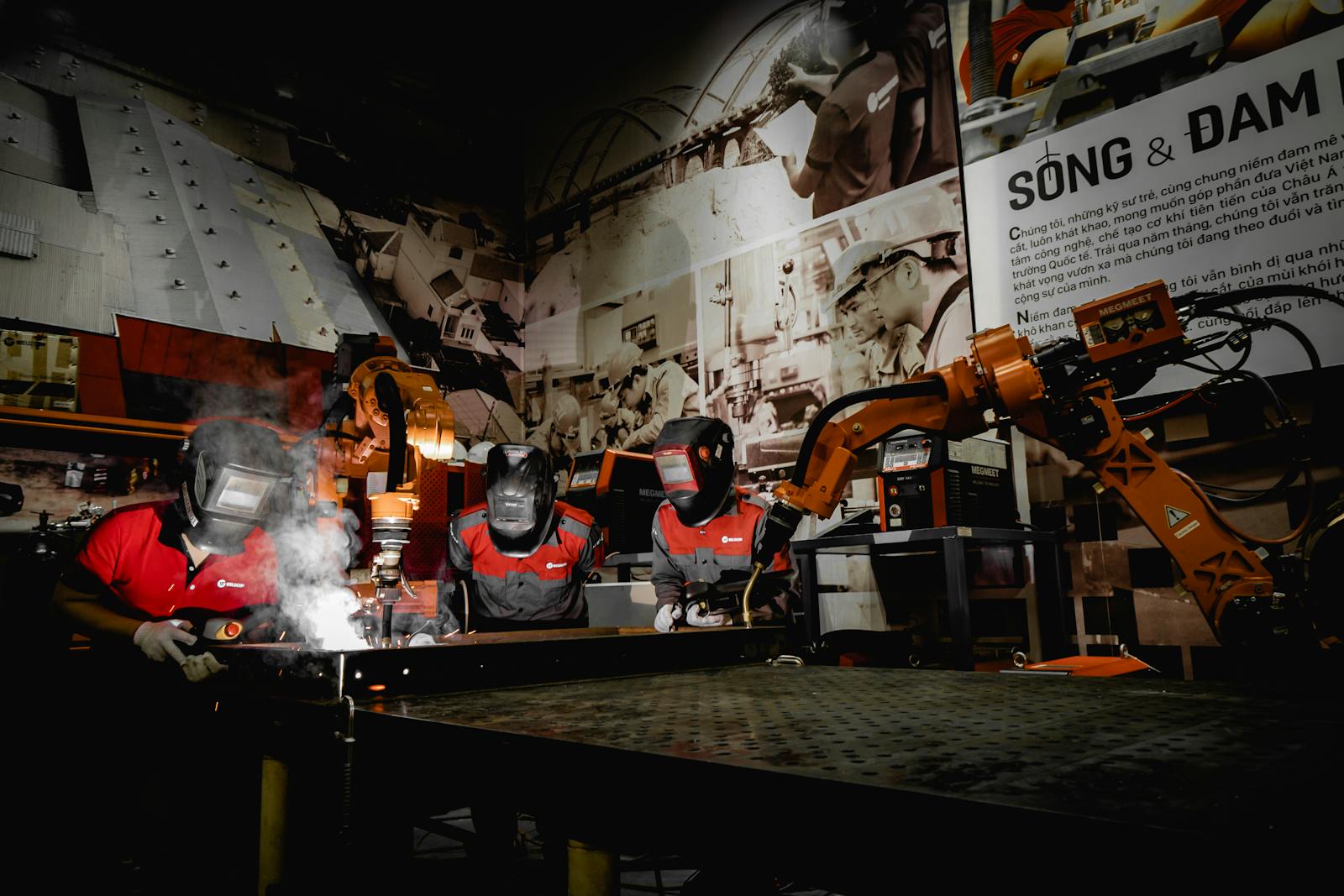
When Hyundai announced it would begin deploying human-like robots in its factories, the news marked more than a technological upgrade. It signaled a turning point in how large manufacturers envision the future of work, productivity, and automation.
For decades, industrial robots have been powerful but limited — excellent at repetitive, pre-programmed tasks, yet clumsy when faced with variability. Hyundai’s move toward humanoid robots represents a shift toward machines designed to move, perceive, and collaborate more like humans themselves.
This shift could redefine factory floors worldwide.
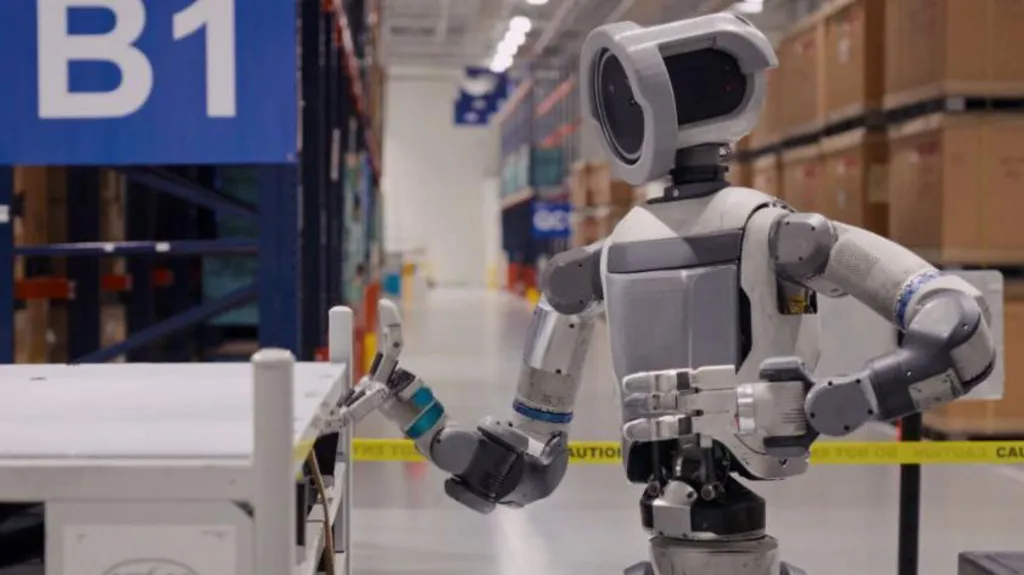
What Makes Hyundai’s Robots Different
Traditional factory robots are usually fixed in place and optimized for a single task, such as welding, painting, or lifting. Hyundai’s new approach focuses on humanoid or human-inspired robots capable of navigating spaces built for people.
Key characteristics include:
- Two-legged or human-like mobility
- Arms and hands designed for dexterous manipulation
- Vision systems powered by AI
- Sensors that allow safe interaction with humans
These robots are being developed through Hyundai’s robotics subsidiary, Boston Dynamics, which the company acquired to accelerate innovation in advanced mobility and automation.
Why Hyundai Is Investing in Human-Like Robots
1. Factories Are Built for Humans
Most industrial spaces were designed around human movement — stairs, narrow walkways, tools sized for hands. Humanoid robots can work in these environments without expensive redesigns, making them more adaptable than traditional robotic systems.
2. Greater Flexibility on the Assembly Line
Humanoid robots can switch between tasks more easily than fixed machines. Instead of being programmed for one operation, they can:
- Pick up tools
- Move parts between stations
- Assist with inspection
- Handle irregular or delicate components
This flexibility is crucial as car manufacturing becomes more customized and complex.
3. Addressing Labor Shortages
Manufacturers worldwide face labor shortages due to aging populations, skills gaps, and declining interest in physically demanding factory work. Robots offer a way to maintain output without relying solely on hard-to-fill roles.
4. Improving Safety and Ergonomics
Many factory jobs involve repetitive motion, heavy lifting, or awkward postures. Robots can take on the most physically demanding or hazardous tasks, reducing injury risk for human workers.
The Role of AI in These Robots
What truly enables humanoid robots is artificial intelligence.
AI allows robots to:
- Recognize objects and people
- Adapt to changing conditions
- Learn tasks through demonstration
- Respond to unexpected events
Instead of following rigid scripts, robots can adjust their actions in real time — a critical requirement for working alongside humans.

How This Could Change Factory Work
Hyundai emphasizes that robots are intended to support, not replace, workers — at least in the near term.
Potential changes include:
- Human workers focusing on supervision, problem-solving, and quality control
- Robots handling physically demanding or monotonous tasks
- New technical roles in robot maintenance, training, and programming
However, the long-term impact on employment remains a topic of debate among economists and labor groups.
A Broader Industry Trend
Hyundai is not alone. Other major manufacturers and tech firms are exploring humanoid robots for logistics, warehousing, and production.
The automotive industry, in particular, is well positioned for early adoption because:
- It already relies heavily on automation
- Margins justify large capital investment
- Assembly lines demand precision and consistency
What makes Hyundai’s move notable is the scale and ambition of deploying robots that closely resemble human workers.
Challenges and Limitations
Despite the excitement, humanoid robots are not ready to replace humans wholesale.
Key challenges include:
- High development and deployment costs
- Energy efficiency limitations
- Reliability in complex, unpredictable environments
- Ethical and regulatory concerns about workplace automation
For now, these robots are best suited for specific tasks, not general human labor.
Strategic Implications for Hyundai
Hyundai views robotics as part of a broader vision that extends beyond cars — into logistics, smart cities, and mobility services.
By integrating robotics early, Hyundai aims to:
- Increase long-term productivity
- Reduce operational risk
- Gain a competitive edge in advanced manufacturing
- Position itself as a leader in future mobility ecosystems
This strategy reflects a growing belief that manufacturing excellence will depend as much on software and AI as on mechanical engineering.
Frequently Asked Questions
Are these robots replacing factory workers?
Not immediately. Hyundai says the robots will assist workers, particularly in physically demanding or repetitive tasks. Long-term effects will depend on how widely the technology is deployed.
Why use humanoid robots instead of traditional machines?
Humanoid robots can operate in environments designed for humans, making them more flexible and adaptable without major factory redesigns.
What company is developing these robots?
Hyundai is leveraging Boston Dynamics, a robotics firm it owns, known for advanced mobility and balance technologies.
Are humanoid robots safe to work with?
They are designed with sensors and AI systems to detect humans and avoid collisions. Safety remains a top priority in deployment.
When will these robots be widely used?
Initial use will be limited and gradual. Widespread adoption could take years as costs fall and reliability improves.
Could this spread to other industries?
Yes. Logistics, warehousing, construction, healthcare, and retail are all exploring humanoid robotics for similar reasons.

The Bottom Line
Hyundai’s move toward human-like robots reflects a profound shift in industrial thinking.
Factories are no longer just places where humans adapt to machines — machines are increasingly being designed to adapt to humans.
While humanoid robots won’t replace the workforce overnight, they represent a future where automation becomes more flexible, collaborative, and human-aware.
The factory of tomorrow may still rely on people — but they may be working side by side with machines that walk, see, and learn just like we do.
Sources BBC

