

Inside the massive global data center boom powering AI… and why it could all go sideways
The world is in the middle of a historic infrastructure buildout — and it’s not for highways or skyscrapers.
It’s for AI data centers.
Across the globe, tech giants and investors are pouring trillions into building high-powered server farms to feed the booming demand for artificial intelligence. Some call it the next industrial revolution. Others are warning: this might look more like a bubble than a boom.
Let’s break down what’s really happening behind the scenes, what could go wrong, and whether this $3 trillion gamble will shape the future — or collapse under its own weight.
💰 What’s Fueling the $3 Trillion AI Infrastructure Surge?
- Generative AI — think ChatGPT, AI image/video tools, smart agents — needs a lot of computing power.
- Companies like Microsoft, Meta, Google, OpenAI, Amazon and others are racing to build the server farms that run these tools.
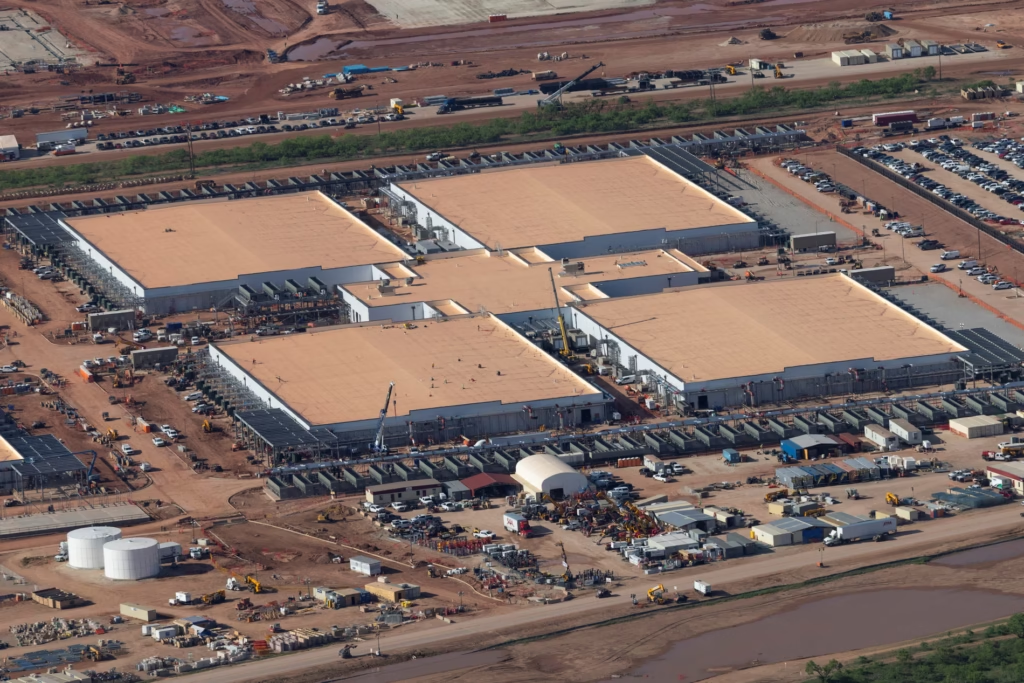
- The cost of these “hyperscale” data centers is staggering: each can cost billions, require acres of land, and draw enough power to run a small city.
- Many governments and investors are buying in — hoping the AI boom delivers jobs, innovation, and long-term returns.
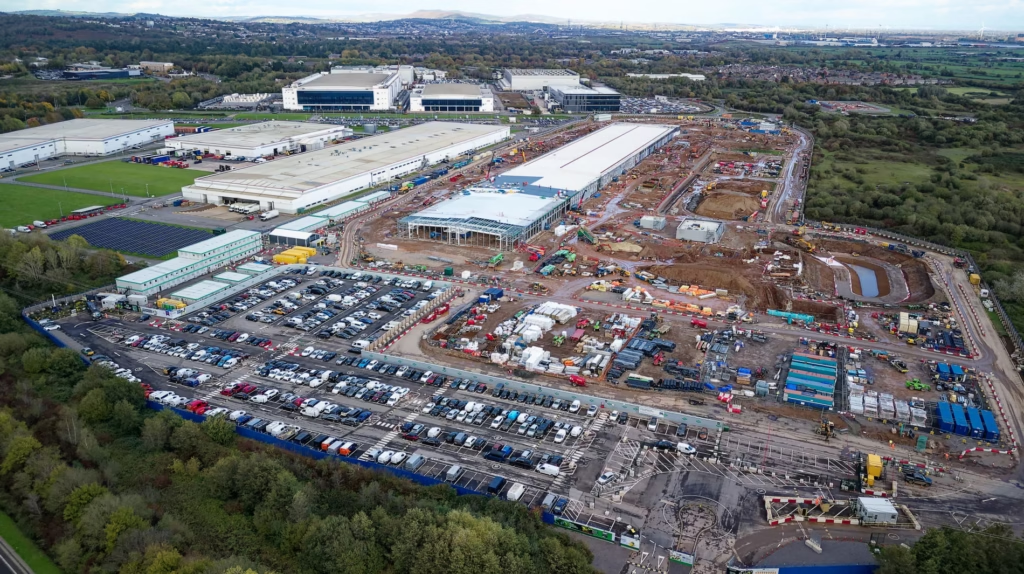
From Wales to Virginia to Singapore, towns and cities are transforming into AI factory hubs.
But here’s the twist: not all the money is coming from tech giants’ own pockets. Nearly half of the projected investment — about $1.5 trillion — is coming from private equity, debt financing, and outside investors.
🚨 Is This a Bubble in the Making?
Here’s why some analysts, economists, and insiders are sounding the alarm.
1. Too Much Debt, Too Fast
Private developers are borrowing billions to build data centers — sometimes without long-term leases or tenants confirmed. That’s a risky move, especially if:
- Demand slows down
- Interest rates stay high
- New technology makes their builds obsolete
2. Tech Moves Fast. Infrastructure Doesn’t.
What happens if AI gets faster, cheaper, or shifts to a new system before these data centers are even finished? Some facilities might be outdated before they turn on.
3. Real Demand Might Be Overestimated
Everyone expects AI usage to explode. But what if it plateaus? Or becomes more efficient and needs less compute? A lot of infrastructure could go unused — becoming “stranded assets.”
4. Grid Pressure and Environmental Backlash
Data centers eat massive amounts of electricity and water. In some regions (like Ireland), they already use over 15% of national electricity. If expansion continues unchecked, expect:
- Power shortages
- Environmental protests
- Policy crackdowns
🌍 What the Headlines Aren’t Telling You
The media often covers the scale — the billions, the buildings, the buzz. But there’s more to the story:
- Returns on investment are uncertain — these are long-term bets, not quick wins.
- Some areas may overbuild and underdeliver — leaving regions with half-used facilities and few jobs.
- AI efficiency is improving — meaning fewer training runs and more edge computing could reduce the need for monster data centers.
- Energy sustainability questions remain — especially in regions using fossil fuels for data center energy needs.
And perhaps most critically: the biggest tech firms can afford to fail. The smaller developers and debt-funded players? Not so much.
🧠 What This Means for You
If you’re a business or investor:
- Be cautious of hype-driven data center projects without long-term demand proof.
- Watch for signs of slowing AI adoption or rising operating costs.
If you’re a local policymaker:
- Don’t greenlight every build without environmental review or public input.
- Focus on long-term job creation and grid stability, not just short-term excitement.
If you’re in tech or AI:
- Remember: infrastructure is just one part of the equation.
- The future may depend more on efficient software, better algorithms, and ethical deployment than raw compute power.
🔍 FAQs: Your Questions Answered
Q: Is the $3 trillion figure real?
Yes — that’s the estimated global investment expected through 2028 in AI-related data center infrastructure. But about half is financed through debt or private capital, not cash from tech companies.
Q: Will all these data centers be useful?
Not guaranteed. If AI demand slows, or more efficient systems are developed, some facilities could be underused or outdated quickly.
Q: What happens if the bubble bursts?
Defaults on loans, job losses in regions dependent on builds, and potentially a pullback in AI innovation — especially from smaller players.
Q: Is this another Dot-Com or real transformation?
It could be both. The internet did change the world — but the dot-com crash hurt a lot of people along the way. The question is whether this boom is being built with sustainable value or unsustainable hype.
Q: How can data centers be more sustainable?
By using renewable energy, improving cooling efficiency, recycling waste heat, and locating in regions with excess clean power capacity.
⚖️ Final Thought: Infrastructure or Illusion?
The AI data center boom is impressive — even inspiring. But history has taught us that when trillions of dollars move quickly, critical thinking matters more than ever.
Whether this is the digital backbone of the future or another overbuilt dream depends not just on how fast we can build — but how wisely we can plan.
Sources The Guardian

