
Artificial intelligence is transforming industries at lightning speed — from Wall Street trading desks to hospital diagnostics and factory floors. Yet in one place where many expected AI to shine brightest — the smartphone — the revolution has felt surprisingly underwhelming.
Now, two technology giants, Samsung and Google, are working to change that.
With the launch of the Galaxy S26 and deeper integration of Google’s Gemini AI models, the companies are attempting something ambitious: turning smartphones from app-launching devices into proactive, AI-powered personal assistants.
The stakes are enormous. Smartphones remain the most widely used consumer technology on the planet. If AI becomes deeply embedded at the device level, it could reshape how billions of people interact with digital services.

Why AI Has Felt Absent on Smartphones
Despite the explosion of generative AI tools, smartphone experiences have remained largely incremental:
- Slightly better cameras
- Faster processors
- Improved battery efficiency
- Cosmetic design changes
AI features — like voice assistants and photo enhancements — have existed for years. But they’ve rarely felt transformative.
There are several reasons for this lag:
1. Cloud Dependency
Most advanced AI models require heavy computing power in data centers, limiting real-time responsiveness on mobile devices.
2. Privacy Constraints
Consumers are wary of always-on AI assistants that process personal messages, photos, and location data.
3. Battery Limitations
Running large AI models locally can drain power quickly.
4. Fragmented Ecosystems
AI tools often operate separately from core phone functions rather than being deeply integrated.
Samsung and Google aim to address these challenges.
The Galaxy S26 and Gemini Integration
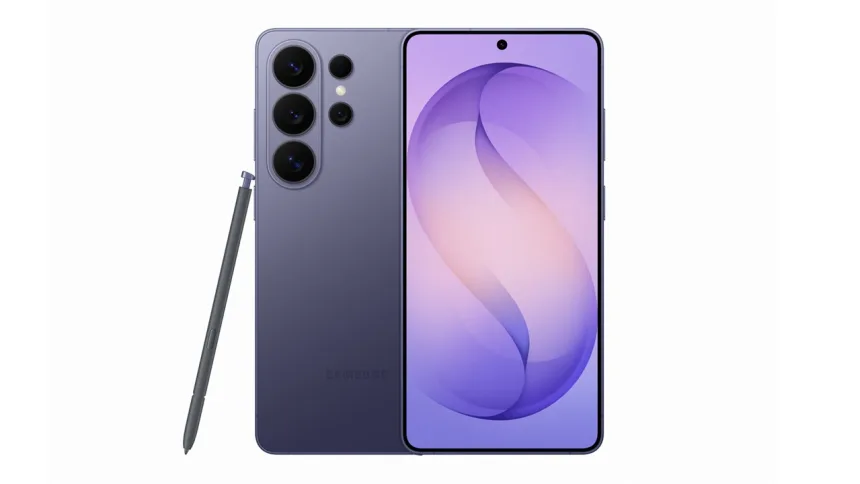
The Galaxy S26 represents a strategic shift. Rather than treating AI as an add-on feature, Samsung is integrating Google’s Gemini AI deeply into the operating system and core applications.
Key ambitions include:
- Context-aware assistance that understands what’s on your screen
- Cross-app task automation
- Smarter messaging replies
- Real-time translation and transcription
- Enhanced search within personal data
- AI-driven scheduling and productivity tools
The goal is for the phone to anticipate needs rather than simply respond to commands.
For example, if a user receives a message about dinner plans, AI could suggest restaurants, check calendar availability, draft a response, and add the event — all with minimal input.
On-Device AI vs Cloud AI
A major breakthrough lies in hybrid processing.
Samsung’s new hardware aims to run smaller AI models directly on the device while offloading more complex tasks to cloud servers.
This approach balances:
- Speed
- Privacy
- Battery efficiency
- Computational capability
On-device AI reduces latency and keeps sensitive data local, addressing one of the biggest barriers to AI adoption on smartphones.
The Competitive Landscape
Samsung and Google are not alone in pursuing AI-driven smartphone transformation. Major competitors are investing heavily in:
- Custom AI chips
- Proprietary AI assistants
- Ecosystem-level integrations
The battle is no longer about megapixels or screen size — it’s about who controls the AI layer of mobile computing.
The winner could shape the next decade of consumer technology.
Why This Matters for Google
For Google, deeper Gemini integration ensures its AI ecosystem remains central to Android devices. It strengthens Google’s search, productivity, and cloud businesses.
Mobile is a key distribution channel. Embedding Gemini into billions of devices provides both data feedback loops and user engagement at scale.
Why This Matters for Samsung
Samsung seeks differentiation in a saturated smartphone market. Hardware upgrades alone no longer drive explosive sales growth.
AI offers a compelling upgrade narrative — positioning new devices as smarter, more capable companions rather than marginally improved gadgets.
Challenges Ahead
Despite the promise, significant hurdles remain:
Consumer Trust
Users must feel confident that personal data is secure.
Overautomation
Too much proactive assistance may feel intrusive.
Performance Trade-offs
Balancing AI power with battery life is complex.
Monetization
It remains unclear how AI-driven features will generate sustainable revenue beyond device sales.
The Bigger Picture: Smartphones as AI Hubs
If successful, AI-enhanced smartphones could become central hubs for:
- Smart home control
- Wearable integration
- Health monitoring
- Automotive connectivity
- Enterprise productivity
Rather than launching apps, users may increasingly interact through natural language prompts and contextual suggestions.
The smartphone could evolve into a personalized AI gateway.
Frequently Asked Questions (FAQ)
Q: What is Gemini?
Gemini is Google’s advanced AI model designed to power conversational assistants, generative tasks, and contextual understanding.
Q: How is the Galaxy S26 different from previous phones?
It integrates AI more deeply into the operating system, enabling cross-app task execution and contextual assistance.
Q: Will AI run directly on the phone?
Yes, smaller models will run on-device, while larger computations will be handled in the cloud.
Q: Is user data safe?
Companies claim strong privacy protections, especially for on-device processing, but users should review data policies carefully.
Q: Will AI significantly improve smartphone productivity?
Potentially. Automation of scheduling, messaging, and search could reduce friction in daily tasks.
Q: Could AI drain battery life?
Efficient chip design and hybrid processing aim to minimize battery impact.
Q: Is this the future of smartphones?
Many analysts believe AI integration will define the next phase of smartphone evolution.
Conclusion
Artificial intelligence has reshaped many sectors, yet smartphones — the most personal devices we own — have felt comparatively unchanged.
Samsung and Google are betting that the next revolution will not be visible in hardware specs but in invisible intelligence.
If they succeed, the smartphone may finally live up to its name — not just a smart device, but a truly intelligent companion.
Sources CNN

