

China’s newest generative AI system has sent a jolt through global creative industries. With the ability to produce high-quality video, cinematic visuals, realistic characters, and near-professional storytelling outputs, the technology has reportedly unsettled Hollywood studios already grappling with disruption.
The reaction isn’t just about creative competition. It reflects deeper concerns about intellectual property, global influence, labor displacement, and geopolitical tech rivalry.
As China’s AI sector accelerates at remarkable speed, the question facing policymakers and executives alike is this:
Will China’s tech industry slow down under regulatory pressure — or double down and reshape the global entertainment and technology landscape?
This article explores the implications of China’s latest AI breakthrough, why it is alarming parts of Hollywood, how it fits into Beijing’s broader tech strategy, what risks and constraints may limit expansion, and what it means for the future of global AI competition.
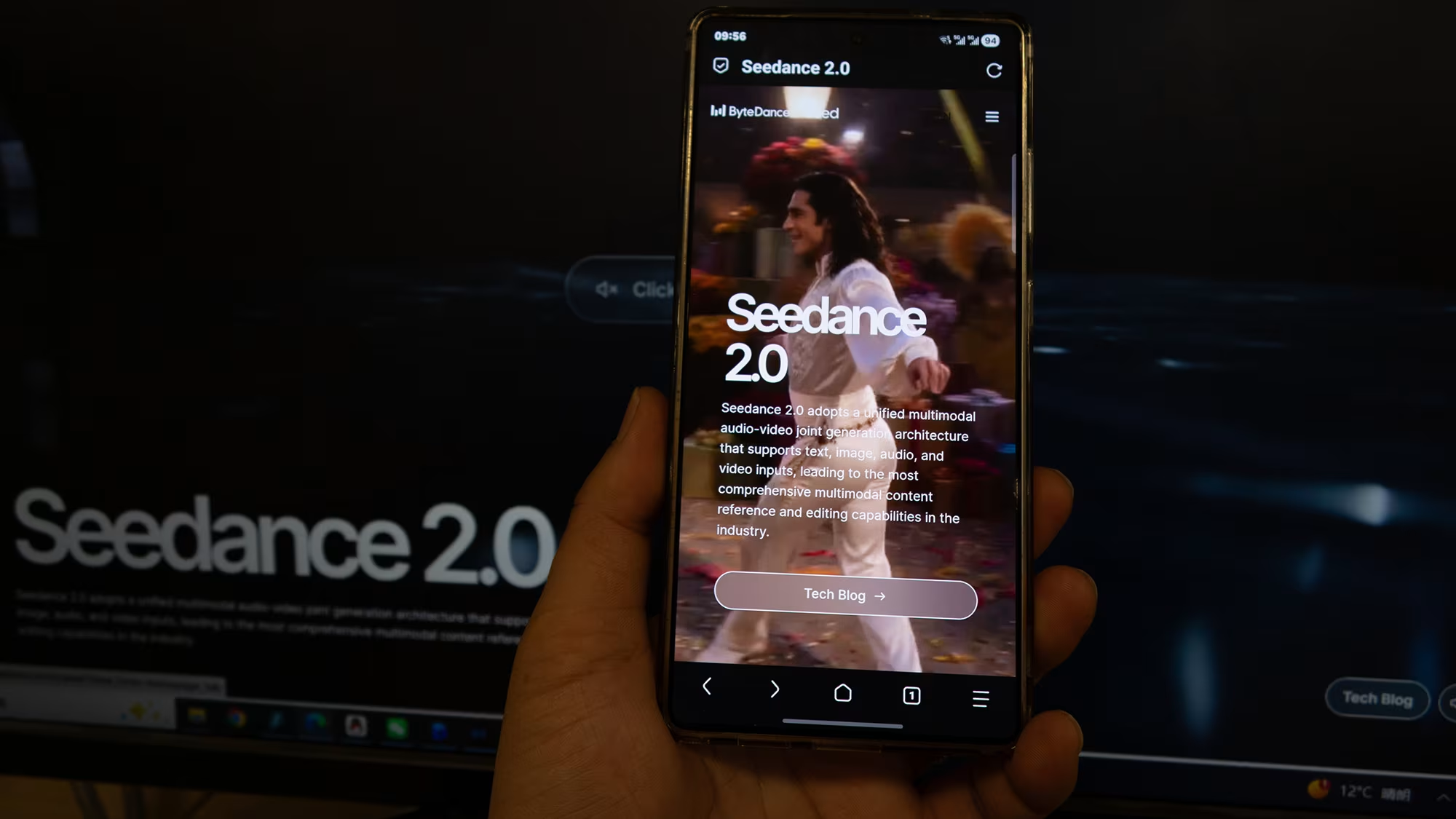
Why This AI Breakthrough Feels Different
Generative AI has already disrupted text, images, and coding. But advanced video-generation models represent a new frontier.
China’s latest system reportedly demonstrates:
- High-fidelity cinematic rendering
- Consistent character modeling across scenes
- Complex motion and camera simulation
- Realistic lighting and sound design
- Storyline coherence
Video production has historically required large teams and significant budgets. If AI lowers those barriers, creative industries could be transformed.
Why Hollywood Is Nervous
1. Production Cost Compression
Film and television rely on:
- Large crews
- Visual effects teams
- Location shoots
- Post-production editing
AI-generated video threatens to reduce many of these roles, especially in:
- Concept visualization
- Background effects
- Secondary animation
- Low-budget productions
Studios already facing labor negotiations over AI use now see foreign competition accelerating.
2. Intellectual Property Concerns
Hollywood worries about:
- AI training on copyrighted material
- Unauthorized style imitation
- Cross-border enforcement challenges
Global legal frameworks for AI-generated media remain fragmented.
3. Speed of Content Creation
If AI systems can generate cinematic-quality video rapidly, content supply may explode, challenging traditional distribution models.
China’s Strategic AI Ambition
China views artificial intelligence as:
- A driver of economic modernization
- A pillar of national security
- A tool for cultural influence
- A lever in global technological competition
Beijing has invested heavily in:
- AI research institutes
- Semiconductor development
- Data infrastructure
- Startup funding
The entertainment dimension adds soft power to technological capability.
Will China “Pump the Brakes”?
There are reasons Beijing might moderate AI expansion:
1. Content Regulation
China maintains strict oversight of media content.
Advanced generative systems raise concerns about:
- Deepfakes
- Political misinformation
- Cultural control
Regulators may impose guardrails to manage social impact.
2. Economic Stability
Rapid technological shifts can disrupt employment.
China faces:
- Youth unemployment challenges
- Slowing economic growth
- Industrial restructuring
Balancing innovation with stability remains central.
3. Global Trade Tensions
AI advancements intersect with:
- Semiconductor export controls
- Geopolitical rivalries
- Sanctions regimes
Aggressive AI scaling could intensify international tensions.
The Competitive Landscape
China is not alone in pursuing advanced generative video AI.
Major players in:
- The United States
- Europe
- South Korea
are racing to develop similar systems.
The result is a multi-polar AI competition rather than a single dominant actor.
The Broader Creative Industry Impact
Beyond Hollywood, industries likely to feel effects include:
- Advertising
- Gaming
- Social media content creation
- Education media
- Corporate training
Democratized video generation may empower small creators — while compressing traditional revenue structures.
What Often Goes Unexamined
Cultural Localization
Chinese AI models trained on local data may produce content aligned with domestic values and aesthetics, potentially reshaping global content flows.
Infrastructure Demands
Advanced video AI requires immense computational resources. Sustaining leadership depends on access to chips and energy capacity.
Ethical Guardrails
Global standards for watermarking, attribution, and deepfake prevention remain under development.
Without them, misuse risk increases.
Frequently Asked Questions
Why is Hollywood concerned about Chinese AI?
Because advanced generative video tools could disrupt production economics and intellectual property norms.
Is China leading in generative AI?
China is advancing rapidly, particularly in applied AI and commercialization, though competition remains strong globally.
Will China restrict its own AI development?
It may impose regulatory controls, but complete slowdown is unlikely given strategic priorities.
Could AI replace film crews?
Certain roles may be automated or augmented, but high-end productions still require human creativity and coordination.
What does this mean for global AI competition?
It signals intensifying rivalry, particularly in creative and cultural applications of AI.

Final Thoughts
China’s latest AI breakthrough is not merely a technological milestone — it is a geopolitical signal.
Advanced generative video tools challenge traditional creative hierarchies and blur the lines between technology and culture.
Hollywood’s unease reflects broader anxieties about automation, global competition, and control over narrative power.
Whether China slows its AI push or accelerates further, one reality is clear:
The next frontier of artificial intelligence will not be confined to code or chatbots.
It will unfold on screens — cinematic, immersive, and increasingly machine-generated — shaping stories, economies, and influence across borders.
Sources CNN

