
The digital world is about to collide with the physical one in ways we’ve never seen before. While the last decade was dominated by smartphone apps, cloud platforms, and early-stage AI tools, the next era is unfolding on a much bigger canvas — our cities, our workplaces, our homes, our economy, and even our bodies.
According to emerging trends, three forces will define 2026:
- Physical AI — AI that operates in the real world, not just through screens.
- Spatial Computing — a new layer of digital interaction that blends seamlessly with physical space.
- A Full-Fledged VR Boom — driven by enterprise adoption, lightweight hardware, and AI-enhanced immersion.
Taken together, these form the backbone of a new computing revolution — one that will reshape industries, consumer habits, and the future of work.
Let’s break down what’s coming, what it means, and what the original article didn’t fully explore.

1. Physical AI: When Intelligence Leaves the Screen
For years, AI has lived mostly in software — chatbots, predictive tools, recommendation engines, productivity apps. But 2026 is the moment AI becomes physical.
What is Physical AI?
Physical AI refers to intelligent systems embedded into real-world environments and objects, enabling them to:
- act
- decide
- sense
- move
- collaborate
- and learn
Think of AI not as a digital assistant but as a physical actor.
Examples Emerging Fast
- Robot factory workers that handle materials, assembly, inspection, and maintenance.
- AI-powered delivery drones and vehicles navigating chaotic real-world spaces.
- Retail robots managing stocking, scanning shelves, and customer assistance.
- AI-integrated medical devices that monitor, respond, and assist in treatment.
- Logistics robots optimized by real-time reasoning models.
- Autonomous construction equipment for earthmoving, surveying, and material handling.
What the original article didn’t cover
- Massive shortage of robotics talent — the world doesn’t have enough engineers to build and maintain this wave of physical AI.
- Insurance and legal challenges — who is at fault when AI acts in the real world?
- Energy demands — physical AI requires sensors, battery systems, and compute far beyond what’s currently available.
- Safety and trust — physical mistakes matter more than digital ones.
2. Spatial Computing: The Digital Layer Around Us
Spatial computing blends the digital and physical worlds, enabling technology to:
- understand your environment
- map real-world spaces
- recognize objects
- overlay interactive information
- create shared mixed-reality contexts
What’s driving the boom?
- Lighter, more powerful AR glasses
- AI models that interpret 3D space
- Accurate object tracking
- 6G and low-latency networks
- Enterprise-scale adoption
- Consumer apps blending AR + AI
Spatial computing isn’t about “virtual worlds.”
It’s about augmenting our world.

Emerging Use Cases
- Training and education: surgeons, pilots, technicians learning in hyper-real simulations.
- Retail: AI overlays showing product features, real-time inventory, or virtual try-ons.
- Manufacturing: workers guided by step-by-step AR workflows.
- Navigation: real-time AR routes layered onto city streets.
- Design & architecture: immersive visualization of projects before construction.
- Healthcare: physical therapy assisted by body-tracked AR feedback.
What the original article missed
- Spatial data privacy — AR devices can collect high-resolution maps of private environments.
- Monopoly concerns — the company that controls spatial maps could control the next internet.
- Human-factor design challenges — dizziness, fatigue, neuro-sensory issues still remain.
- Accessibility issues — spatial computing could widen digital inequality.
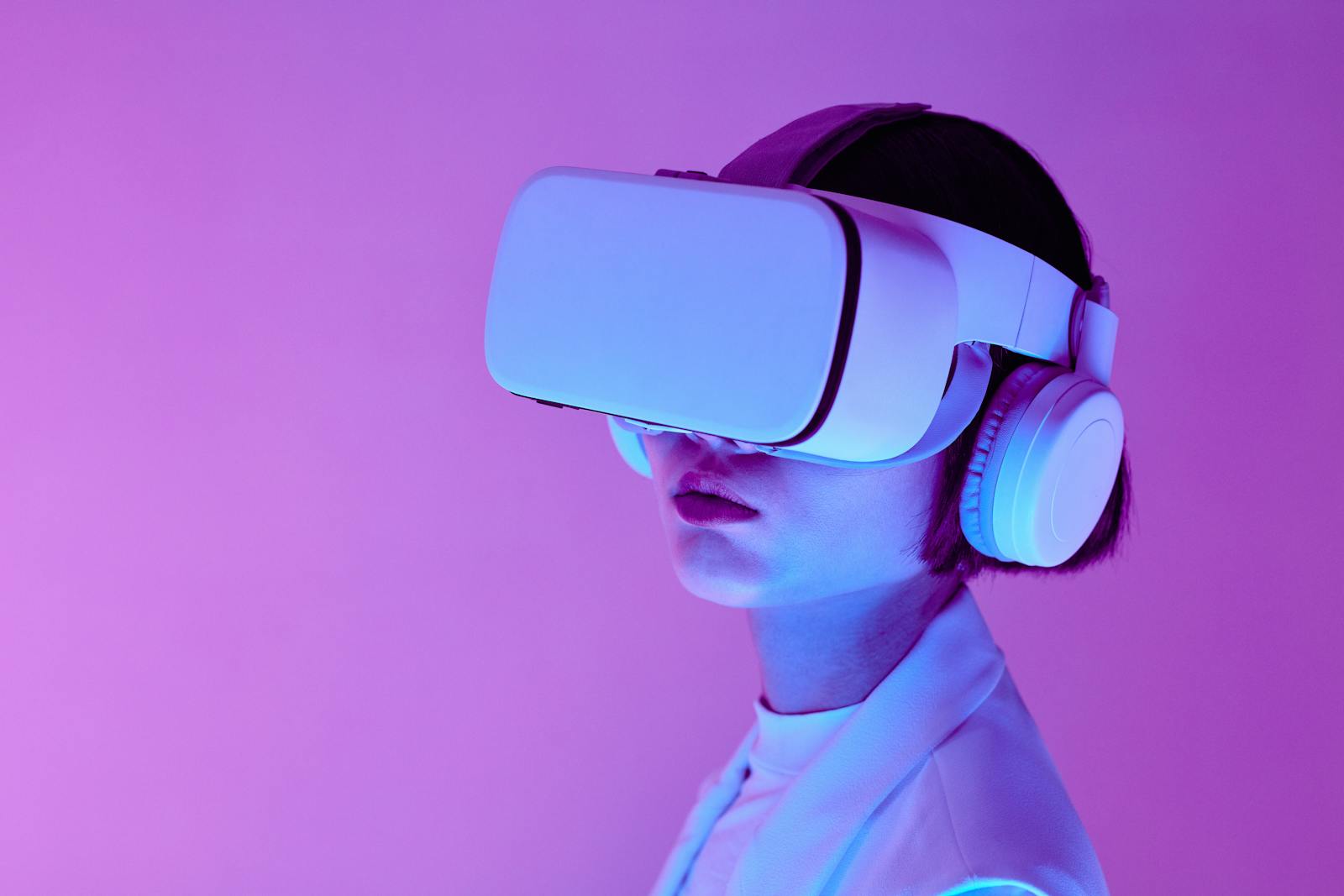
3. VR’s Second Boom: This Time, It’s Not a Gimmick
VR had its first hype wave around 2016 — and then it fizzled.
But the 2026 boom will be different.
Why?
Three things have changed:
• AI-enhanced immersion
AI now generates environments, characters, voices, and physics simulations on the fly — reducing production costs and increasing realism.
• Enterprise adoption
Companies are using VR for:
- onboarding
- simulation training
- collaborative design
- remote operations
- digital twin management
Enterprise demand is stable, profitable, and long-term.
• Hardware finally caught up
- lighter headsets
- higher resolution
- longer battery life
- better optics
- more accurate tracking
- less motion sickness
This is the VR generation that actually works.
What the original article didn’t emphasize
- VR is becoming a corporate standard, not a gaming novelty.
- Virtual offices are quietly replacing some physical office functions.
- Digital twins (VR + real-time data) are becoming essential to smart factories, energy grids, and supply chains.
- Hyper-personalized avatars powered by AI are transforming customer support, therapy, coaching, and education.
- VR is merging with spatial computing, not competing with it.
The Convergence: A New Kind of Internet
The most important takeaway?
Physical AI + Spatial Computing + VR = The next computing platform.
This convergence creates a world where:
- AI sees what you see
- AI understands the space around you
- AI interacts with physical objects
- AI simulates environments
- AI helps manage your real-world decisions
- AI becomes a seamless, ambient layer
This is not science fiction.
It’s already happening — quietly, rapidly, and at industrial scale.

Frequently Asked Questions (FAQ)
Q1. What is “physical AI” and how is it different from regular AI?
Physical AI operates in the real world through robots, smart devices, sensors, drones, and automated systems — not just digital interfaces.
Q2. Is spatial computing just another word for AR?
Not exactly. AR is one part.
Spatial computing is broader, covering mapping, understanding space, interacting with objects, AI reasoning, and digital overlays.
Q3. Why is VR booming again?
Lighter hardware, enterprise use cases, better optics, and AI-powered content creation have made VR practical and valuable.
Q4. Will physical AI take jobs?
Some tasks will be automated, but demand for robotics technicians, AI supervisors, maintenance experts, and designers will grow.
Q5. Does this mean smartphones are becoming obsolete?
Not overnight — but these technologies are pushing computing away from screens and into the environment.
Q6. Are there safety concerns with physical AI?
Yes — physical mistakes carry real consequences. Standards, testing, and accountability frameworks are still evolving.
Q7. Who will benefit most from these trends?
Industries including manufacturing, logistics, healthcare, training, retail, and construction are early winners.
Q8. What role does AI play in VR and spatial computing?
AI provides real-time environment understanding, object tracking, simulation, natural language interfaces, and dynamic content creation.
Q9. How soon will these technologies be mainstream?
Expect early consumer adoption by 2026–2028, and widespread enterprise adoption before that.
Q10. Is this the next major tech platform shift?
Yes — this is the biggest shift since the smartphone era, combining intelligence, immersion, and physical-world integration.
Sources Forbes

