
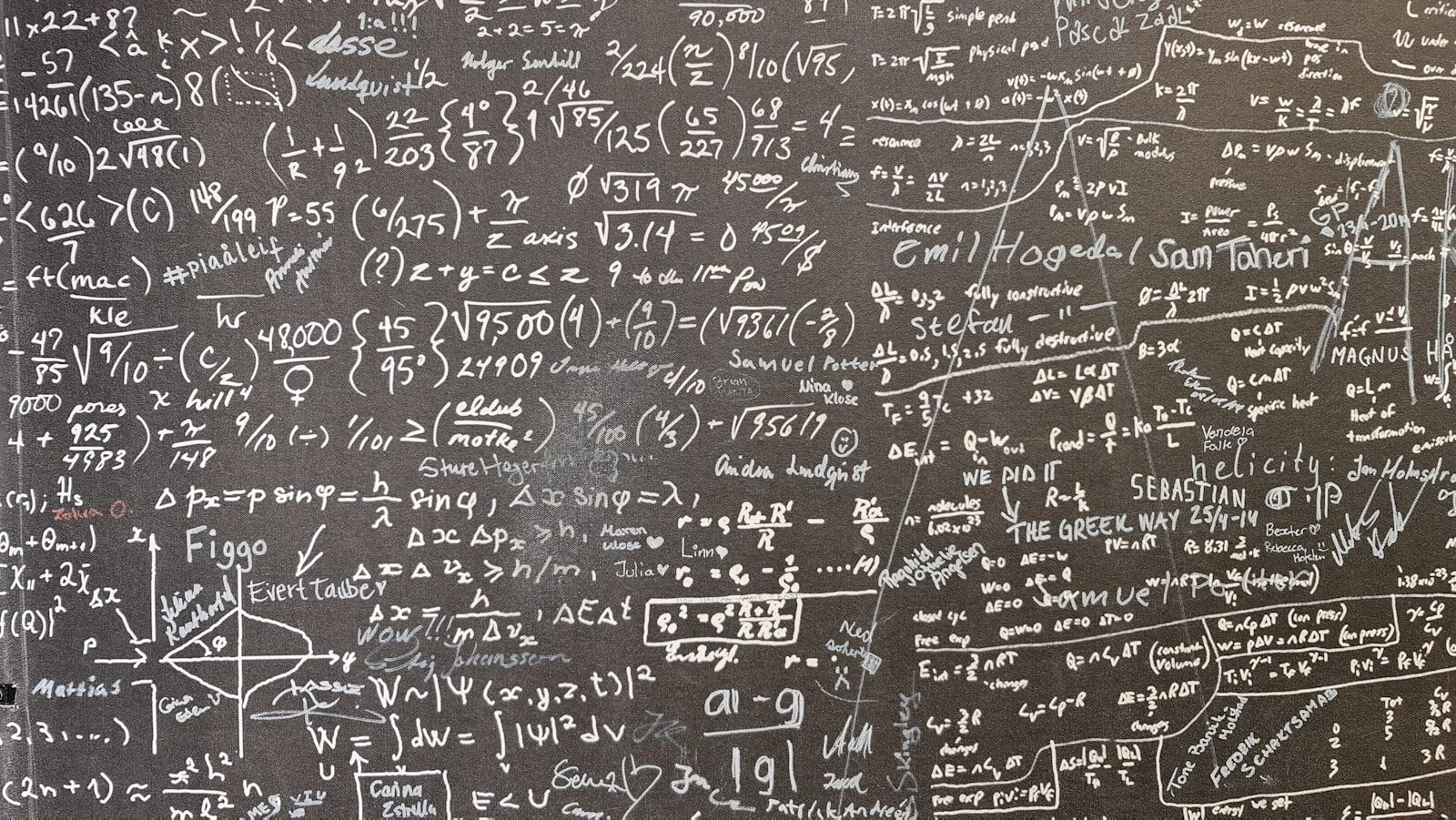
For centuries, mathematics has occupied a unique position in human knowledge.
Unlike many other disciplines, mathematics is built on proofs—logical arguments that can be checked, verified, and understood by other mathematicians. A theorem is not accepted because a machine says it is true. It is accepted because humans can follow the reasoning step by step.
Artificial intelligence is beginning to challenge that tradition.
As AI systems become increasingly capable of generating proofs, suggesting conjectures, formalizing mathematical arguments, and assisting researchers with complex reasoning, mathematicians are confronting a question that would have seemed like science fiction only a few years ago:
What happens if mathematics discovers truths that humans can no longer fully understand?
That concern is one of the central motivations behind the newly released Leiden Declaration on Artificial Intelligence and Mathematics, a statement endorsed by the International Mathematical Union and supported by researchers from leading institutions worldwide. The declaration argues that while AI offers extraordinary opportunities for mathematical discovery, it also raises serious questions about reliability, attribution, transparency, and the future direction of the discipline.
Why AI Has Become a Major Issue in Mathematics
Mathematics has always embraced technology.
Calculators, symbolic computation software, proof assistants, and computer-aided verification systems have become standard tools in many fields.
AI, however, represents something fundamentally different.
Traditional software follows explicit instructions.
Modern AI systems can:
- Generate mathematical arguments
- Search for proof strategies
- Suggest new conjectures
- Formalize existing results
- Assist with theorem proving
- Identify patterns in large mathematical datasets
Recent advances have convinced many researchers that AI could become an active participant in mathematical discovery rather than merely a computational tool.
This prospect excites many mathematicians.
It also worries them.
The Birth of the Leiden Declaration
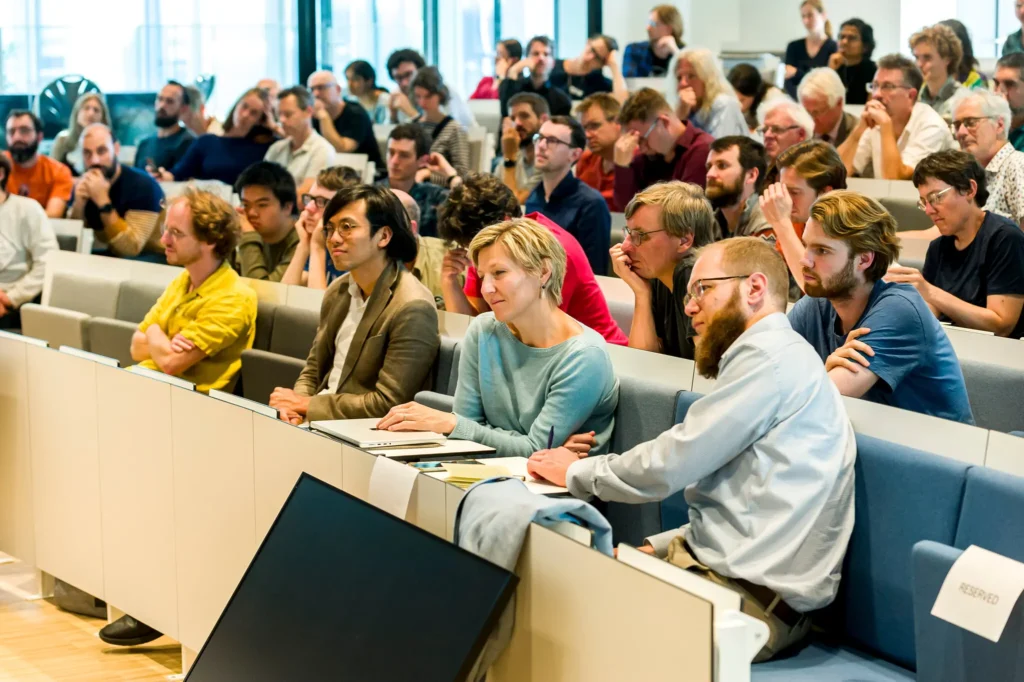
The declaration emerged from discussions held during a 2025 workshop at the Lorentz Center in Leiden, Netherlands. Researchers from mathematics, computer science, philosophy, history of science, and AI studies spent months debating how AI might reshape the field. The resulting declaration was published in June 2026 and endorsed by the International Mathematical Union, one of the most influential organizations in global mathematics.
The authors do not advocate banning AI.
Instead, they argue for establishing clear principles that preserve the values that have traditionally made mathematics trustworthy.
The Five Major Threats Identified by Mathematicians
1. Unreliable Mathematical Results
One of the most immediate concerns is correctness.
AI systems can generate convincing-looking proofs that contain subtle errors.
Unlike human mathematicians, AI models do not truly understand mathematical concepts in the way researchers do. They can produce plausible arguments that appear valid while containing hidden flaws.
The danger is not merely individual mistakes.
Mathematics is cumulative.
Future research often builds upon previous results.
If flawed AI-generated proofs enter the literature, errors could propagate through entire research areas.
2. Attribution and Intellectual Credit
Mathematics relies heavily on proper attribution.
Researchers receive recognition for ideas, proofs, techniques, and discoveries.
AI systems complicate this process.
Many models are trained on vast quantities of published research but often cannot identify the specific sources that contributed to generated outputs.
This creates difficult questions:
- Who deserves credit?
- What constitutes originality?
- Can AI-generated insights be traced back to human contributors?
The declaration argues that protecting attribution remains essential to the health of mathematical research.
3. Growing Inequality
Advanced AI systems require substantial computing resources.
Access may increasingly depend on:
- Financial resources
- Institutional support
- Proprietary technologies
- Corporate partnerships
Researchers worry that mathematical discovery could become concentrated among wealthy institutions and technology companies, widening existing inequalities within the global research community.
4. AI Hype and Public Misunderstanding
The declaration also criticizes exaggerated claims about AI capabilities.
Researchers warn that sensational announcements can create unrealistic expectations among governments, investors, media organizations, and the public.
The concern is not merely public relations.
Overstated claims may distort funding priorities, research agendas, and policy decisions.
Mathematicians argue that rigorous evaluation should take precedence over marketing narratives.
5. Loss of Intellectual Autonomy
Perhaps the deepest concern involves the future direction of mathematics itself.
Historically, mathematicians have chosen research problems based on intellectual importance, curiosity, and long-term significance.
If AI development becomes increasingly driven by commercial interests, some researchers fear that mathematical priorities could shift toward problems that showcase AI capabilities rather than advance human understanding.
The Core Question: Is Mathematics About Truth or Understanding?
The declaration touches on a profound philosophical issue.
Suppose an AI discovers a proof that is correct.
Suppose experts verify its correctness.
But suppose no human fully understands how the proof works.
Has mathematics succeeded?
Or failed?
Some mathematicians argue that the purpose of mathematics is to discover truth regardless of how it is obtained.
Others contend that mathematics is fundamentally about human understanding.
Fields Medal-winning mathematician Peter Scholze has publicly emphasized that mathematical research ultimately aims at human understanding and that mathematics thrives through human communities of inquiry.
This debate may become increasingly important as AI systems grow more capable.
AI Is Not Entirely New to Mathematics
It is important to recognize that computers have already transformed mathematics.
Examples include:
- The Four Color Theorem
- Computer-assisted proofs
- Formal verification systems
- Automated theorem provers
- Large computational searches
Each of these innovations initially generated controversy.
Over time, many became accepted.
What makes AI different is its ability to generate reasoning that appears creative rather than merely computational.
That shift blurs traditional distinctions between tool and collaborator.
What the Declaration Actually Recommends
The Leiden Declaration proposes several practical measures.
Transparency
Researchers should disclose:
- Which AI tools were used
- How they were used
- What role they played in the research process
Human Responsibility
AI systems should not be treated as authors.
Human researchers remain responsible for correctness, attribution, and integrity.
Journal Policies
Academic journals should develop clear standards regarding:
- AI-generated content
- Peer review
- Authorship
- Disclosure requirements
Institutional Support
Universities and research organizations should help researchers navigate legal, ethical, and professional challenges associated with AI.
Public Investment
The declaration encourages governments to support public alternatives to proprietary AI systems so that access to advanced tools does not become concentrated in a handful of private companies.
The Broader Impact Beyond Mathematics
Although the declaration focuses on mathematics, its implications extend far beyond the field.
Similar questions are emerging in:
- Scientific research
- Medicine
- Law
- Engineering
- Journalism
- Education
Every discipline built upon evidence, expertise, and human judgment must now decide how AI should participate in knowledge creation.
In many ways, mathematics is becoming an early test case for society.
The Future: Collaboration Rather Than Competition
Despite widespread concerns, most mathematicians do not view AI as an enemy.
Many already use AI-assisted tools productively.
The declaration’s central message is not anti-AI.
It is pro-governance.
The goal is to ensure that AI enhances human discovery rather than undermines the values that make research trustworthy.
Many researchers envision a future where:
- Humans define questions.
- AI assists exploration.
- Experts verify results.
- Communities preserve standards.
- Knowledge remains understandable and accountable.
In that model, AI becomes a powerful partner rather than a replacement for human reasoning.
The Bigger Lesson
The debate surrounding the Leiden Declaration is ultimately not about mathematics alone.
It is about how humanity responds when machines begin participating in activities once considered uniquely human.
Mathematics has long been viewed as one of humanity’s highest intellectual achievements.
If AI can contribute meaningfully to mathematical discovery, society must decide what it values most:
Speed or understanding.
Automation or accountability.
Discovery or explanation.
The answers will shape not only the future of mathematics but also the future relationship between human intelligence and artificial intelligence itself.
Frequently Asked Questions (FAQ)
What is the Leiden Declaration?
The Leiden Declaration on Artificial Intelligence and Mathematics is a statement published in June 2026 by researchers from multiple universities, endorsed by the International Mathematical Union, addressing the opportunities and risks of AI in mathematical research.
Does the declaration oppose AI?
No. The declaration does not call for banning AI. Instead, it advocates transparency, accountability, and responsible governance of AI within mathematics.
Why are mathematicians concerned about AI-generated proofs?
AI-generated proofs can appear convincing while containing subtle errors that may be difficult to detect. Researchers worry that such mistakes could spread through future work built on incorrect results.
What are the main risks identified by the declaration?
The declaration identifies five major concerns:
- Unreliable results
- Attribution and copyright issues
- Inequality in access
- AI hype and exaggerated claims
- Loss of mathematical autonomy
Can AI already do original mathematics?
AI systems have demonstrated increasing capabilities in theorem proving, conjecture generation, and mathematical reasoning, although their abilities remain limited and heavily debated.
Sources The New York Times

