
As artificial intelligence continues to reshape industries and automate tasks once thought untouchable, a pressing question looms for young people entering the workforce: Which jobs will still exist—and thrive—in an AI-driven future?
While headlines often focus on job losses and automation, a growing body of research and expert opinion suggests a more nuanced reality. AI will not replace all work. Instead, it will redefine the value of uniquely human skills, elevating roles that machines struggle to replicate.
Understanding these roles is critical—not just for career planning, but for navigating a rapidly changing economic landscape.
The Big Shift: From Task-Based Work to Human-Centered Work
Historically, jobs have been defined by tasks—many of which can now be automated.
AI excels at:
- processing large amounts of data
- performing repetitive or structured tasks
- generating content based on patterns
But it struggles with areas that require:
- emotional understanding
- physical adaptability
- complex human interaction
- ethical judgment
This shift is redefining what makes a job “valuable.”
Jobs AI Still Struggles to Do
1. Care-Based Roles
Jobs that involve empathy, trust and human connection remain difficult for AI to replicate.
Examples include:
- nurses and caregivers
- therapists and counselors
- social workers
- teachers (especially early education)
These roles require emotional intelligence, cultural awareness and interpersonal skills that go beyond data processing.
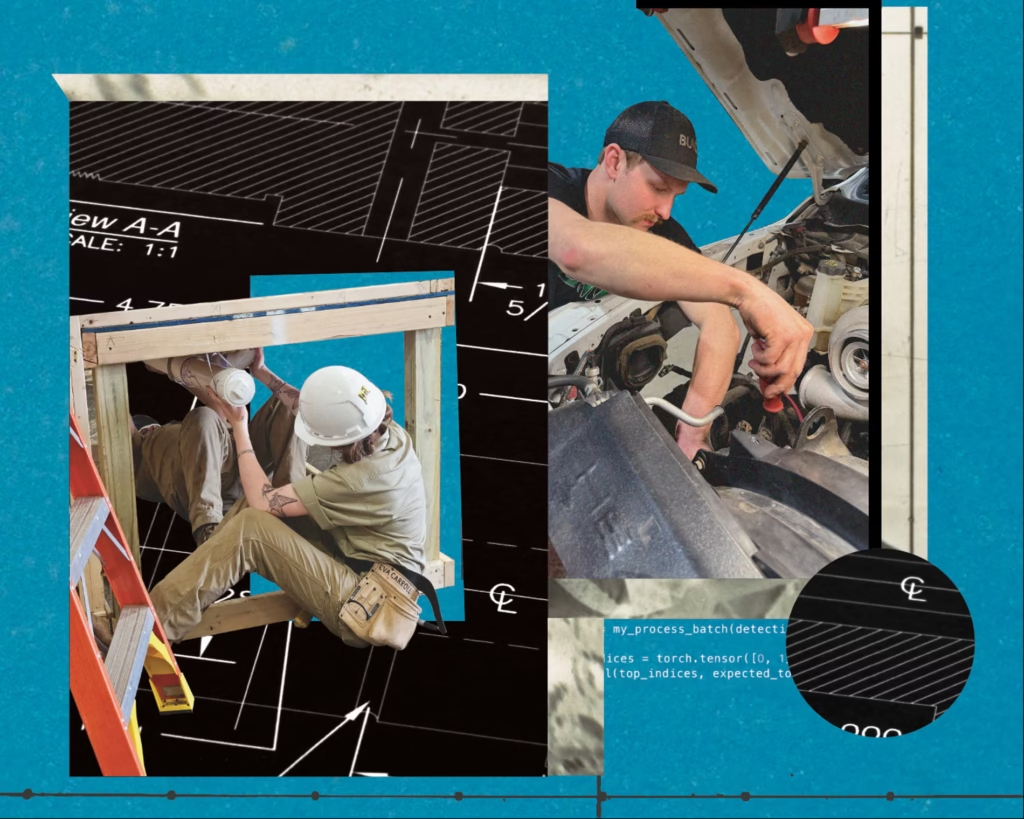
2. Skilled Trades and Hands-On Work
Physical jobs that involve unpredictable environments are surprisingly resilient.
Examples include:
- electricians
- plumbers
- construction workers
- mechanics
These roles require:
- adaptability
- problem-solving in real-world conditions
- manual dexterity
Robots and AI systems still struggle with the variability of physical environments.
3. Creative and Original Work
While AI can generate content, truly original and culturally meaningful creativity remains human-driven.
Examples include:
- artists and designers
- writers and filmmakers
- musicians and performers
The value here lies not just in output, but in authenticity, perspective and emotional resonance.
4. Leadership and Decision-Making Roles
AI can provide data and recommendations—but leadership involves more than analysis.
Examples include:
- managers and executives
- entrepreneurs
- policymakers
These roles require:
- strategic thinking
- ethical judgment
- negotiation and persuasion
5. Jobs Requiring Trust and Accountability
In many professions, people prefer human responsibility.
Examples include:
- lawyers
- doctors
- financial advisors
Even if AI assists in these fields, humans remain accountable for decisions.

What the Original Conversation Misses
While it’s helpful to identify “safe” jobs, the reality is more complex.
No Job Is Completely Safe
AI will likely affect every profession to some degree.
Hybrid Roles Will Dominate
The most valuable jobs will combine:
- human skills
- AI tools
Skills Matter More Than Job Titles
Instead of focusing on specific careers, individuals should focus on adaptable skills.
The Rise of “Human + AI” Work
The future workforce will not be divided into “AI jobs” and “non-AI jobs.”
Instead, most roles will involve collaboration between humans and machines.
Examples:
- doctors using AI for diagnosis
- designers using AI for prototyping
- teachers using AI for personalized learning
The key is not avoiding AI—but learning how to work with it effectively.
Skills That Will Matter Most
For young people, developing the right skills is more important than choosing the “perfect” job.
1. Emotional Intelligence
Understanding people, building relationships and managing emotions.
2. Critical Thinking
Evaluating information, questioning assumptions and making decisions.
3. Adaptability
The ability to learn new tools and adjust to change.
4. Creativity
Generating new ideas and perspectives.
5. Communication
Explaining complex ideas clearly and persuasively.
These are areas where humans maintain a strong advantage.
The Education Gap
One of the biggest challenges is that education systems are not fully aligned with the AI era.
Many schools still focus on:
- memorization
- standardized testing
- routine problem-solving
But the future demands:
- creativity
- collaboration
- digital literacy
- AI awareness
Bridging this gap is essential for preparing the next generation.
The Psychological Impact on Young People
The uncertainty around AI and jobs is affecting how young people think about their future.
Common concerns include:
- fear of choosing the “wrong” career
- anxiety about job security
- pressure to constantly upskill
While these concerns are valid, they can also be reframed as opportunities.
The AI era rewards those who are:
- flexible
- curious
- proactive
A More Realistic View of the Future
Rather than asking “Which jobs are safe?”, a better question might be:
“How can I stay valuable in a changing world?”
The answer lies in:
- continuous learning
- combining human strengths with technology
- focusing on roles that require judgment, creativity and connection
Frequently Asked Questions (FAQ)
Q: Which jobs are safest from AI?
Jobs involving human interaction, creativity and physical adaptability are generally more resilient.
Q: Will AI replace all jobs?
No. AI will transform many jobs, but new roles and opportunities will also emerge.
Q: Should young people avoid tech careers?
Not at all. Tech skills are valuable, especially when combined with human-centered abilities.
Q: What skills should I focus on?
Emotional intelligence, creativity, critical thinking and adaptability.
Q: Can AI replace teachers or doctors?
AI can assist these professions, but human judgment and trust remain essential.
Q: Is it still worth going to university?
Yes, but choosing fields that develop adaptable and future-proof skills is important.
Q: How can I prepare for an AI-driven future?
Learn how to use AI tools, stay curious and continuously update your skills.
Conclusion
The rise of artificial intelligence is not the end of work—it is the beginning of a new kind of work.
Jobs that rely purely on routine tasks may decline, but roles that emphasize human strengths are becoming more valuable than ever.
For young people, the goal is not to outrun AI—but to develop the qualities that AI cannot replicate.
Because in the future of work, the most important advantage won’t be what you know—it will be how uniquely human you are.
Sources The Guardian

