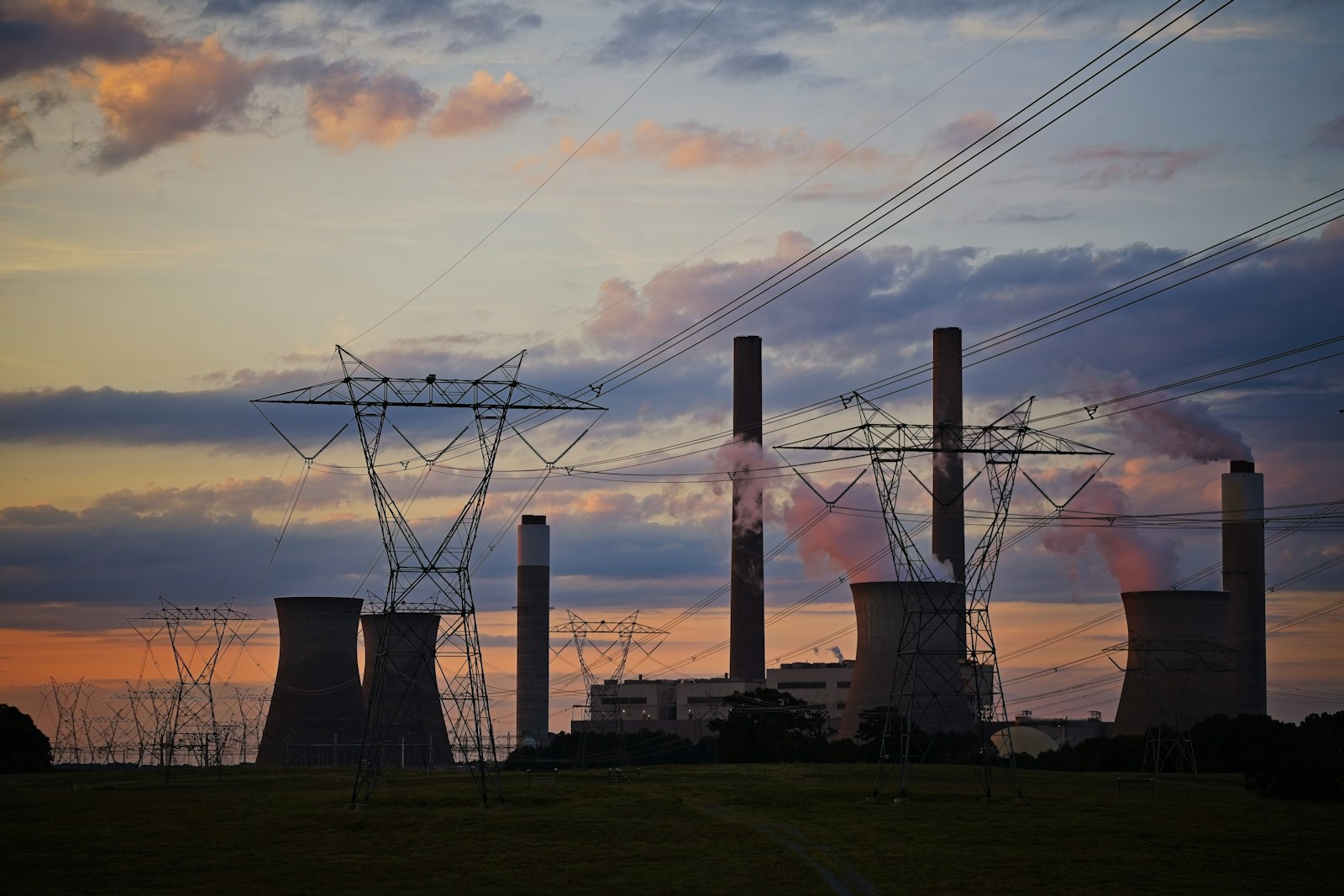
Artificial intelligence is fueling a new kind of energy crisis.
Across Georgia, a quiet battle is unfolding between economic growth and sustainability as AI datacenters — the massive facilities that power everything from ChatGPT to Google’s Gemini — drive an unprecedented surge in electricity demand.
The state, once a hub of cheap, reliable energy in the American South, is now at the center of a national debate:
Can the U.S. power the AI revolution without pricing out its citizens or destroying its environment?

Georgia: The New Frontier of AI Infrastructure
Over the past five years, Georgia has emerged as one of the fastest-growing data center hubs in the United States.
Tech giants including Microsoft, Google, Amazon Web Services (AWS), and Meta have poured billions into building AI supercomputing complexes near Atlanta and in rural counties such as Douglas, Fayette, and Henry.
The attraction is simple:
- Low land costs
- Access to fiber-optic networks
- A pro-business energy policy
- Tax incentives for renewable and tech development
But the explosive growth of these facilities — each consuming as much electricity as a small city — has put immense pressure on Georgia Power, the state’s main utility provider.
AI’s Hidden Power Appetite
The global AI boom has made datacenters the factories of the digital age — but their energy demands are staggering.
According to the International Energy Agency (IEA), global datacenter electricity consumption could double by 2026, surpassing the energy use of entire countries like Germany or Japan.
In Georgia alone, recent estimates suggest AI datacenters could require as much as 4 gigawatts of new capacity within five years — equivalent to the power needed for 3 million homes.
The culprit? Generative AI.
Unlike traditional cloud computing, AI workloads involve massive GPU clusters that perform billions of simultaneous calculations. Cooling these processors demands even more energy, sometimes accounting for 40–50% of total consumption.
Higher Rates, Lower Trust
To keep up, Georgia Power has filed proposals with the state’s Public Service Commission to expand grid capacity — plans that include new gas-fired plants and infrastructure upgrades.
But there’s a catch: those costs could fall on residential and small business customers.
Consumer advocates warn that rate hikes — potentially up to 12% over the next three years — would effectively make Georgians subsidize the electricity used by trillion-dollar tech companies.
“It’s unacceptable that everyday families are being asked to foot the bill for Silicon Valley’s AI gold rush,” said energy policy analyst Dr. Amanda Blake of the Southern Environmental Law Center.
Georgia Power, meanwhile, insists that the investments will ultimately benefit the state’s economy, bringing jobs, tax revenue, and technological advancement.
Still, public trust is fraying.
Environmental Toll: Gas Over Green
AI datacenters are also challenging Georgia’s climate commitments.
To meet surging demand, utilities are reviving natural gas projects — a move that critics say undermines years of progress toward renewable energy.
Georgia currently generates only about 12% of its power from renewables (mainly solar), far below states like California or Texas. With AI-driven consumption outpacing clean energy expansion, the carbon footprint of these facilities is set to balloon.
“We’re at risk of replacing one digital revolution with another form of pollution,” warns environmental economist Dr. Evan Patel. “AI may be smart, but its power supply is still dirty.”
The National Picture: A Looming Grid Crisis
Georgia’s dilemma reflects a larger national challenge.
Across the U.S., utilities are scrambling to meet AI-related electricity demand:
- Virginia’s “Data Center Alley” is already straining local grids.
- Texas faces blackouts as new AI centers compete with crypto miners for power.
- Oregon and Arizona are pushing back against water-intensive cooling systems.
By 2030, analysts predict U.S. datacenter energy use could account for 10% of total national electricity consumption — up from 2% in 2020.
That shift threatens not only affordability but also grid reliability, especially during summer heat waves and winter cold snaps.
Balancing Innovation and Responsibility
AI infrastructure brings undeniable economic benefits. Georgia’s data economy is projected to generate tens of thousands of high-tech jobs and billions in tax revenue.
But the current trajectory raises crucial questions:
- Who pays for the power upgrades?
- How will the state balance industry growth with climate goals?
- And can innovation coexist with sustainability?
Experts suggest a few solutions:
- Mandating renewable energy sourcing for AI datacenters.
- Dynamic pricing models that charge large tech users more during peak demand.
- Reinvesting corporate tax breaks into grid modernization and community energy projects.
The goal, as one policy expert put it, should be to ensure that “AI’s power doesn’t come at the expense of the powerless.”
Frequently Asked Questions (FAQs)
| Question | Answer |
|---|---|
| 1. Why are AI datacenters moving to Georgia? | Low energy costs, strong infrastructure, and state-level tax incentives make Georgia attractive to tech companies. |
| 2. How much power do datacenters use? | A single large AI facility can consume as much electricity as 80,000 homes. Georgia could soon require 4 GW of new capacity to meet demand. |
| 3. Will electricity rates increase for residents? | Possibly. Utilities may raise rates to fund grid expansion and new generation projects. |
| 4. Why can’t renewable energy handle the load? | Renewable infrastructure is growing but not fast enough to meet the sudden spike in AI power demand. Gas and coal plants are being extended as stopgaps. |
| 5. What role does AI play in power usage? | AI models require high-performance GPUs running constantly, which dramatically increases energy use compared to traditional cloud services. |
| 6. Are there environmental consequences? | Yes. More fossil fuel generation leads to higher carbon emissions and water usage for cooling systems. |
| 7. Are there benefits for Georgia’s economy? | Yes — job creation, data infrastructure growth, and higher tax revenues, but critics say the costs outweigh the gains. |
| 8. What can policymakers do? | Implement sustainable power sourcing mandates, charge higher industrial rates, and accelerate renewable projects. |
| 9. Is this problem unique to Georgia? | No. States like Virginia, Texas, and Arizona are facing similar datacenter-related grid pressures. |
| 10. How can residents respond? | By participating in public utility hearings, advocating for clean energy, and monitoring corporate accountability. |
Final Thoughts
Georgia’s energy story is a preview of what’s coming for the rest of the world.
As AI systems grow more intelligent, their power needs grow more insatiable. The question isn’t whether we can power the AI revolution — it’s who will pay for it, and what will be left behind.
If Georgia can find a way to balance economic progress, environmental integrity, and energy justice, it could become a model for sustainable AI infrastructure.
If not, the world’s smartest machines may end up running on some of humanity’s most short-sighted choices.

Sources The Guardian