For years, artificial intelligence has been framed as an unstoppable race. Faster models, bigger data centers, quicker rollouts. The message was simple: move fast or be left behind.
So when Jamie Dimon, CEO of JPMorgan Chase, and Jensen Huang, CEO of Nvidia, publicly suggest that AI’s rollout should be slowed, it marks a quiet but profound shift.
These aren’t critics on the sidelines. They are two of the biggest beneficiaries of the AI boom.
When leaders like this start urging caution, it signals that AI’s risks are no longer theoretical — they are becoming systemic.
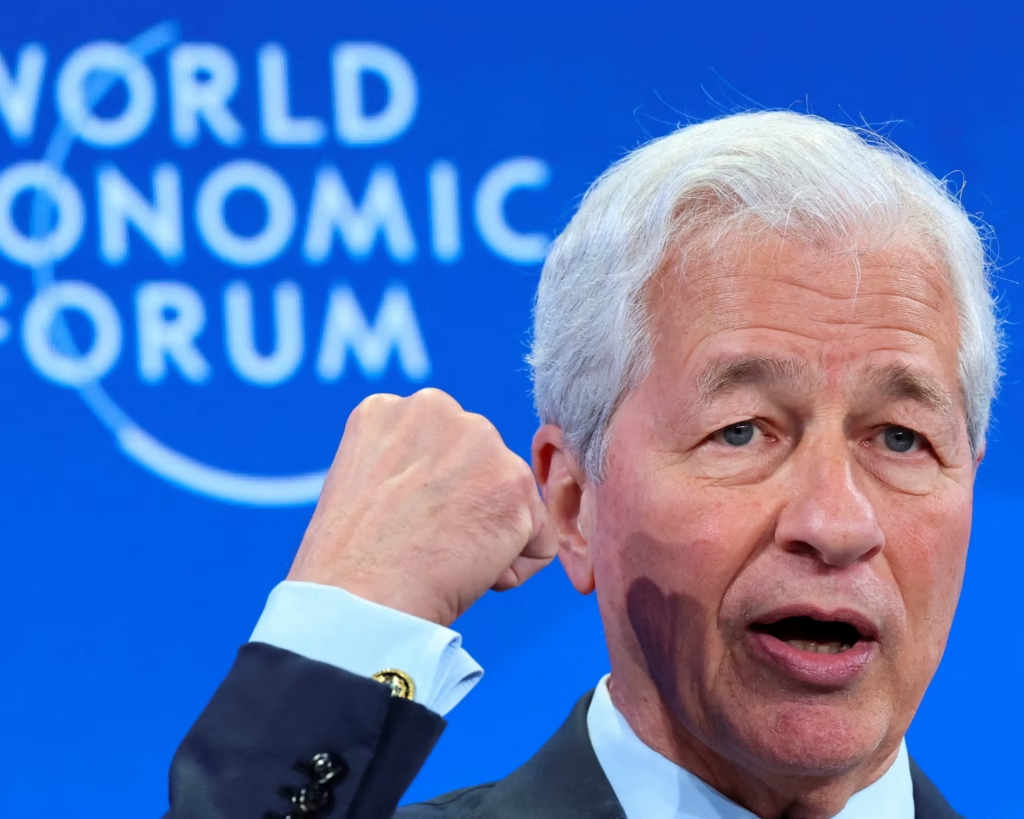
Why Calls to Slow AI Are Coming From Inside Big Tech and Finance
Historically, tech leaders have argued that innovation should move quickly and society would adapt later. AI is challenging that assumption.
Executives now see:
- How rapidly AI reshapes labor markets
- How fragile social trust has become
- How concentrated AI power is in a few hands
- How difficult it is to reverse harm after deployment
Slowing AI isn’t about resisting progress. It’s about preventing irreversible damage.
What “Slowing the Rollout” Really Means
This isn’t a call to stop AI development.
A responsible slowdown could include:
- Phased rollouts instead of mass deployment
- Stress-testing systems before release
- Clear accountability for AI failures
- Restrictions on high-risk uses
- Regulatory oversight that matches AI’s power
In short, governance catching up to capability.
Why the Financial System Is Especially Vulnerable
Jamie Dimon’s warning reflects the dangers AI poses to complex financial systems.
In banking and markets:
- AI-driven trading can amplify volatility
- Automated decisions can cascade across institutions
- Errors can propagate faster than humans can intervene
Finance depends on stability and trust. AI that moves too fast — or acts opaquely — threatens both.
Why Nvidia’s Caution Is Even More Alarming
As the world’s leading AI chipmaker, Nvidia profits directly from rapid AI expansion. If anyone benefits from speed, it’s Jensen Huang.
Yet Huang has emphasized:
- The need for guardrails
- The dangers of deploying systems we don’t fully understand
- The importance of safety before scale
This suggests a deeper truth: AI capability is advancing faster than human comprehension.
Where the Greatest Risks Are Emerging
Labor and Social Stability
Rapid AI deployment can:
- Displace workers faster than they can adapt
- Erase entry-level jobs
- Widen inequality
- Fuel social unrest
Slowing rollout buys time for transition.

Misinformation and Trust
AI-generated content:
- Blurs reality and fiction
- Overwhelms moderation systems
- Undermines public confidence
Once trust collapses, rebuilding it is painfully slow.
Energy and Infrastructure
AI expansion strains:
- Power grids
- Water supplies
- Local communities
Uncontrolled growth creates backlash that slows innovation anyway.
What Often Goes Missing From the Debate
Speed Is a Choice
Companies decide how quickly AI is deployed. Markets reward speed — societies absorb the cost.
Some Harm Is Irreversible
Once AI systems reshape institutions, rolling them back is nearly impossible.
Public Consent Has Been Minimal
AI deployment has largely bypassed democratic input.
Trust Is a Finite Resource
Each failure accelerates skepticism and resistance.
What a Responsible Slowdown Could Achieve
A measured approach could:
- Allow regulation to mature
- Improve safety and reliability
- Build public trust
- Reduce political backlash
- Ensure benefits are more evenly shared
Ironically, slowing down may make AI more sustainable — and more profitable — in the long run.
Why This Moment Feels Like a Turning Point
For years, concerns about AI risk were dismissed as alarmist.
Now, the warnings are coming from:
- Bank CEOs
- Chip manufacturers
- AI developers
- Economists
The conversation has shifted from “Can we build it?” to “Should we deploy it this fast?”
Frequently Asked Questions
Why would AI leaders want to slow deployment?
Because they see systemic risks that threaten trust, stability, and long-term value.
Does slowing AI mean losing competitiveness?
Not necessarily. Poorly governed AI can cause more damage than cautious progress.
Which AI uses are most dangerous?
Finance, misinformation systems, military applications, and critical infrastructure.
Can regulation keep up with AI?
Only if deployment slows enough for oversight to function.
Is this just PR?
Partially, perhaps — but the risks they highlight are real and growing.
What happens if AI isn’t slowed?
Stronger backlash, harsher regulation, and higher chances of systemic failure.

The Bottom Line
When the people building and profiting most from AI start urging restraint, it’s time to listen.
Slowing AI isn’t about fear of innovation. It’s about recognizing a simple truth: societies move slower than software — and breaking that balance carries real danger.
AI’s power is undeniable. So are its risks.
The choice now is whether we shape AI deliberately — or let speed decide our future for us.
Sources The Guardian